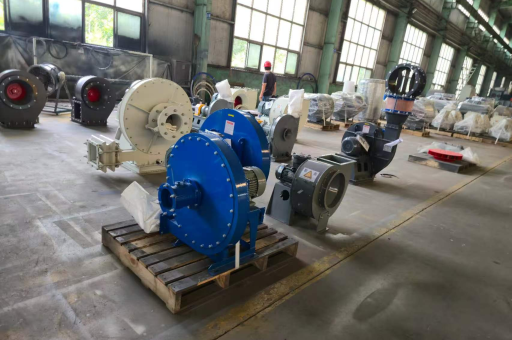
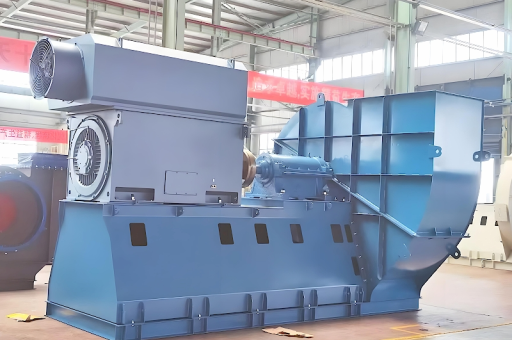
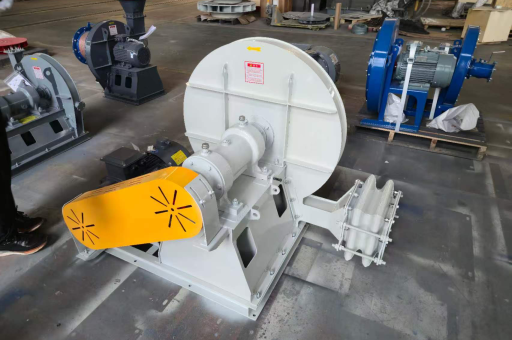
This article's table of contents introduction:
- Table of Contents
- Introduction to Flue Gas Recirculation (FGR) Technology
- Technical Specifications of a 250kW FGR Fan
- Why 250kW? – Power Requirements and Fan Selection Criteria
- Operational Mechanism: How the FGR Fan Reduces NOx Emissions
- Energy Efficiency and Cost Benefits
- Maintenance and Reliability Challenges
- Q&A Section: Common Questions About 250kW FGR Fans
- Conclusion: The Future of FGR Fan Applications
The Critical Role of the 250kW Flue Gas Recirculation Fan in Modern Power Plant Efficiency and Emission Control
Table of Contents
- Introduction to Flue Gas Recirculation (FGR) Technology
- Technical Specifications of a 250kW FGR Fan
- Why 250kW? – Power Requirements and Fan Selection Criteria
- Operational Mechanism: How the FGR Fan Reduces NOx Emissions
- Energy Efficiency and Cost Benefits
- Maintenance and Reliability Challenges
- Q&A Section: Common Questions About 250kW FGR Fans
- Conclusion: The Future of FGR Fan Applications
Introduction to Flue Gas Recirculation (FGR) Technology
In modern thermal power plants and industrial boiler systems, Flue Gas Recirculation (FGR) stands as one of the most effective primary methods for controlling nitrogen oxide (NOx) emissions. The technology works by diverting a portion of the exhaust flue gas back into the combustion chamber or burner air stream, reducing oxygen concentration and peak flame temperature. This results in significantly lower thermal NOx formation.
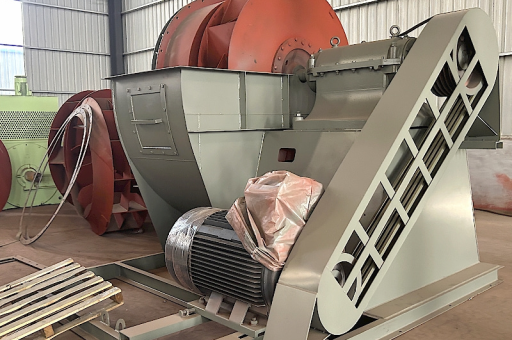
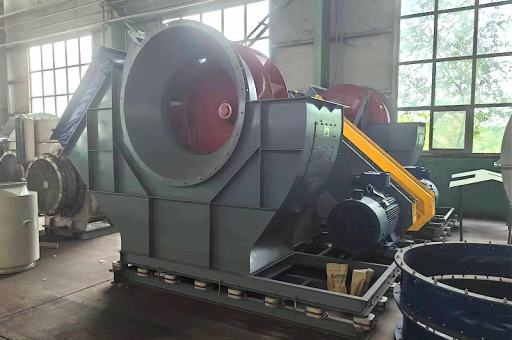
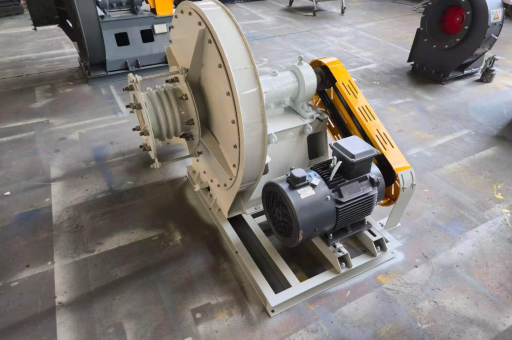
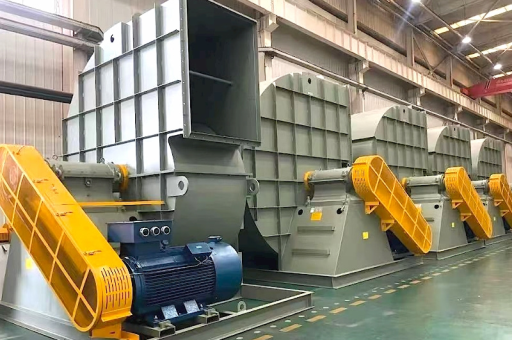
At the heart of this system lies the 250kW Flue Gas Recirculation Fan – a heavy-duty, high-temperature industrial fan engineered to handle corrosive, particle-laden exhaust gases at elevated temperatures often exceeding 200°C. These fans are not merely accessory components; they are the pulse of the entire recirculation loop, providing the necessary static pressure and volumetric flow to overcome system resistance.
According to industry research, FGR systems can reduce NOx emissions by 30% to 50% in natural gas-fired boilers and up to 60% in coal-fired units when combined with other technologies. The 250kW power rating places these fans in a specific niche suitable for medium-to-large industrial boilers, combined heat and power (CHP) plants, and certain waste-to-energy facilities.
Technical Specifications of a 250kW FGR Fan
A typical 250kW FGR fan operates with the following key parameters:
- Power Rating: 250 kilowatts (approximately 335 horsepower)
- Flow Range: 80,000 to 150,000 m³/h (depending on system backpressure)
- Static Pressure: 3,000 to 6,000 Pa (12 to 24 inches w.g.)
- Operating Temperature: 180°C to 280°C (with optional cooling systems for higher temperatures)
- Impeller Material: High-chrome duplex stainless steel or Inconel for corrosion resistance
- Drive Configuration: Direct-coupled or V-belt with variable frequency drive (VFD) compatibility
- Bearings: High-temperature grease-lubricated or oil-mist lubricated spherical roller bearings
The fan design typically features backward-curved blades for higher efficiency and lower noise levels. Many modern units also include wear-resistant liners at critical areas such as the volute tongue and impeller blade leading edges, as fly ash particles in coal-fired flue gas can cause rapid erosion.
Why 250kW? – Power Requirements and Fan Selection Criteria
You might wonder: Why specifically 250kW? The power rating is not arbitrary. The selection of a 250kW FGR fan is determined by the system resistance curve and the required recirculation ratio, which typically ranges from 10% to 30% of total flue gas flow.
For example, a 100 MW thermal boiler operating with a 20% recirculation ratio may require approximately 100,000 m³/h of recirculated gas. Using the fan power equation:
[ P (kW) = \frac{Q \times \Delta P}{3600 \times \eta} ]
Where:
- Q = volumetric flow rate (m³/h)
- ΔP = system total pressure rise (Pa)
- η = fan efficiency (typically 75–85%)
If Q = 100,000 m³/h, ΔP = 5,000 Pa, and η = 0.80, we get:
[ P = \frac{100,000 \times 5,000}{3600 \times 0.80} \approx 173.6 \text{ kW} ]
A 250kW motor provides a 30–40% safety margin, accounting for temperature-induced gas density changes, duct fouling, and future capacity expansion. This margin ensures the fan does not operate near the surge line and maintains stable operation under variable load conditions.
Operational Mechanism: How the FGR Fan Reduces NOx Emissions
The operational principle is elegantly simple yet thermodynamically profound. The 250kW FGR fan extracts flue gas downstream of the economizer or particulate control device and injects it upstream of the burner or into the windbox.
Step-by-step process:
- The fan draws hot flue gas (typically at 150–250°C) from the exhaust duct.
- The gas passes through a temperature control damper to avoid over-cooling the combustion zone.
- The FGR fan pressurizes the gas and delivers it to the burner air register.
- The recirculated gas mixes with combustion air, reducing the oxygen content from 21% to approximately 16–18%.
- Lower oxygen availability and reduced flame temperature (by 100–300°C) suppress thermal NOx formation.
Real-world impact: A 250kW fan in a 50 MW natural gas boiler can cut NOx emissions from 80 ppm to below 30 ppm without the use of downstream selective catalytic reduction (SCR) systems, representing a direct operational cost savings.
Energy Efficiency and Cost Benefits
Despite consuming 250kW of electrical power, the FGR fan typically generates net positive economic returns. How?
- Reduced Selective Catalytic Reduction (SCR) operating cost: SCR catalysts require ammonia injection and periodic replacement. By lowering NOx at the source, FGR reduces ammonia slip and extends catalyst life by 2–3 years.
- Fuel switching avoidance: Many plants face carbon taxes or emission penalties. FGR allows continued use of lower-cost fuels while meeting compliance.
- Power consumption optimization: Modern 250kW FGR fans equipped with variable frequency drives (VFDs) can reduce energy consumption by 15–30% during low-load operation. If the fan runs 6,000 hours/year, a VFD can save 225 MWh annually.
Example cost calculation:
- Fan power consumption: 250 kW × 0.85 load factor × 8,000 hours = 1,700 MWh/year
- Electricity cost: $0.08/kWh → $136,000/year
- NOx allowance savings: $200,000/year (typical in EU or North American markets)
- Net annual benefit: $64,000 positive cash flow
Maintenance and Reliability Challenges
A 250kW FGR fan operating in high-temperature, particulate-laden flue gas faces several maintenance challenges:
- Erosion: Fly ash particles at velocities exceeding 30 m/s can erode blades within 6–12 months. Hardfacing or ceramic overlay coatings can extend lifespan to 3–5 years.
- Bearing failure: High temperatures cause grease breakdown. Operators should check bearing vibration and temperature weekly, and replace lubricant every 500 operating hours.
- Shaft seal leakage: Seals must handle positive pressure and prevent flue gas escape. Labyrinth seals with purge air are recommended over carbon rings.
- Corrosion: Acid condensation (sulfuric or hydrochloric) occurs if gas temperature drops below the acid dew point. Insulation and trace heating of ductwork and fan casing are essential.
Best practices:
- Perform vibration analysis monthly.
- Inspect impeller welds using dye penetrant testing annually.
- Clean fan blades using water washing only during planned outages, with proper drying to avoid rust.
Q&A Section: Common Questions About 250kW FGR Fans
Q1: Can a 250kW FGR fan handle flue gas from a coal-fired boiler? Yes, but only with appropriate erosion protection. The fan must include wear-resistant blade coatings and hardened liners at the casing. Coal flue gas contains fine silica particles that accelerate erosion 3–5 times faster than natural gas flue gas.
Q2: What is the typical lifespan of a 250kW FGR fan? With proper maintenance, the fan itself can last 15–20 years. However, the impeller may need replacement every 4–6 years in coal service, or 8–10 years in gas service.
Q3: How does temperature affect fan performance? Flue gas density decreases as temperature rises. A fan moving gas at 250°C will move about 40% more volumetric flow than one moving gas at 20°C, but the mass flow and motor load are lower. Always size the motor based on the cold-start condition where gas density is highest.
Q4: Is a VFD necessary for a 250kW FGR fan? Not strictly necessary, but highly recommended. Without a VFD, flow is controlled by dampers, which waste energy and can cause stall near the surge region. A VFD allows precise flow matching to boiler load, saving 15–30% in electricity.
Q5: What is the approximate cost of a 250kW FGR fan? A complete fan package including motor, VFD, damper, and expansion joints typically ranges from $80,000 to $150,000 USD, depending on material specifications and required temperature rating.
Conclusion: The Future of FGR Fan Applications
The 250kW Flue Gas Recirculation Fan remains a cornerstone of cost-effective NOx control in medium-to-large combustion systems. As global emissions regulations tighten – with the US EPA's Boiler MACT rules, EU Industrial Emissions Directive, and China's ultra-low emission standards – demand for reliable, high-efficiency FGR fans continues to grow.
Emerging trends include:
- Smart sensors: Real-time temperature and vibration monitoring integrated with plant DCS.
- Aerodynamic improvements: Computational fluid dynamics (CFD) optimization of impeller and volute designs for 2–3% higher static efficiency.
- Additive manufacturing: 3D-printed impellers with optimized blade profiles for reduced noise and erosion.
For plant operators, selecting the right 250kW fan from reputable manufacturers – and pairing it with proper duct design, instrumentation, and maintenance protocols – can deliver decades of reliable service while keeping NOx emissions within regulatory limits.
Whether you are retrofitting an existing boiler or designing a new combined cycle plant, the FGR fan is not an afterthought – it is a critical investment in operational efficiency and environmental compliance.