This article's table of contents introduction:
- Table of Contents
- Introduction: Why the 110kW Centrifugal Blower Matters
- Technical Specifications: Engineered for Heavy-Duty Exhaust
- How It Differs from Standard Fans: Pressure, Volume, and Energy
- Core Applications: Industrial Boilers, Power Plants, and Beyond
- Efficiency Gains and Cost Savings from Modern Fan Design
- Maintenance Best Practices to Maximize Service Life
- Key Q&A Section: Common Operational Questions
- Conclusion: A Strategic Investment for Compliance and Performance
Table of Contents
- Introduction: Why the 110kW Centrifugal Blower Matters
- Technical Specifications: Engineered for Heavy-Duty Exhaust
- How It Differs from Standard Fans: Pressure, Volume, and Energy
- Core Applications: Industrial Boilers, Power Plants, and Beyond
- Efficiency Gains and Cost Savings from Modern Fan Design
- Maintenance Best Practices to Maximize Service Life
- Key Q&A Section: Common Operational Questions
- Conclusion: A Strategic Investment for Compliance and Performance
Introduction: Why the 110kW Centrifugal Blower Matters
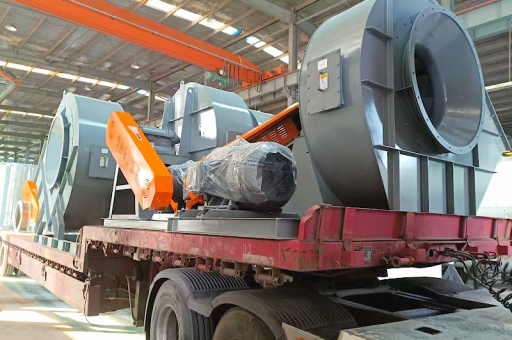
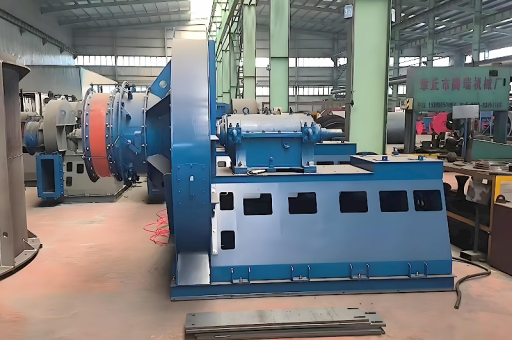
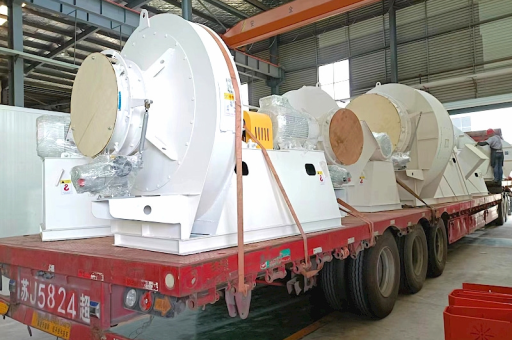
In large-scale industrial environments, thermal processes depend on reliable, high-volume air movement. The 110kW Centrifugal Blower Boiler Exhaust Fan represents a critical component for facilities that operate medium-to-large boilers, whether for power generation, district heating, or process steam. This fan is specifically designed to handle high-temperature, sometimes particulate-laden gases, while maintaining stable static pressure across the system. Its 110 kW (approximately 147 horsepower) motor provides the torque needed to drive a heavy-duty impeller that moves large air volumes (often exceeding 70,000 cubic meters per hour) against significant resistance. Without such a fan, boiler draft would be insufficient, leading to incomplete combustion, reduced thermal efficiency, and dangerous backflow of flue gases. This article explores its design, advantages, and essential operational knowledge.
Technical Specifications: Engineered for Heavy-Duty Exhaust
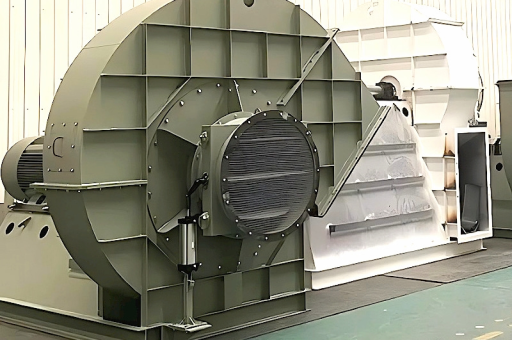
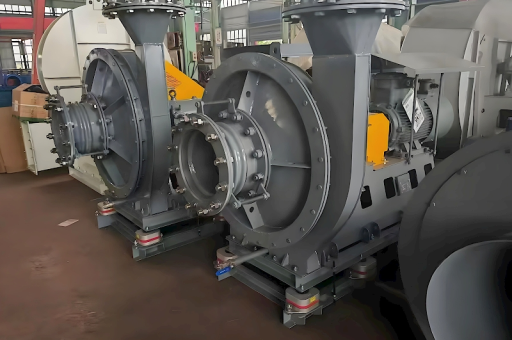
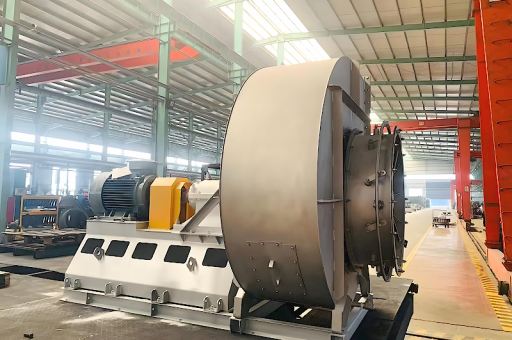
A 110kw Centrifugal Blower Boiler Exhaust Fan is not a generic ventilation unit. Key design parameters typically include:
- Motor Power: 110 kW (3-phase, high-voltage, typically 380V–690V).
- Impeller Type: Backward-curved or radial blades, constructed from abrasion-resistant steel or stainless steel for corrosion resistance.
- Flow Rate (Air Volume): Usually between 60,000 and 120,000 m³/h, depending on system resistance.
- Static Pressure: Typically 2500–4500 Pa, sufficient to overcome boiler backpressure, ductwork losses, and pollution control devices.
- Temperature Rating: Certified for continuous operation at 200°C–350°C; special high-temperature models handle up to 500°C.
- Drive System: Direct-coupled or V-belt drive; variable frequency drive (VFD) compatible for precise flow control.
The fan housing is often reinforced to prevent vibration fatigue, and bearings are either water-cooled or equipped with high-temperature grease to operate reliably in the boiler room.
How It Differs from Standard Fans: Pressure, Volume, and Energy
Many industrial buyers confuse a material handling fan with a boiler exhaust fan. Here are the critical differences:
- Higher Static Pressure: A boiler exhaust fan must overcome the pressure drop across the boiler, economizer, baghouse, or scrubber. Standard centrifugal fans typically top out at 1500 Pa, but the 110kW version is designed for 3000 Pa or more.
- Temperature Tolerance: Standard blowers fail at prolonged exposure above 80°C. This fan uses thermal expansion joints, heat slingers, and high-temperature lubricants.
- Energy Consumption Curve: The 110kW unit is optimized for peak efficiency near its rated point (typically 75–85% efficiency). Off-peak operation is supported by VFD control, which reduces power consumption when demand is lower.
Core Applications: Industrial Boilers, Power Plants, and Beyond
The 110kw Centrifugal Blower Boiler Exhaust Fan is deployed in:
- Large Package Boilers (10–50 TPH): Used in textile, chemical, and food processing plants to ensure negative draft and proper combustion.
- Coal, Biomass, and Heavy Oil Boilers: Handles flue gases containing fly ash, soot, and acidic vapors.
- Waste Heat Recovery Systems: Moves hot exhaust from gas turbines or engines through heat exchangers.
- Cement and Steel Kiln Exhaust Systems: Withstands particulate loading and high static requirements.
- District Heating Plants: Operates year-round, often at varying loads; VFD compatibility is essential.
Efficiency Gains and Cost Savings from Modern Fan Design
Upgrading or selecting a modern 110kw Centrifugal Blower Boiler Exhaust Fan yields measurable benefits:
- Lower Energy Consumption: Modern backward-curved impellers reduce input power by 10–20% compared to older radial or forward-curved fans. For a 110kW motor running 6000 hours/year, a 12% efficiency improvement saves 79,200 kWh annually, which at $0.10/kWh equals $7,920/year.
- Reduced Maintenance: Chrome-carbide wear plates and balanced impellers extend bearing and seal life by up to 40%.
- Noise Reduction: Acoustically optimized housings can lower sound levels by 5–8 dB(A), improving workplace compliance.
- Emissions Compliance: Stable draft maintains tight oxygen control, reducing NOx and CO formation. Many facilities report 5–10% lower excess air after upgrading.
Maintenance Best Practices to Maximize Service Life
To ensure that a 110kw Centrifugal Blower Boiler Exhaust Fan performs reliably for 10–15 years, adopt these practices:
- Weekly Inspections: Check vibration levels (limit: <4 mm/sec RMS), bearing temperatures (max 80°C), and listen for rubbing or scraping sounds.
- Monthly Tasks: Lubricate bearings per manufacturer spec; inspect V-belt tension and alignment (or coupling alignment if direct-drive).
- Quarterly Cleaning: Remove soot and fly ash build-up from impeller blades. Imbalance from deposit buildup is the #1 cause of premature bearing failure.
- Annual Overhaul: Replace seals, inspect wheel for cracking, re-balance impeller if needed, and test drive train alignment.
- Critical: Always lockout/tagout and allow the fan to cool down completely before inspection, because impeller surfaces can exceed 100°C even after motor stop.
Key Q&A Section: Common Operational Questions
Q1: Can a 110kw Centrifugal Blower Boiler Exhaust Fan run at low speeds without damage?
Yes, if equipped with a VFD. However, avoid prolonged operation below 15–20 Hz because bearing lubrication can be inadequate at very low RPM. Use a minimum speed setting recommended by the manufacturer.
Q2: What happens if the fan operates at higher temperature than rated?
The risk is thermal expansion unbalance, bearing grease melting, or impeller creep stress. Prolonged over-temperature will shorten the lifespan. If occasional spikes above 350°C are inevitable, request a high-temperature version with cooling fins or shaft heat shields.
Q3: How do I select between forward-curved and backward-curved impeller?
For boiler exhaust, backward-curved is almost always the correct choice. It provides higher efficiency, a non-overloading power curve, and is less likely to stall when duct resistance fluctuates.
Q4: Is it necessary to install a soft starter or VFD for a 110kW fan?
Yes, because the motor startup current can reach 600–800 Amps (for a 110kW motor). A soft starter or VFD reduces in-rush current by 60%, prevents belt slip, and reduces mechanical shock to the impeller.
Q5: Can this fan handle wet or corrosive exhaust?
Standard models are for dry gases. For corrosive or condensing exhaust (e.g., from natural gas boilers with flue gas condensation), request a fan with stainless steel impeller, coated housing, and a bottom drain.
Q6: What is the typical lifespan of bearings in a boiler exhaust fan?
With proper maintenance, SKF or FAG bearings last 20,000–40,000 operating hours. High temperature and vibration reduce this. Use vibration monitoring to predict failures and avoid unplanned shutdowns.
Q7: Are there any notable differences in fan sizing for coal versus natural gas boilers?
Yes. Coal boilers have higher static pressure needs (3000–4500 Pa) due to fuel handling, air heaters, and baghouse filters. Natural gas boilers usually require lower pressure (1500–2500 Pa) but higher volume. Always base sizing on flue gas temperature, density, and total system resistance. A 110kW fan is commonly matched to a 15–30 TPH coal boiler or a 50–70 TPH gas boiler.
Conclusion: A Strategic Investment for Compliance and Performance
The 110kw Centrifugal Blower Boiler Exhaust Fan is far more than a simple air mover. It is a mission-critical asset that determines combustion quality, energy cost, and environmental compliance. Selecting the right model with proper impeller design, temperature tolerance, and VFD readiness can cut energy costs by thousands of dollars annually while extending equipment life. For plant managers and engineers, understanding the technical profiles, maintenance strategies, and operational limits of this fan is not optional—it is essential for safe, profitable, and sustainable industrial operation.
For further details on sizing, high-temperature options, or spare parts compatibility, please consult a specialist in industrial fan engineering.