This article's table of contents introduction:
- The Role: Boiler Exhaust Fan (ID Fan)
- What "132 kW" Tells You
- Key Specifications (Typical Range for this Size)
- Critical Engineering Considerations
- Common Manufacturers for this Size
- Typical Issues with a 132kW Boiler Fan
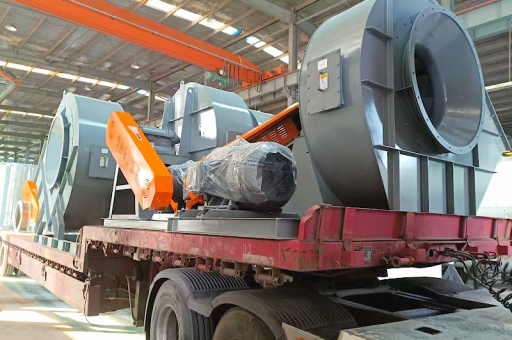
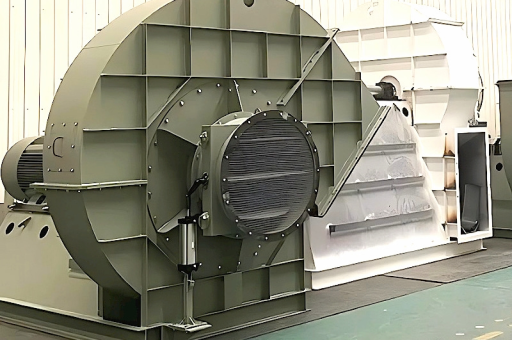
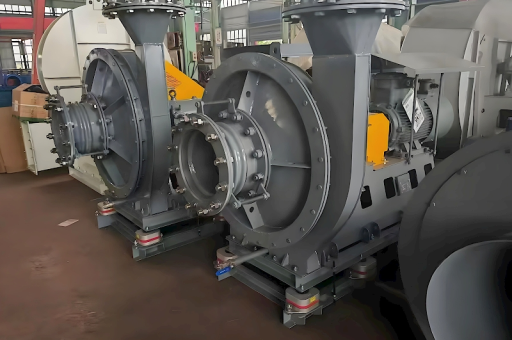
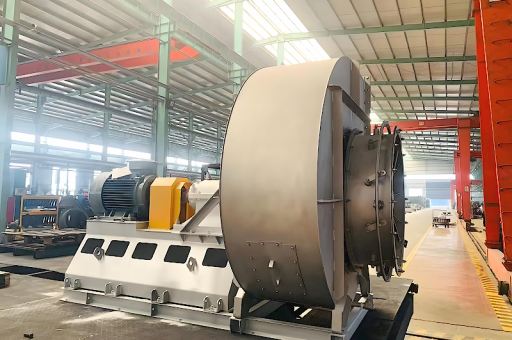
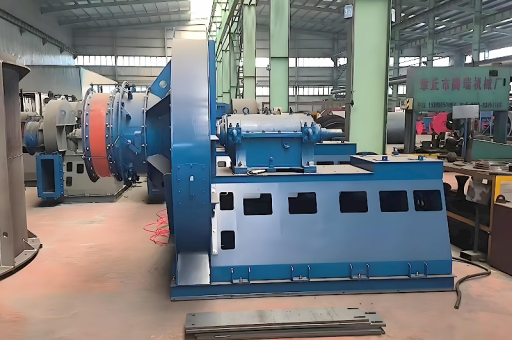
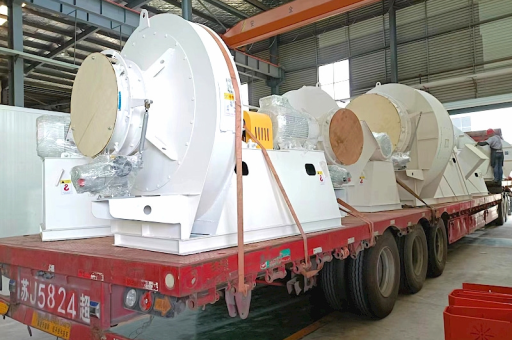
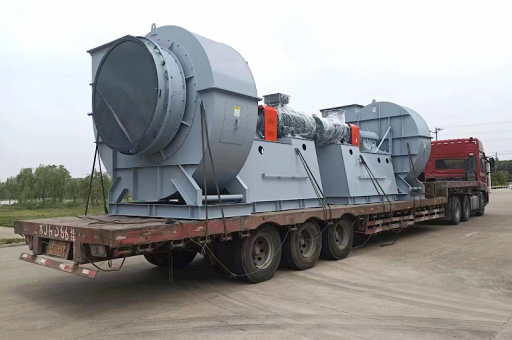
It sounds like you are referencing a 132 kW Centrifugal Blower used as a Boiler Exhaust Fan (often called an Induced Draft Fan or ID Fan).
Here is a breakdown of what this specification typically means, the key engineering considerations, and common applications.
The Role: Boiler Exhaust Fan (ID Fan)
- Function: It pulls flue gases (combustion byproducts) from the boiler furnace, through the heat exchangers, economizer, and scrubbers (if present), and expels them out the chimney.
- Why Centrifugal? Centrifugal fans are ideal for handling hot, dirty, and corrosive gases because they are robust, efficient at high static pressures, and less prone to clogging than axial fans.
What "132 kW" Tells You
- Power: The motor is rated for 132 kW (approx. 177 HP).
- Scale: This is a large industrial fan. It is not for a residential furnace. It is for a medium-to-large industrial boiler (e.g., a 20–50 ton/hr steam boiler, a large biomass plant, or a cement kiln exhaust).
- Electrical Requirements: A 132 kW motor is typically a 400V-690V AC 3-phase motor, requiring a soft starter or Variable Frequency Drive (VFD) to manage inrush current.
Key Specifications (Typical Range for this Size)
| Parameter | Typical Value / Consideration |
|---|---|
| Power | 132 kW (177 HP) |
| Airflow (Volume) | 50,000 – 120,000 m³/hr (30,000 – 70,000 CFM) Depends heavily on system pressure |
| Static Pressure | 2,500 – 6,000 Pa (10 – 24 inches w.g.) High pressure for overcoming duct resistance and chimney losses |
| Impeller Type | Backward Curved (high efficiency) or Radial (Paddle Wheel) (for dirty/sticky gases) |
| Temperature | 150°C – 250°C (Standard) or 350°C+ (If a high-temperature bearing/cooling system is used) |
Critical Engineering Considerations
If you are specifying, buying, or maintaining this fan, pay attention to:
A. Gas Temperature
- The fan must be designed for the maximum exhaust gas temperature (including upset conditions).
- Cooling: For temperatures >150°C, the shaft needs cooling (cooling fan or water cooling). Bearings must be heat-shielded.
B. Material Selection
- Corrosion: Flue gases contain sulfuric acid (from sulfur in fuel). Below the dew point (~120°C), acid corrodes standard steel. Use Corten steel or Stainless Steel (SS316L) .
- Erosion: If burning biomass or coal with fly ash, the impeller blades will erode. Hard facing or wear plates are essential.
C. Vibration & Balance
- A 132 kW fan is heavy. It must sit on a heavy-duty inertia base with spring isolators.
- Balance Grade: G6.3 (standard) or G2.5 (for high-speed operation).
- Bearing Type: Spherical roller bearings with remote vibration monitoring.
D. Control (VFD vs. DOL)
- Variable Frequency Drive (VFD): Highly recommended. Boiler load varies (you don't always need 100% exhaust). A VFD saves massive amounts of energy (Fan Law: Power ∝ Speed³).
- Dampers: Inlet guide vanes or discharge dampers are less efficient but cheaper for fixed-speed applications.
E. Standards
- API 673 (for heavy-duty industrial fans) or ISO 13797 or DIN 24163 (performance testing).
- ATEX (Explosion Proof): If the boiler burns gas or if there is a risk of unburnt fuel pockets, the fan must be spark-resistant.
Common Manufacturers for this Size
- Howden (high-temp ID fans)
- Greenheck (industrial)
- New York Blower (USA)
- Kruger Ventilation (Europe)
- Clyde Bergemann (specialized boiler fans)
- TLT-Turbo (heavy industry)
Typical Issues with a 132kW Boiler Fan
- Bearing Failure: Due to heat soak from the shaft.
- Imbalance: From ash buildup on blades (solved by a cleaning port or air cannons).
- Motor Overload: If the gas density increases or dampers fail to close.
- Vibration Trips: The vibration switch (usually set at 7-10 mm/s RMS) will trip the motor to prevent catastrophic failure.
To get a precise quote or specification, you need to provide:
- Max exhaust gas temperature (°C)
- Gas composition (Is it dirty? Corrosive? Explosive?)
- Required volumetric flow rate (m³/hr or CFM)
- System total static pressure (Pa or inches w.g.)
- Fuel type (Gas, oil, coal, biomass, waste?)
In short: A 132 kW boiler exhaust fan is a high-powered, heavy-duty induced draft fan designed to handle hot, potentially corrosive flue gases in a medium-to-large industrial boiler system. It requires careful material selection and vibration management.