This article's table of contents introduction:
- What is an 11kW Centrifugal Boiler Exhaust Fan?
- Key Specifications & Features to Look For
- Common Applications
- Important Considerations for Purchase & Installation
- Typical Manufacturer Examples (Global & Regional)
- General Sizing Note
- Recommendation for Next Step
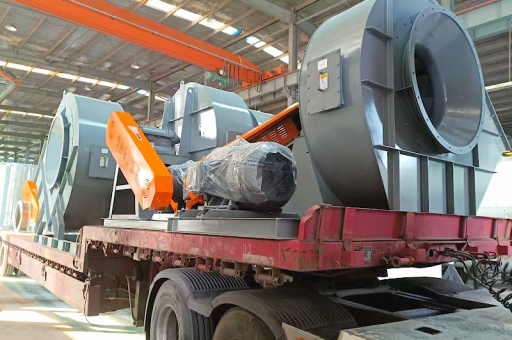
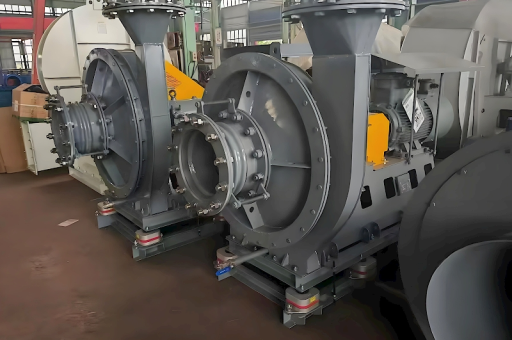
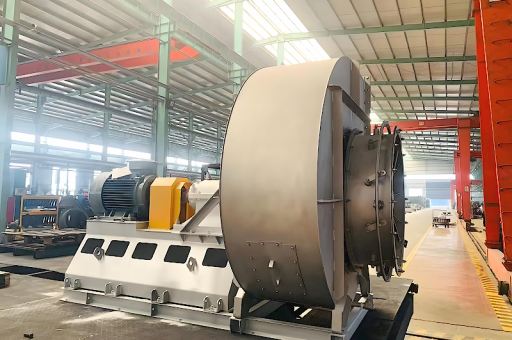
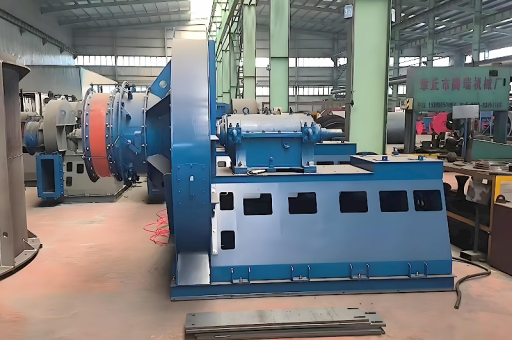
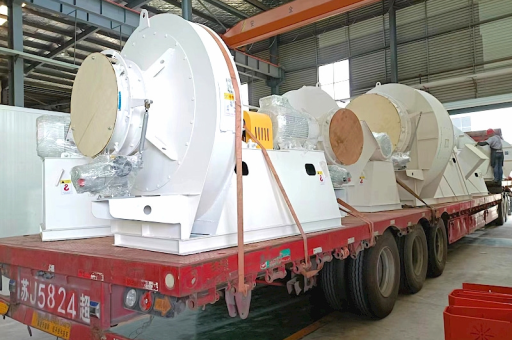
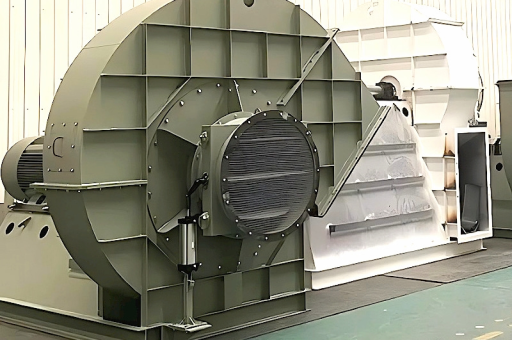
It appears you are describing a 11 kW (kilowatt) centrifugal blower designed for use as a boiler exhaust fan.
This is a standard industrial component used to remove flue gases (combustion byproducts) from a boiler system. Here is a breakdown of the specifications, typical applications, and important considerations for this type of equipment.
What is an 11kW Centrifugal Boiler Exhaust Fan?
- Power: 11 kW (approximately 15 HP). This is a medium-to-large industrial fan motor.
- Type: Centrifugal (also called radial). Air is drawn into the center of a spinning impeller and thrown outward by centrifugal force. This creates high pressure, which is essential for overcoming the resistance of ductwork, heat exchangers, and chimney stacks.
- Function: Boiler Exhaust Fan (often specifically an ID Fan or Induced Draft Fan). It pulls the hot, dirty flue gas out of the boiler furnace, through the heat recovery systems (economizer, air pre-heater), and out the stack/chimney.
Key Specifications & Features to Look For
When sourcing or specifying an 11kW boiler exhaust fan, these are the critical parameters:
- Airflow (Volume): Measured in m³/hr (cubic meters per hour) or CFM (cubic feet per minute). A 11kW fan is typically rated for high volume. Depending on the specific impeller design and static pressure, expect airflow in the range of 10,000 to 25,000 m³/hr (approx. 5,900 to 14,700 CFM).
- Static Pressure: Measured in mmWC (millimeters of water column), Pa (Pascals), or inWC (inches of water column). This is the "resistance" the fan can overcome. For a boiler exhaust, expect moderate to high pressure (e.g., 50 to 150 mmWC or 500 to 1500 Pa).
- Temperature Rating: This is CRITICAL.
- Standard (Low Temp): Up to 80°C (176°F).
- Medium Temp: Up to 150°C (302°F).
- High Temp: 200°C to 350°C+ (392°F to 662°F+). High-temp fans require special bearings, shaft cooling, and materials to prevent heat damage.
- Impeller Design:
- Forward Curved (Squirrel Cage): High airflow, lower pressure. Used for clean air or low-resistance systems.
- Backward Inclined (Airfoil): Higher efficiency, suitable for medium pressure, handles particulate better.
- Radial (Paddle Wheel): Best for dirty air, sticky materials, or dust-laden exhaust. Self-cleaning.
- Special High-Temp: Often made of stainless steel (SS304, SS316) or special alloys.
- Housing Material:
- Mild Steel (MS): Standard for low/medium temps.
- Stainless Steel (SS): For high temperatures or corrosive flue gas (e.g., from high-sulfur fuel).
- Drive Type:
- Direct Drive: Motor shaft is directly coupled to the impeller. Simple, efficient, but speed is fixed.
- Belt Drive: Motor is connected via pulleys and belts. Allows speed adjustment (changing pulleys) for tuning airflow/pressure. More common for heavy industrial use.
Common Applications
- Industrial Boiler Exhaust: Oil, gas, coal, or biomass-fired boilers.
- ID Fan (Induced Draft Fan): The primary fan pulling exhaust through the system.
- FD Fan (Forced Draft Fan): While less common, a large 11kW fan could be used to supply combustion air to the burner (Forced Draft).
- Process Heating: Drying ovens, furnaces, kilns.
- Dust Collection: Larger systems handling heavy dust loads.
- Ventilation: Large warehouses, factories with high exhaust air volumes.
Important Considerations for Purchase & Installation
- Motor Type: The 11kW motor is typically a three-phase induction motor (380V, 415V, 460V depending on location). It can be standard efficiency, high efficiency (IE3/IE4), or inverter-rated if using a VFD. Ensure a VFD (Variable Frequency Drive) is considered for energy savings and precise control. A VFD allows the fan to ramp up/down slowly, reducing mechanical stress.
- VFD Requirement: Controlling a constant-speed fan of this size by a damper is very inefficient. A VFD is highly recommended.
- Thermal Protection: The motor must have proper overload protection (thermal overload relay or PTC thermistors in the motor windings).
- Mounting: Check the fan for floor mounting with a base plate or suspension mounting. Ensure the motor is on a slide rail or base for belt tensioning (if belt-driven).
- Duct Connection: Standard rectangular or circular flanges. Size will match the fan outlet (often 400mm to 500mm diameter or equivalent rectangular).
- Noise & Vibration: This size fan will generate significant noise (likely 85-95 dB). It should be installed on a vibration-isolation base (rubber mounts or spring isolators). A silencer on the inlet or discharge may be necessary.
- Drainage: The fan housing and ductwork must have a drain point for condensate that may form from flue gas cooling.
- Regulations: Compliance with local environmental (emission limits) and safety standards (guarding, electrical codes) is required.
Typical Manufacturer Examples (Global & Regional)
- Cincinnati Fan (US)
- New York Blower (US)
- Greenheck (US)
- Howden (Global)
- Sundyne / Robuschi (Global)
- KE-Burgmann (Global)
- Chinese manufacturers: (e.g., Shanghai Blower, Chongqing General; often lower cost but require careful specification of temperature and pressure)
- Indian manufacturers: (e.g., Fläkt Woods, Airan, Sharad Industries)
General Sizing Note
An 11kW centrifugal fan for boiler exhaust is quite substantial. It is likely designed for a boiler rated at several million BTU/hr (e.g., 5-15 MMBTU/hr or roughly 1.5-4.5 MW thermal output), depending on pressure drop.
Recommendation for Next Step
To properly specify or purchase this fan, you need to know:
- Required Airflow (m³/hr or CFM)
- Total Static Pressure (mmWC or Pa)
- Maximum Gas Temperature (°C)
- Gas Composition (Is it clean natural gas exhaust, or heavy biomass? Corrosive?)
- Power Supply (Voltage, phase, frequency)
- Desired Drive Type (Direct or Belt)
Without these numbers, the fan will likely be incorrectly sized, leading to poor performance (too much or too little draft) and potential boiler problems.
If you are looking to buy this fan, search for "11kW centrifugal boiler exhaust fan" or "11kW ID fan" with your specific parameters on industrial supplier sites like Alibaba, Made-in-China, Indiamart, or from local HVAC/industrial fan distributors.
Safety Note: Working with boiler exhaust systems involves high temperatures, corrosive gases, and heavy rotating equipment. Always consult with a qualified mechanical or HVAC engineer for design, installation, and commissioning.