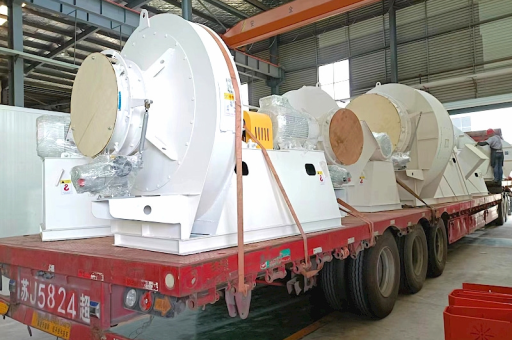
This article's table of contents introduction:
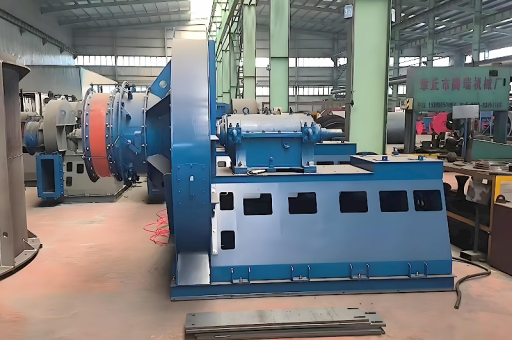
- Table of Contents
- Introduction: The Critical Role of High-Power Exhaust Systems
- Technical Specifications: What Makes a 55kW Centrifugal Blower Unique?
- Core Working Principle: From Air Intake to Forced Draft
- Key Applications: Why Boilers Depend on This Specific Fan
- Design Features: Material Selection for High-Temperature & Corrosive Gases
- Energy Efficiency & Variable Speed Control (VFD) Integration
- Installation Best Practices: Ductwork, Vibration Damping, and Safety
- Common Faults, Troubleshooting, and Preventive Maintenance Schedule
- Why 55kW? Sizing Calculations for Commercial & Industrial Boilers
- Frequently Asked Questions (FAQ)
- Conclusion: Optimizing Your Boiler System with the Right Fan
Table of Contents
- Introduction: The Critical Role of High-Power Exhaust Systems
- Technical Specifications: What Makes a 55kW Centrifugal Blower Unique?
- Core Working Principle: From Air Intake to Forced Draft
- Key Applications: Why Boilers Depend on This Specific Fan
- Design Features: Material Selection for High-Temperature & Corrosive Gases
- Energy Efficiency & Variable Speed Control (VFD) Integration
- Installation Best Practices: Ductwork, Vibration Damping, and Safety
- Common Faults, Troubleshooting, and Preventive Maintenance Schedule
- Why 55kW? Sizing Calculations for Commercial & Industrial Boilers
- Frequently Asked Questions (FAQ)
- Conclusion: Optimizing Your Boiler System with the Right Fan
Introduction: The Critical Role of High-Power Exhaust Systems
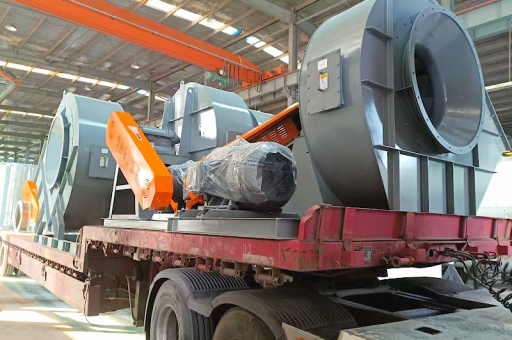
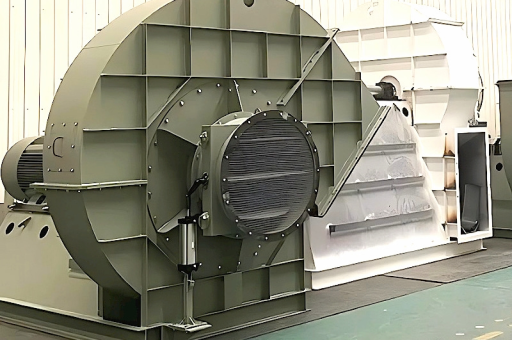
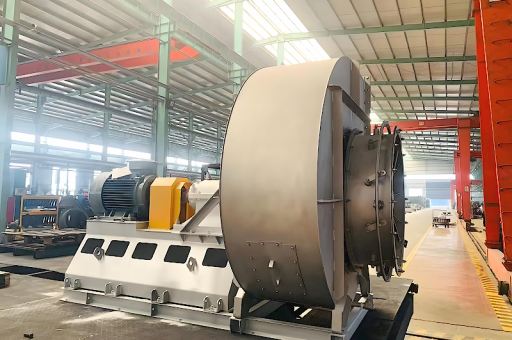
In any large-scale industrial boiler system—whether used in power plants, heavy manufacturing, or district heating—the exhaust fan is not merely an accessory; it is a critical component that directly impacts combustion efficiency, system pressure, and operational safety. The 55kW Centrifugal Blower Boiler Exhaust Fan specifically occupies a sweet spot in the market: powerful enough to handle high static pressure requirements of large boilers, yet energy-optimized enough to avoid the skyrocketing operational costs of significantly larger units. This guide provides an in-depth, SEO-optimized technical analysis of this fan type, focusing on real-world performance, engineering principles, and long-term reliability.
Technical Specifications: What Makes a 55kW Centrifugal Blower Unique?
When engineers search for a "55kW Centrifugal Blower", they are typically looking for a machine that delivers a specific combination of airflow and pressure. Here are the standard parameters for a boiler exhaust variant:
- Power Rating: 55 kW (approx. 74 HP)
- Airflow (Volume): Typically 30,000 to 60,000 m³/h (depending on impeller design and RPM)
- Static Pressure: 3,000 to 6,000 Pa (12 to 24 inches w.g.)
- Impeller Type: Backward-curved or radial (for handling particulate-laden exhaust).
- Speed: 1,450 to 2,950 RPM (depending on VFD control).
- Maximum Operating Temperature: 200°C to 400°C (with thermal insulation and shaft cooling).
The key differentiator for a boiler exhaust fan versus a standard HVAC fan is its ability to handle hot, slightly corrosive gases at high static pressure without mechanical failure. The 55kW rating ensures that even with filter loading or duct resistance, the fan can maintain the required draft.
Core Working Principle: From Air Intake to Forced Draft
Unlike axial fans which move air parallel to the shaft, the centrifugal blower changes the air direction by 90 degrees. Here's the step-by-step process:
- Step 1: Air Inlet. Hot flue gases from the boiler enter the fan via the inlet cone.
- Step 2: Impeller Acceleration. The rotating impeller (with backward-curved blades) uses centrifugal force to accelerate the gas outward.
- Step 3: Energy Conversion. As the gas reaches the scroll housing (volute), the kinetic energy is converted into static pressure.
- Step 4: Exhaust Discharge. The pressurized gas exits through the outlet duct, overcoming resistance from dampers, scrubbers, or chimney stacks.
Why this matters: The 55kW power input is specifically calculated to overcome the system resistance curve of a typical medium-to-large industrial boiler, ensuring consistent negative draft (for induced draft fans) or positive pressure (for forced draft fans) without stalling the combustion process.
Key Applications: Why Boilers Depend on This Specific Fan
The 55kW Centrifugal Blower is not a one-size-fits-all product. It is specifically engineered for:
- Industrial Steam Boilers: Maintaining draft in high-pressure steam systems (10-25 tons/hour).
- Thermal Oxidizers: Exhausting treated hot gas safely.
- Biomass Boilers: Handling ash-laden exhaust where abrasion resistance is critical.
- Waste Heat Recovery Systems: Moving gas through HRSG units.
- Solvent Recovery Systems: Explosion-proof configurations for flammable vapor exhaust.
Expert Note: If your boiler system requires a static pressure exceeding 5,000 Pa or temperatures above 400°C, you may need a specialized heavy-duty radial blower; the standard 55kW backward-curved design is optimal for standard industrial exhaust.
Design Features: Material Selection for High-Temperature & Corrosive Gases
A standard centrifugal fan fails quickly in boiler exhaust due to thermal expansion, corrosion, and vibration. The industrial-grade 55kW boiler fan incorporates:
- Impeller Material: Q345R or Stainless Steel 316L for temperatures above 250°C. For extremely corrosive exhaust (e.g., biogas or sulfur-heavy fuels), duplex stainless steel is used.
- Shaft Coupling: High-flexible coupling with heat slinger to prevent bearing overheating.
- Housing: Reinforced carbon steel with a drain plug for condensation removal.
- Bearing System: Self-aligning spherical roller bearings with continuous grease lubrication.
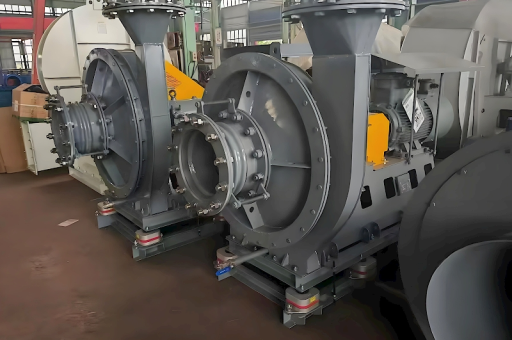
- Vibration Isolation: Inertia base frames with spring vibration isolators (necessary for roof-top installations).
Design Insight: The spark-resistant construction (aluminum impeller or copper-tipped blades) is often requested for boiler exhaust to prevent ignition of unburned fuel particles.
Energy Efficiency & Variable Speed Control (VFD) Integration
A fixed-speed 55kW motor running continuously can cost tens of thousands of dollars annually in electricity. Modern VFD (Variable Frequency Drive) integration can reduce energy consumption by 30-40%. Here is the calculation:
- Affinity Laws: Flow ∝ Speed; Pressure ∝ Speed²; Power ∝ Speed³.
- Example: Reducing speed to 80% reduces power consumption to 51.2% of rated power.
- Payback Period: For a 55kW fan running 6,000 hours/year at $0.12/kWh, a VFD upgrade often pays back within 12-18 months through reduced energy bills and reduced mechanical wear.
Recommendation: Always specify a heavy-duty HVAC VFD with sinusoidal output filters to protect the motor windings from reflected wave voltages.
Installation Best Practices: Ductwork, Vibration Damping, and Safety
Improper installation is the number one cause of premature fan failure. Follow these guidelines:
- Ductwork Alignment: Ensure zero axial misalignment between the fan inlet and ducting. Use flexible connectors to absorb thermal expansion.
- Base Isolation: The fan-base must be a reinforced concrete inertia pad weighing at least 3 times the fan weight.
- Inlet Damper: Install a modulating inlet vane damper (not outlet damper) to control airflow without excessive energy loss.
- Safety Guards: Even though it's a blower, safety mesh guards are mandatory per OSHA 1910.212 on the inlet and shaft coupling.
- Drainage: The volute must have a bottom drain to prevent acid condensate (sulfuric acid formation in coal boilers) from pooling.
Common Faults, Troubleshooting, and Preventive Maintenance Schedule
Faults & Solutions:
| Fault | Likely Cause | Solution |
|---|---|---|
| Excessive Vibration | Impeller imbalance due to dust buildup | Clean blades; rebalance rotor |
| Motor Overload | Duct blockage or damper closed | Inspect dampers; clean ductwork |
| Bearing Overheating | Lack of lubrication or misalignment | Regrease; check shaft coupling |
| Low Airflow | Fan rotating wrong direction | Swap any two power leads |
| Noise Increase | Cavitation or inlet vortex | Install anti-vortex rings; reduce speed |
Preventive Maintenance Schedule:
- Weekly: Check vibration levels (maintain < 4.5 mm/s RMS).
- Monthly: Inspect belt tension (if belt-driven); clean inlet screen.
- Quarterly: Grease bearings (check for grease contamination); inspect impeller for erosion.
- Annually: Perform full fan balancing; replace seals; test emergency stop.
Why 55kW? Sizing Calculations for Commercial & Industrial Boilers
Why not 45kW or 75kW? The 55kW rating is a standard optimized for:
- System Pressure Drop: A typical boiler exhaust system (including duct, cyclone, bag filter, and stack) creates a loss of 3,500-5,000 Pa.
- Capacity Matching: A 55kW motor perfectly drives an impeller that moves 40,000-50,000 m³/h at 4,000 Pa—a common requirement for a 10-ton boiler.
- Motor Efficiency: Modern IE4 (Super Premium Efficiency) 55kW motors operate at >95% efficiency, offering the best cost-to-efficiency ratio.
Design Tip: If your actual system resistance is lower than estimated, consider running the fan at half-speed with a VFD. A 55kW fan running at 75% speed uses only 23.2 kW.
Frequently Asked Questions (FAQ)
Q1: Can a 55kW centrifugal fan be used for coal boiler exhaust with high dust content? Answer: Yes, but you must order the fan with an abrasion-resistant wear liner (e.g., ceramic tile or AR400 steel) and a radial impeller design rather than backward-curved, to prevent dust accumulation on blades.
Q2: What is the difference between an Induced Draft (ID) fan and a Forced Draft (FD) fan? Answer: An ID fan (typically used for boiler exhaust) pulls flue gas from the boiler, creating negative pressure. The 55kW fan described here is designed primarily for ID service. An FD fan pushes air into the burner, requiring different pressure characteristics.
Q3: How noisy is a 55kW centrifugal blower? Answer: At full load, sound levels range from 85 to 95 dB(A) at 1 meter. For indoor installations, an acoustic enclosure or silencer is recommended. Ensure hearing protection is worn per OSHA guidelines.
Q4: Can I retrofit this fan into an existing boiler system? Answer: Yes, but you must recalculate the system curve. A 55kW fan may be oversized or undersized if your ductwork has changed. Always perform a field airflow survey before installation.
Q5: What is the lifespan of a 55kW boiler exhaust fan? Answer: With proper maintenance (including bearing greasing and impeller balancing), these fans typically operate for 15-20 years or more. The most common end-of-life indicator is casing corrosion or shaft fatigue.
Conclusion: Optimizing Your Boiler System with the Right Fan
Selecting the 55kW Centrifugal Blower Boiler Exhaust Fan is not simply a matter of matching horsepower to a motor frame. It requires an understanding of temperature margins, static pressure requirements, and material compatibility. Whether you are upgrading an existing coal-fired boiler or engineering a new biomass waste-to-energy plant, this fan size offers a proven balance between initial capital cost and long-term operating efficiency.
To ensure longevity, prioritize these three elements in your procurement specification:
- IE4 55kW Motor with VFD-ready winding insulation.
- Heavy-duty impeller made from corrosion-resistant SS316L.
- Full vibration monitoring hardware (transducers and PLC integration).
For a custom quotation or to verify your system curve match, consult a licensed HVAC engineer specializing in industrial centrifugal fans. The right exhaust fan does not just move air—it protects your boiler's combustion stability and your facility's bottom line.