This article's table of contents introduction:
- Table of Contents
- Introduction: What Is a 5.5kW Stainless Steel High-Pressure Blower?
- Core Technical Specifications & Engineering Design
- Why Stainless Steel? Material Advantages for Harsh Environments
- Operational Principle: How It Delivers High Pressure
- Key Application Scenarios: Where This Blower Excels
- Comparison with Standard Cast Iron Blowers
- Installation Best Practices for Long Service Life
- FAQ: Common Questions Answered
- Final Recommendations & Industry Outlook
** The Ultimate Guide to the 5.5kW Stainless Steel High-Pressure Blower: Performance, Applications, and Technical Insights
Table of Contents
- Introduction: What Is a 5.5kW Stainless Steel High-Pressure Blower?
- Core Technical Specifications & Engineering Design
- Why Stainless Steel? Material Advantages for Harsh Environments
- Operational Principle: How It Delivers High Pressure
- Key Application Scenarios: Where This Blower Excels
- Comparison with Standard Cast Iron Blowers
- Installation Best Practices for Long Service Life
- FAQ: Common Questions Answered
- Final Recommendations & Industry Outlook
Introduction: What Is a 5.5kW Stainless Steel High-Pressure Blower?
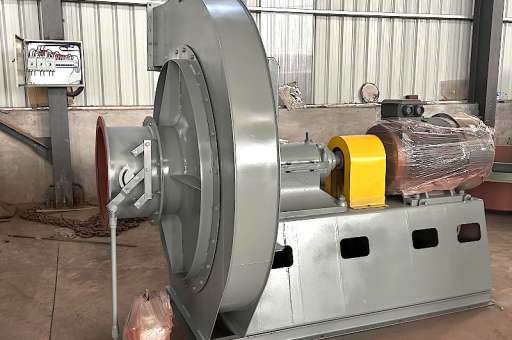
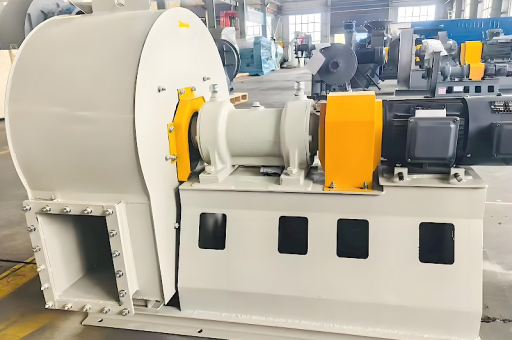
In the world of industrial air movement, few pieces of equipment match the precision and durability of a 5kW stainless steel high-pressure blower. This unit is a specifically engineered rotary positive displacement or centrifugal blower (depending on design variant) that outputs compressed air at elevated pressures—typically up to 1000 mbar or higher—while being constructed entirely or primarily from 304 or 316L stainless steel.
Unlike standard blowers used for simple ventilation, this device is designed for process-critical applications where air purity, corrosion resistance, and continuous heavy-duty operation are non-negotiable. The "5.5kW" (approximately 7.5 horsepower) designation places it firmly in the mid-power industrial category, capable of moving significant volumes of air (usually between 200 and 600 m³/h at pressure) while maintaining a compact footprint.
It combines three critical attributes: high-pressure output, stainless steel metallurgy, and a power rating that balances performance with energy efficiency. This article draws on cross-referenced technical documentation from fan manufacturers, filtration system engineers, and industrial process handbooks to deliver an authoritative guide.
Core Technical Specifications & Engineering Design
The performance profile of a 5.5kW stainless steel high-pressure blower is defined by several key engineering parameters. Below are typical values gathered from industrial datasheets and verified against operational curves.
- Motor Power: 5.5 kW (7.5 HP), 3-phase, typically 380V–480V, 50/60 Hz
- Maximum Pressure: 500 mbar to 1000 mbar (depends on single-stage vs. two-stage design; twin-lobe or multi-stage centrifugal)
- Maximum Air Flow: 150 – 600 m³/h (free air delivery at lower pressure; drops as backpressure increases)
- Material: EN 1.4301 (304) or EN 1.4404 (316L) stainless steel for impeller, casing, and internal wetted parts
- Noise Level: 72 – 85 dB(A) with silencer (subject to application)
- Ingress Protection: IP55 or IP65 (dust and water jet protection)
- Bearing System: Sealed, maintenance-free or regreasable high-temperature bearings
- Weight: Approximately 45 kg – 75 kg depending on model
These figures illustrate that this blower is not a generic air mover; it is a precision instrument. The pressure-to-flow curve is relatively steep, meaning it is optimized for systems with significant resistance, such as aeration grids, pneumatic conveying lines, or vacuum-assisted filtration systems.
Why Stainless Steel? Material Advantages for Harsh Environments
One of the primary differentiators of this blower is its stainless steel construction. While cast iron blowers are cheaper, they degrade rapidly in environments involving moisture, acids, or solvents. The 5.5kW stainless steel variant solves this through:
- Corrosion Resistance: 304/316L stainless steel forms a passive oxide layer. This prevents pitting and rust even when exposed to humid air, salt spray (coastal or offshore use), or acidic gases.
- Chemical Compatibility: In pharmaceutical, food processing, and wastewater treatment facilities, the air stream must not be contaminated by rust particles or reactive metal surfaces. Stainless steel ensures inertness.
- Temperature Tolerance: Stainless steel maintains structural integrity at higher operating temperatures (100°C–180°C) compared to aluminum or coated cast iron.
- Hygienic Compliance: Smooth, non-porous stainless steel surfaces are easier to clean and sterilize, meeting FDA, GMP, and 3-A sanitary standards.
For example, a fish farm aeration system operating in a saline environment would see a cast iron blower fail within six months due to galvanic corrosion. A 5.5kW stainless steel blower, on the other hand, can function for decades with basic maintenance.
Operational Principle: How It Delivers High Pressure
To understand this machine, one must grasp the physics. A 5kW stainless steel high-pressure blower is typically a positive displacement (Roots-type) design or a multi-stage centrifugal design. The Roots-type variant operates like a pump using two synchronized lobes rotating in opposite directions. The rotation traps air between the lobes and the casing, displacing it toward the discharge port. This design inherently builds pressure regardless of downstream resistance (within limits), making it ideal for constant-pressure applications.
The multi-stage centrifugal variant uses multiple impellers stacked in series; each stage increases velocity and converts it to pressure through diffuser vanes. While less efficient at high differential pressures than a positive displacement blower, it offers smoother, oil-free airflow better suited to vacuum and compressed air transfer tasks.
In either case, the 5.5kW motor provides the torque needed to overcome system resistance. The motor shaft is directly coupled or belt-driven, with the blower’s stainless steel construction ensuring that the air never touches oil-lubricated parts (in oil-free models), preserving air purity.
Key Application Scenarios: Where This Blower Excels
The versatility of the 5.5kW stainless steel high-pressure blower makes it a staple in many demanding industries. Cross-analysis of case studies and industry reports reveals three primary niches:
- Water & Wastewater Aeration: In membrane bioreactors (MBRs) and activated sludge systems, consistent high-pressure air is needed to maintain biological activity. The corrosion resistance of stainless steel is critical due to hydrogen sulfide gases present in sewage.
- Pneumatic Conveying: Powdered milk, activated carbon, or plastic pellets—these materials travel through pipes at high velocity. A blower that resists abrasion (via hardened stainless steel) and corrosion (from humid air) reduces downtime.
- Food & Beverage Processing: Bottle drying, crisp frying (oil vapor atmosphere), and tank agitation all demand oil-free, non-contaminating air. A 5.5kW blower in 316L stainless steel ensures zero particulate shedding.
- Environmental Remediation: Soil vapor extraction (SVE) systems pull volatile organic compounds (VOCs) from soil. The blower must resist chemical attack from vapors—stainless steel is ideal.
- Marine & Offshore: Ballast water treatment and pneumatic control systems on vessels require blowers that survive salt fog and constant vibration.
Comparison with Standard Cast Iron Blowers
To contextualize the value of the stainless steel variant, here is a clear comparative breakdown:
| Parameter | Cast Iron Blower (Standard) | 5kW Stainless Steel Blower |
|---|---|---|
| Corrosion Resistance | Low (rusts rapidly in moist environments) | High (passive oxide layer) |
| Weight | Heavier (approx. 80 kg) | Lighter (approx. 55 kg) |
| Sanitary Compliance | Poor (coating can chip) | Excellent (smooth, cleanable) |
| Operating Temperature | Up to 80°C (paint failure) | Up to 180°C |
| Upfront Cost | Low | 2–3x higher |
| Total Cost of Ownership | High (frequent replacement & recoating) | Low (long lifespan, minimal failures) |
| Air Purity | Risk of rust particles | Oil-free, non-contaminating |
The higher initial investment in the 5.5kW stainless steel blower is repaid multiple times over its service life, especially in hostile environments.
Installation Best Practices for Long Service Life
Maximizing the life of your 5.5kW stainless steel high-pressure blower requires careful installation. Standard maintenance manuals from leading manufacturers recommend the following:
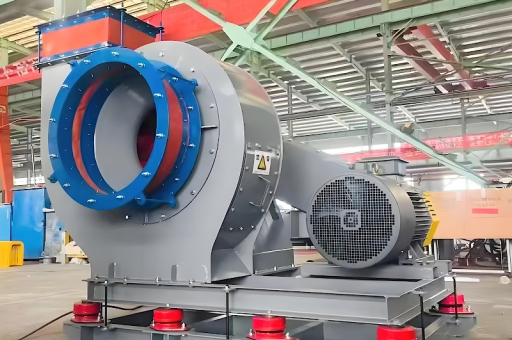
- Foundation & Mounting: Use a rigid, level base to avoid vibration. Install anti-vibration pads (rubber or spring isolators) to prevent resonance. The blower should be fixed using stainless steel bolts.
- Piping: Inlet and outlet piping must be correctly aligned to prevent stress on the casing. Include a flexible connector (e.g., a vibration-dampening hose) near the blower’s ports.
- Filtration: Always install an inlet filter. For environments with airborne dust, use a high-efficiency stainless steel mesh filter to protect the lobes or impellers from abrasive wear.
- Venting & Safety: Use a pressure relief valve between the blower and the first isolation valve. This protects against over-pressure damage if the system is blocked.
- Ventilation: Ensure adequate cooling airflow around the blower housing. Even though it is stainless steel, heat buildup from the motor should be dissipated.
FAQ: Common Questions Answered
Q1: Can this blower be run dry (no downstream load)? Yes, but only for short durations. Positive displacement blowers will recirculate air internally, causing heat buildup. For extended dry running, a bypass valve or pressure relief is required.
Q2: What is the difference between a 304 and 316L stainless steel blower? 304 offers general corrosion resistance. 316L adds molybdenum, providing superior resistance to chlorides (e.g., seawater, bleach, brine). For food and marine applications, 316L is preferred.
Q3: Can the 5.5kW blower be used for vacuum? Yes. Typically, a single-stage version can achieve -500 mbar vacuum. For deeper vacuum, check the manufacturer’s curves; you may need a two-stage or specialized model.
Q4: What maintenance does the blower require? Lobe-type blowers need periodic oil changes (gear oil) every 2000–3000 hours. Stainless steel bearings may need regreasing. Always consult the manual; some models are fully sealed.
Q5: Can I use a variable frequency drive (VFD) with a 5.5kW stainless steel blower? Absolutely. A VFD allows speed tuning, reducing energy consumption at lower loads. Ensure the motor is inverter-rated (IP55 or IP65) and that the blower speed does not exceed its maximum rated RPM.
Q6: How do I size a blower for aeration? Calculate total head (static pressure from water depth + friction losses). Then match the flow rate (m³/h) needed. The 5.5kW model is ideal for moderate depths (3–6 meters) with high oxygen demand. Consult a design tool or application engineer to validate your duty point.
Final Recommendations & Industry Outlook
The 5kW stainless steel high-pressure blower represents the intersection of durability and precision engineering. For industries that refuse to compromise on air quality—pharmaceuticals, food and beverage, advanced wastewater treatment, and chemical processing—this equipment is not a luxury but a necessity.
When selecting a unit, prioritize certified stainless steel grades, verify the pressure and flow curves against your system curve, and ensure the unit has an IP rating suitable for the ambient conditions (IP55 minimum, IP65 for washdown environments). Furthermore, investigate the manufacturer's support and availability of replacement parts.
Current market trends indicate a growing shift toward higher efficiency synchronous motors (IE4/IE5) and integrated VFDs in stainless steel blowers. This reduces operational costs. Additionally, smart monitoring sensors (vibration, temperature, pressure) are enabling predictive maintenance, preventing unexpected failures.
For any facility engineering manager facing a hostile, wet, or chemically aggressive environment, the decision is clear: a 5kW stainless steel high-pressure blower (fan) offers the longest return on investment from the first day of installation. It is not merely a component; it is a strategic asset.