This article's table of contents introduction:
- Table of Contents
- Introduction: Defining the High-Pressure Centrifugal Blower Standard
- Technical Deep Dive: Decoding 900 mmAq and 19,500 m³/h
- Core Engineering Components and Design Philosophy
- Application Landscape: Where This Blower Excels
- Performance Optimization and Efficiency Metrics
- Frequently Asked Questions (FAQ)
- Conclusion: The Future of Industrial Air Movement
** The Power of Precision: Engineering Insights into the 900 mmAq, 19,500 m³/h High-Pressure Centrifugal Blower
Table of Contents
- Introduction: Defining the High-Pressure Centrifugal Blower Standard
- Technical Deep Dive: Decoding 900 mmAq and 19,500 m³/h
- Core Engineering Components and Design Philosophy
- Application Landscape: Where This Blower Excels
- Performance Optimization and Efficiency Metrics
- Frequently Asked Questions (FAQ)
- Conclusion: The Future of Industrial Air Movement
Introduction: Defining the High-Pressure Centrifugal Blower Standard
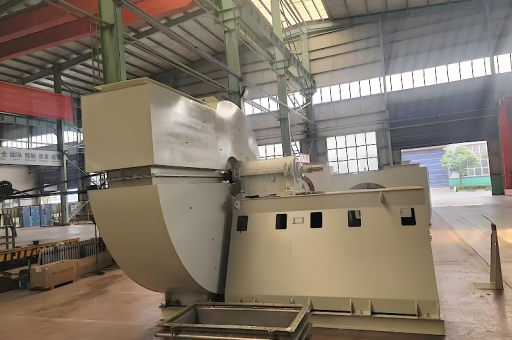
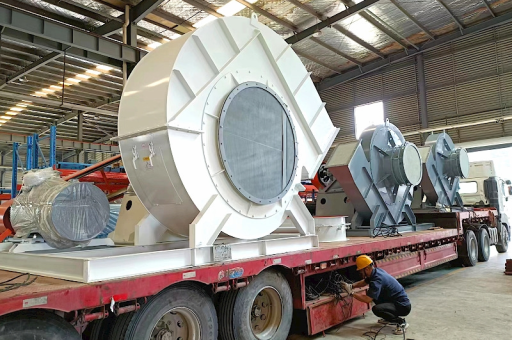
In the demanding world of industrial air movement, the specification “900 mmAq, 19,500 m³/h” represents a critical benchmark. This is not merely a fan; it is a precision-engineered High-Pressure Centrifugal Blower designed for applications where standard ventilation equipment fails. The term “900 mmAq” refers to the static pressure (in millimeters of water gauge) the blower can overcome, which is approximately 8.8 kPa. The “19,500 m³/h” denotes the volumetric flow rate at that pressure. This combination indicates a machine operating at the intersection of high resistance and high volume—a niche requiring robust aerodynamic design, heavy-duty construction, and sophisticated motor control. For engineers and facility managers, understanding the balance between these two parameters is the foundation of system reliability.
Technical Deep Dive: Decoding 900 mmAq and 19,500 m³/h
To appreciate the capability of this blower, one must understand the physics behind its rating.
-
Pressure (900 mmAq or 8.8 kPa): This is the static pressure, the resistance the blower must overcome to move air through ductwork, filters, scrubbers, or long piping runs. 900 mmAq (millimeters of water column) is a high static pressure, typical in pneumatic conveying, cement aeration, or wastewater aeration where deep tanks create significant backpressure. In the International System of Units (SI), this translates to approximately 8,829 Pascals. Achieving this pressure requires a high tip speed on the impeller, typically necessitating a direct-drive connection to a motor running at 2,900 to 3,600 RPM.
-
Flow (19,500 m³/h): This is the volumetric flow rate, or how much air the blower moves in one hour. This volume translates to approximately 325 cubic meters per minute or 11,475 cubic feet per minute (CFM). 19,500 m³/h is substantial—suitable for central vacuum systems in large factories or for aeration in medium-sized wastewater treatment plants.
-
The Performance Curve: The critical relationship is the Pressure-Flow (P-Q) curve. For a centrifugal blower, as pressure increases, flow decreases. At 900 mmAq, achieving a flow of 19,500 m³/h requires a specific impeller diameter and scroll design. If the system resistance rises above 900 mmAq, the flow will drop; if it falls below, the flow will surge. Understanding this characteristic is vital to avoid motor overload or system instability.
Core Engineering Components and Design Philosophy
A High-Pressure Centrifugal Blower operating at this specification is not just a bigger version of a standard fan. It incorporates specific engineering features:
-
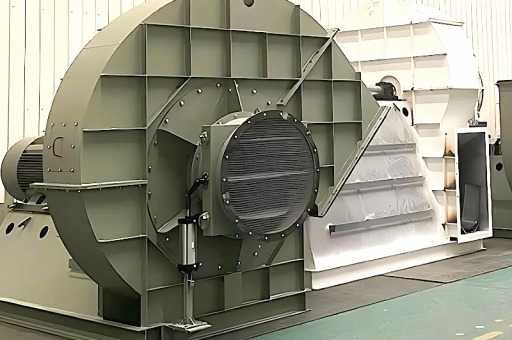
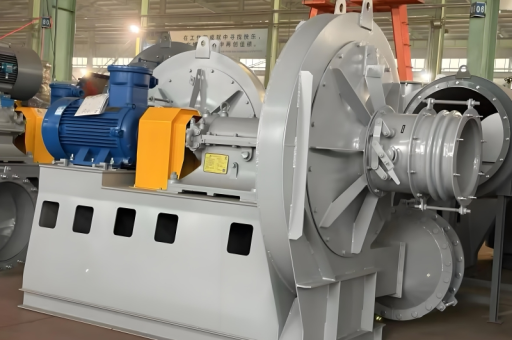
Impeller Design: The impeller is the heart of the unit. For 900 mmAq, the blades are typically backward-curved (airfoil or single-thickness). Backward-curved blades are non-overloading (the motor won't burn out at low system resistance) and offer high efficiency (up to 85%). The impeller must be dynamically balanced to ISO 1940 G2.5 or better to handle the high rotational speed.
-
Housing & Volute: The housing is engineered from heavy-gauge steel (often 8mm to 10mm thickness) to withstand the internal pressure of 900 mmAq. The volute design must efficiently convert velocity energy into static pressure.
-
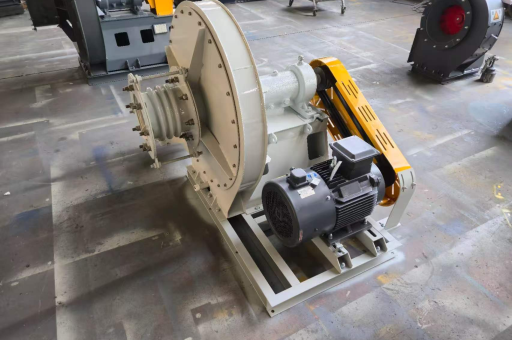
Drive Configuration: To maintain constant speed under varying load, direct drive is preferred. An IE3 or IE4 class motor is common to reduce energy costs. Variable Frequency Drives (VFDs) are often integrated to allow precise control of flow without throttling.
-
Sealing & Bearings: High-pressure systems are prone to air leaks. Shaft seals must be robust (labyrinth or lip seals). Bearings are typically heavy-duty spherical roller bearings, rated for L10 life exceeding 100,000 hours.
Application Landscape: Where This Blower Excels
The 19,500 m³/h @ 900 mmAq range is a “goldilocks” zone for several critical industrial processes:
- Pneumatic Conveying (Dense Phase): Transporting powders (flour, cement, plastic pellets) over long distances requires high pressure to push material through pipes. This blower provides the necessary head pressure.
- Wastewater Treatment (Diffused Aeration): Fine bubble diffusers sit at the bottom of deep tanks. The hydrostatic head from the water plus the friction loss in the pipework requires precisely this pressure range.
- Industrial Dust Collection: Centralized systems with long duct runs and high-efficiency cartridge filters often need 700–950 mmAq to maintain capture velocity at the hoods.
- Flue Gas Desulfurization (FGD) in Power Plants: Small plants or boosters require consistent pressure injection of oxidation air into limestone slurry tanks.
Performance Optimization and Efficiency Metrics
Operating a blower at this scale consumes significant energy. Optimization is key.
- Efficiency: Check the Isentropic Efficiency (Gas Power / Shaft Power). For a 900 mmAq blower driving 19,500 m³/h, the required shaft power is roughly calculated:
Power (kW) = (Flow m³/s × Pressure Pa) / (1000 × Efficiency). Assuming 80% efficiency, this unit requires approximately 60 kW. - VFD Control: Instead of using inlet guide vanes or damper throttling (which wastes energy), a VFD adjusts the motor speed to match demand directly. This can reduce energy consumption by 35% at 80% flow.
- Maintenance: Regularly check bearing vibration (ISO 10816), belt tension (if belt-driven), and impeller cleanliness. A 1mm buildup of dust on the impeller can reduce efficiency by 3-5%.
Frequently Asked Questions (FAQ)
Q1: What is the difference between a 900 mmAq centrifugal blower and a compressor? A: Pressure. Compressors typically generate pressures above 1,000 mmAq (0.1 bar) and often exceed 10 bar. A blower in this range (900 mmAq or 0.09 bar) is classified as a low-pressure compressor or high-volume blower. It moves large volumes but compresses gas very minimally.
Q2: Can I use this blower for vacuum (suction) applications? A: Yes, but with limitations. The fan you mentioned (fan) can be used in a vacuum service by reversing the inlet and outlet, but the pressure rating will be different. Standard centrifugal blowers are rated for pressure. For vacuum, you need a unit rated specifically for vacuum duty (e.g., 600 mmHg) to prevent housing collapse. This unit is ideal for pressure applications (e.g., pushing air into a tank).
Q3: How do I calculate the actual power consumption for a unit running at 19,500 m³/h and 900 mmAq?
A: Use the formula:
Shaft Power (kW) = [Flow (m³/s) × Pressure (Pa)] / (1000 × Efficiency).
Flow = 19,500 / 3600 = 5.416 m³/s. Pressure = 900 mmAq × 9.81 = 8,829 Pa.
Shaft Power = (5.416 × 8,829) / (1000 × 0.80) = 59.8 kW.
Add 5-10% for mechanical losses (belts, bearings, motor efficiency) to get the electrical input power.
Q4: What happens if the system resistance is lower than 900 mmAq? A: The blower will operate at a higher flow point on its curve. If the impeller has backward-curved blades, the motor power will decrease. If it has forward-curved blades (which are rare at this pressure), the motor power could spike and cause overload. Always check the P-Q curve.
Q5: What is the typical noise level for a blower of this size? A: Expect 85 to 95 dB(A) at 1 meter. High-pressure blowers are always loud due to the high tip speeds (turbulence + mechanical noise). You should install an inlet silencer and a flexible connector.
Conclusion: The Future of Industrial Air Movement
The 900 mmAq, 19,500 m³/h High-Pressure Centrifugal Blower is a workhorse of modern industry. It represents a perfect balance between high static head and substantial volume. As industries push toward energy efficiency, the integration of IE4 motors, VFDs, and aerodynamic impeller designs will continue to evolve. For engineers designing pneumatic conveying lines or wastewater aeration systems, selecting a blower with a stable, non-overloading curve and robust construction is non-negotiable. The specification is clear; the application is demanding; the solution is a high-quality centrifugal blower from a reliable fan manufacturer. Whether you are replacing an aging unit or designing a new system, understanding this exact pressure-flow relationship will determine your operational success.