
This article's table of contents introduction:
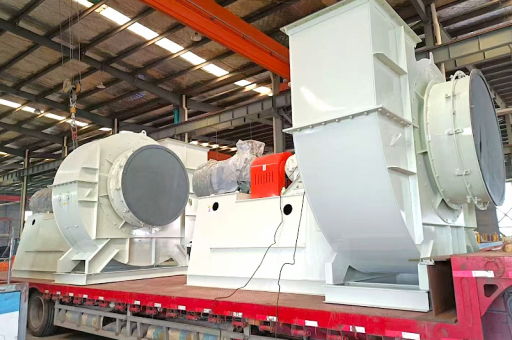
- Decoding the Name: "Single Suction Heavy Duty Antiwear Cement Mill Industrial Centrifugal Blower Fan"
- Primary Function:
- Key Design Features (The "Antiwear" Part):
- Where is it used in a Cement Plant? (Beyond the Mill)
- Key Specifications (Typical for a Cement Mill Fan):
- Summary Table:
This is a highly specific piece of industrial equipment. Let's break down the name and define what this machine actually is, what it does, and where it's used.
The name describes a specialized high-pressure centrifugal fan designed for the harshest environments in the cement industry.
Decoding the Name: "Single Suction Heavy Duty Antiwear Cement Mill Industrial Centrifugal Blower Fan"
Let's break it down piece by piece:
- Centrifugal Blower Fan: This is the core type. It uses a rotating impeller to accelerate air radially outward, increasing its velocity and pressure.
- Single Suction: Air enters the fan from only one side of the impeller. This is the standard configuration for most industrial fans, as opposed to "double suction" which pulls air from both sides for much higher volumes.
- Heavy Duty: This indicates the fan is built to withstand continuous, 24/7 operation with high stress, heavy vibration, and elevated temperatures.
- Antiwear: This is the most critical feature. The fan is specifically designed with materials and coatings to resist erosion from abrasive dust (like cement raw meal, clinker dust, and fly ash).
- Cement Mill: This is the specific application. It's designed for use on a cement mill (the large rotating drum that grinds clinker into cement powder). These mills generate a massive amount of fine, hot, and highly abrasive dust.
- Industrial: It's not for commercial or residential use. It's for large-scale manufacturing.
Primary Function:
The fan's main purpose is to provide the air and material flow for the grinding process inside the cement mill. It's often called a mill exhaust fan or a mill separator fan.
- Ventilation: It extracts hot air, moisture, and fine cement dust from the mill.
- Material Transport: It creates a vacuum to pull fine, ground cement powder up and out of the mill.
- Classification: In a closed-circuit mill, this fan sends the air-powder mixture to a dynamic separator. The separator spins the fines (product) into a collector, while returning the coarse particles back to the mill for further grinding. The fan provides the pressure and volume needed for this entire circuit.
Key Design Features (The "Antiwear" Part):
This is what makes this fan different from a standard industrial fan. The "antiwear" construction typically includes:
- Thicker Wall Sections: The fan housing and impeller blades are made from much thicker steel (e.g., 10mm, 12mm, or even thicker) compared to a standard fan.
- Wear Liners: The housing is lined with replaceable, bolt-in wear plates made from high-chrome iron, ceramic tiles, or hardened steel. These are the sacrificial parts that take the abrasion.
- Impeller Protection:
- Hardfacing: The leading edges of the impeller blades are welded with a layer of extremely hard, wear-resistant material (e.g., Stellite or chromium carbide).
- Full Blade Liners: Thin plates of wear-resistant material are sometimes bolted or welded to the entire surface of the blades.
- Backplate & Inlet Cone Liners: These areas are also vulnerable to erosion and are protected.
- Shaft Seal: A robust seal (e.g., a labyrinth seal or a purge air system) prevents dust from leaking along the shaft into the bearings.
- Robust Bearing Housing: Heavy-duty, spherical roller bearings housed in a robust pillow block to absorb high loads and vibration.
- Dynamic Balancing: The impeller is dynamically balanced to a very high standard (e.g., G2.5 or G1.0) to minimize vibration at high speeds (typically 1000–1500 RPM for a cement mill fan).
Where is it used in a Cement Plant? (Beyond the Mill)
While specifically called a "Cement Mill" fan, these "Single Suction Heavy Duty Antiwear" centrifugal fans are also used in other critical, high-dust areas:
- Raw Mill Fan: On the mill that grinds raw limestone and clay.
- Kiln Induced Draft (ID) Fan: Pulls hot gases through the preheater tower and rotary kiln (though this one is often exposed to hot, corrosive gases and is more of a "process gas fan").
- Coal Mill Fan: Handles fine, abrasive coal dust.
- Clinker Cooler Fan (Air Quenching Cooler): Pushes air through the hot clinker.
Key Specifications (Typical for a Cement Mill Fan):
- Flow Rate (Volume): 100,000 – 750,000 m³/hr (or higher)
- Pressure: 1500 – 4000 Pa (or more)
- Speed: 750 – 1500 RPM
- Temperature: 80°C – 150°C (sometimes higher with high-temperature clinker)
- Material: Carbon steel (e.g., Q235 or ASTM A36) with high-chrome wear liners.
- Drive: Typically via a V-Belt drive or a direct coupling to a motor.
Summary Table:
| Feature | Description |
|---|---|
| Product Name | Single Suction Heavy Duty Antiwear Cement Mill Industrial Centrifugal Blower Fan |
| Type | High-pressure, abrasion-resistant centrifugal fan |
| Primary Use | Ventilation, material transport, and classification for cement mills |
| Key Feature | "Antiwear" - Resists erosion from abrasive cement dust |
| Materials | Thick steel housing + replaceable high-chrome or ceramic wear liners |
| Alternative Names | Mill exhaust fan, mill separator fan, mill dust collector fan |
| Industry | Cement manufacturing, minerals processing |
In short: You are looking at a very rugged, specialized piece of equipment built to survive in one of the most abrasive environments in heavy industry. It's not just a fan; it's a critical, heavy-duty component of the cement grinding process.





