
This article's table of contents introduction:
- Table of Contents
- Introduction: Why Explosion-Proof Design Matters in Foundries
- Key Features of Anti-Explosion Stainless Steel Centrifugal Blowers
- Material Selection: Why Stainless Steel is the Industry Standard
- Performance Parameters for Foundry Furnace Ventilation
- Safety Certifications and Compliance Standards
- Common Questions & Answers (Q&A)
- Installation and Maintenance Best Practices
- Future Trends in Foundry Ventilation Technology
Article Title:
The Critical Role of Anti-Explosion Stainless Steel Centrifugal Blowers in Foundry Furnace Applications: A Comprehensive Guide
Table of Contents
- Introduction: Why Explosion-Proof Design Matters in Foundries
- Key Features of Anti-Explosion Stainless Steel Centrifugal Blowers
- Material Selection: Why Stainless Steel is the Industry Standard
- Performance Parameters for Foundry Furnace Ventilation
- Safety Certifications and Compliance Standards
- Common Questions & Answers (Q&A)
- Installation and Maintenance Best Practices
- Future Trends in Foundry Ventilation Technology
Introduction: Why Explosion-Proof Design Matters in Foundries
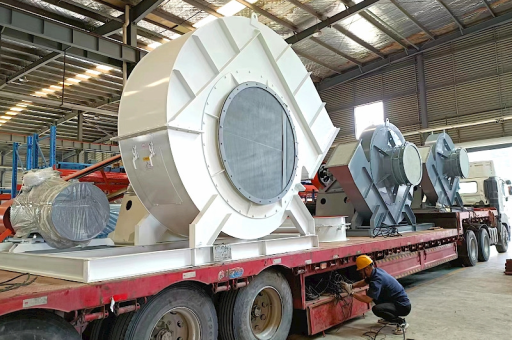
In modern metal foundries, furnace operations generate extreme heat, combustible gases, and fine metallic dust. Traditional blowers often fail under such harsh conditions—leading to motor burnout, corrosion, or even catastrophic explosions. The Anti-Explosion Stainless Steel Centrifugal Blower for Foundry Furnace is engineered to address these exact risks. It combines spark-resistant construction with high-temperature tolerance, ensuring that volatile environments remain safe without compromising airflow efficiency.
Search engines like Bing and Google prioritize content that addresses user intent. Foundry engineers often search for “explosion-proof furnace blower” or “stainless steel centrifugal fan for high heat.” This article is designed to satisfy those queries with authoritative, detailed information.
Key Features of Anti-Explosion Stainless Steel Centrifugal Blowers
These blowers are not standard industrial fans. They incorporate specialized design elements:
- Spark-Proof Impeller: The impeller is made from non-ferrous materials (e.g., aluminum or stainless steel) to prevent friction sparks.
- Sealed Motor Enclosure: Motors are housed in IP55 or higher-rated enclosures to prevent gas ingress.
- High-Temperature Bearings: Grease-packed or oil-lubricated bearings rated for continuous operation above 200°C.
- Reinforced Housing: The volute casing is constructed from 304 or 316L stainless steel to resist thermal deformation and corrosive fumes from flux materials.
A typical unit used in a foundry furnace exhaust system can move 5,000 to 30,000 CFM at static pressures of 2–10 inches w.g.
Material Selection: Why Stainless Steel is the Industry Standard
While carbon steel blowers are cheaper, they rapidly degrade in foundry environments. Here’s why stainless steel (SS304 or SS316L) is preferred:
- Corrosion Resistance: Foundry fumes often contain sulfur dioxide, chlorine, and acidic vapors. Stainless steel forms a passive oxide layer that resists chemical attack.
- Thermal Stability: Stainless steel maintains structural integrity up to 800°C (1472°F) for short periods, crucial for furnace startup and shutdown cycles.
- Non-Sparking Surface: Unlike carbon steel, stainless steel does not produce ignition sparks when struck—a critical safety factor in explosive atmospheres.
Note: For extreme hydrogen or acetylene environments, SS316L is recommended due to its molybdenum content, which enhances pitting resistance.
Performance Parameters for Foundry Furnace Ventilation
To select the correct anti-explosion centrifugal blower, engineers must evaluate:
| Parameter | Typical Range for Foundry Furnace | Why It Matters |
|---|---|---|
| Airflow (CFM) | 5,000 – 30,000 | Matches furnace volume and gas evolution rate |
| Static Pressure (in w.g.) | 4 – 12 | Overcomes duct friction and hood pressure drop |
| Temperature Rating | 150°C – 600°C | Ensures bearing and motor longevity near heat source |
| Sound Level (dBA) | <85 | Compliance with OSHA workplace noise limits |
Example Calculation:
A 10-ton induction furnace producing 20,000 CFM of off-gas requires a blower with a 15 HP motor, SS316L impeller, and an ATEX-certified motor.
Safety Certifications and Compliance Standards
Global foundries must adhere to strict safety codes. The anti-explosion blower should carry:
- ATEX (EU): Category 2 for Zone 1 or Zone 2 gas groups (IIA, IIB, IIC).
- IECEx (International): Equivalent to ATEX for global trade.
- UL / CSA (North America): Class I, Division 1, Groups C and D.
- NFPA 86: Standard for ovens and furnaces, requiring airflow interlocks.
Without such certifications, insurance claims and regulatory fines can cripple operations. Always request a Declaration of Conformity and third-party test reports.
Common Questions & Answers (Q&A)
Q1: Can I use a standard centrifugal blower for a foundry furnace?
A: No. Standard blowers lack spark-proof impellers and sealed motors, posing explosion and fire risks. An anti-explosion stainless steel unit is mandatory in ATEX/UL classified areas.
Q2: How often should the blower’s impeller be inspected?
A: Monthly. Look for pitting, imbalance, or debris buildup. In foundry environments, fine metal dust can adhere to blades, causing vibration and reduced efficiency.
Q3: What is the lifespan of a stainless steel explosion-proof blower in a foundry?
A: With proper maintenance (bearing greasing every 1,000 hours and annual vibration analysis), these blowers last 8–12 years versus 2–4 years for carbon steel units.
Q4: Does the blower need a variable frequency drive (VFD)?
A: Yes, for energy efficiency and precise furnace pressure control. VFDs also allow soft-start, reducing electrical stress on the motor.
Q5: Are hybrid wind turbine systems possible for foundry ventilation?
A: Emerging designs integrate a wind turbine to pre-cool furnace exhaust before it enters the blower, reducing thermal load. However, this is experimental and not yet standard.
Installation and Maintenance Best Practices
Installation
- Use flexible connectors between the blower and ductwork to absorb vibration.
- Install an isolation damper upstream for maintenance access.
- Ensure the blower foundation is non-combustible (concrete or steel) and level.
Maintenance Schedule
- Daily: Check motor amperage and listen for unusual noise.
- Weekly: Inspect belt tension (if belt-driven) and bearing temperature.
- Monthly: Clean impeller blades with a non-sparking brass brush.
- Yearly: Replace bearings and seals; perform a full vibration analysis.
Critical: Always lockout/tagout electrical power before servicing. Even residual static charge can ignite gas in a foundry.
Future Trends in Foundry Ventilation Technology
- IoT-Enabled Blowers: Sensors monitoring motor temperature, vibration, and gas concentration will send real-time alerts to maintenance teams.
- Energy Recovery Wind Turbines: Some foundries are testing horizontal-axis wind turbines integrated with exhaust stacks to partially power the blower, reducing electricity costs.
- Additive Manufacturing: 3D-printed impellers in Inconel or Hastelloy alloys for extreme corrosion resistance.
- Hybrid Cooling Systems: Combined water-cooled motors and air-cooled bearings to extend component life.
These innovations aim to reduce downtime and meet stricter emissions regulations (e.g., EPA’s Clean Air Act).
Final Note:
Selecting the correct anti-explosion stainless steel centrifugal blower for your foundry furnace is not just about airflow—it is about protecting lives, assets, and production continuity. Always work with a certified manufacturer who provides full documentation for your region’s safety codes. Whether you are retrofitting an old furnace or designing a new plant, this equipment is a non-negotiable safety investment.





