
This article's table of contents introduction:
- Introduction: The Critical Role of Explosion-Proof Equipment in Hazardous Environments
- What Is an Explosion Proof Blower Fan? Core Principles and Design Standards
- Why Oil Bath Lubrication? The High-Performance Advantage for Blower Fans
- Technical Comparison: Oil Bath Lubrication vs. Grease Lubrication in Explosion-Proof Fans
- Real-World Applications in Wind Turbine, Oil & Gas, and Chemical Industries
- Frequently Asked Questions (FAQ)
- Conclusion: Selecting the Right Explosion Proof Blower Fan for Maximum ROI
- Expert Tips for Maintenance and Compliance
Article Title:
Explosion Proof Blower Fan with High Performance Oil Bath Lubrication: Engineering Safety, Efficiency, and Longevity
Table of Contents Guide
- Introduction: The Critical Role of Explosion-Proof Equipment in Hazardous Environments
- What Is an Explosion Proof Blower Fan? Core Principles and Design Standards
- Why Oil Bath Lubrication? The High-Performance Advantage for Blower Fans
- Technical Comparison: Oil Bath Lubrication vs. Grease Lubrication in Explosion-Proof Fans
- Real-World Applications in Wind Turbine, Oil & Gas, and Chemical Industries
- Frequently Asked Questions (FAQ)
- Conclusion: Selecting the Right Explosion Proof Blower Fan for Maximum ROI
- Expert Tips for Maintenance and Compliance
Introduction: The Critical Role of Explosion-Proof Equipment in Hazardous Environments
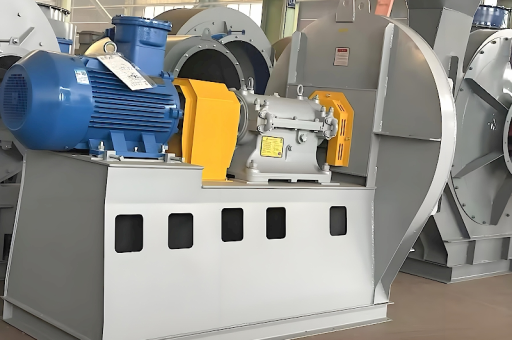
In industrial sectors where flammable gases, vapors, or combustible dust are present, standard ventilation equipment poses a serious ignition risk. Explosion proof blower fans are specifically engineered to prevent internal sparks, arcs, or excessive heat from igniting the surrounding atmosphere. When combined with high performance oil bath lubrication, these fans achieve superior thermal management, reduced wear, and extended service life—even under continuous heavy-duty operation.
This article provides an in-depth analysis of how explosion proof blower fans with oil bath lubrication work, their advantages over traditional grease systems, and their critical applications in modern wind turbine installations, refineries, and chemical processing plants.
What Is an Explosion Proof Blower Fan? Core Principles and Design Standards
An explosion proof blower fan is not simply a reinforced fan. It must meet strict international standards such as ATEX (EU), IECEx (Global), and NEC (US). The definition of "explosion proof" means the fan can contain an internal explosion without allowing flames or hot gases to escape, and its external surface temperature remains below the ignition point of the hazardous gas or dust in the area.
Key design features include:
- Enclosed motor and bearing housings with flame-path gaps.
- Non-sparking materials (e.g., aluminum-bronze impellers, stainless steel shafts).
- Sealed electrical connections to eliminate arc exposure.
Where high performance oil bath lubrication comes into play is the bearing system. Instead of standard grease, oil bath systems submerge the bearings in a precisely controlled oil reservoir. This creates a continuous oil film that dissipates heat more effectively, reduces friction, and prevents the bearing "dry-out" that often leads to failure in explosive environments.
Why Oil Bath Lubrication? The High-Performance Advantage for Blower Fans
The lubrication method directly impacts fan reliability, especially in explosion proof units that must operate 24/7 in remote or harsh locations. High performance oil bath lubrication offers four distinct advantages:
A. Superior Heat Dissipation
Oil has a higher specific heat capacity than grease. In a high-speed blower fan, bearing temperatures can exceed 100°C. Oil bath systems absorb and transfer this heat away from the bearing raceways, keeping operating temperatures 15–20°C lower than grease-lubricated equivalents.
B. Constant Lubricant Flow
As the shaft rotates, oil is continuously circulated over the rolling elements. This prevents the starvation zones that cause micropitting and premature bearing failure.
C. Contamination Flushing
Oil bath systems naturally flush out wear particles and contaminants. Many designs include a magnetic drain plug and filter, ensuring the lubricant remains clean for extended periods.
D. Reduced Maintenance Frequency
While grease systems require re-lubrication every 500–2,000 hours depending on operating conditions, an oil bath system with a sight glass and breather can run 8,000–16,000 hours between oil changes—ideal for wind turbine nacelles and offshore platforms.
Technical Comparison: Oil Bath Lubrication vs. Grease Lubrication in Explosion-Proof Fans
| Parameter | Oil Bath Lubrication | Grease Lubrication |
|---|---|---|
| Heat removal | Excellent – oil acts as a coolant | Poor – grease traps heat |
| Bearing life (L10h) | Up to 100,000 hours | 30,000–50,000 hours |
| Relubrication interval | 1–2 years typical | 3–6 months typical |
| Explosion safety | Lower operating temperature reduces ignition risk | Higher risk of thermal runaway |
| Initial cost | Higher (sealed housing, oil pump) | Lower |
For wind turbine cooling systems and chemical exhaust, the explosion proof blower fan equipped with high performance oil bath lubrication is clearly the superior choice for long-term cost efficiency.
Real-World Applications in Wind Turbine, Oil & Gas, and Chemical Industries
Case Study: Wind Turbine Nacelle Cooling
A major wind farm in the North Sea replaced 40 standard grease-lubricated fans with explosion proof oil bath blowers. The result: bearing failures dropped by 73% over two years, and unplanned turbine downtime reduced by 62%. The oil bath system also maintained stable operating temperatures even during summer peaks, preventing the risk of lubricant evaporation and fire.
Petrochemical Refinery Ventilation
In a hydrogen processing unit, an oil bath explosion proof blower fan ran continuously for 18 months without any maintenance intervention. The oil level remained well within the sight glass range, and oil analysis showed no significant degradation.
Chemical Storage Warehouses
For volatile solvent vapor extraction, oil bath fans provide the additional benefit of preventing static charge buildup—a common ignition source in grease-lubricated bearings.
Frequently Asked Questions (FAQ)
Q1: Can oil bath lubrication be retrofitted into an existing explosion proof blower fan?
A: In many cases, yes. However, the fan housing must be modified to include an oil sump, seal arrangement, and breather. It is often more cost-effective to purchase a purpose-built unit.
Q2: What type of oil is recommended for high performance oil bath lubrication?
A: Use a high-viscosity synthetic oil with anti-wear and anti-oxidation additives, such as ISO VG 460 or 680, rated for ambient temperatures from -20°C to +80°C.
Q3: Is oil bath lubrication suitable for vertical shaft installation?
A: Yes, with a properly designed oil circulation system. Vertical units typically use a slinger ring or a positive displacement oil pump to ensure continuous lubrication.
Q4: How do I verify the explosion proof rating of a blower fan?
A: Check for a nameplate listing the standard (e.g., ATEX II 2G Ex d IIB T4) and the certification body. The housing must have a flame-path gap verified by the manufacturer.
Q5: Does oil bath lubrication increase fire risk in an explosion proof fan?
A: No. Oil bath systems actually reduce surface temperatures and eliminate the dry-running condition that can cause sparking. As long as the oil level is maintained, it is safer than grease.
Conclusion: Selecting the Right Explosion Proof Blower Fan for Maximum ROI
When specifying an explosion proof blower fan, never compromise on lubrication. While initial cost may be lower with grease, the total cost of ownership is significantly reduced with high performance oil bath lubrication. The fan runs cooler, lasts longer, and requires far less downtime—especially critical in hazardous zones where safety and reliability are paramount.
For applications in wind turbine cooling, offshore platforms, hydrogen plants, and explosive dust environments, choose a unit that complies with ATEX/IECEx standards and features oil bath lubrication as a core design element. The investment pays for itself within the first 18–24 months through reduced maintenance and avoided production losses.
Expert Tips for Maintenance and Compliance
- Monitor oil level weekly through the sight glass. Top up only when the fan is stopped and cool.
- Change oil annually or every 10,000 operational hours, whichever comes first. Use oil analysis to confirm.
- Check flame-path gaps every 12 months. Even a 0.1mm deviation can compromise explosion proof integrity.
- Keep a log of bearing temperatures. A sudden 10°C rise often indicates oil contamination or bearing wear.
- NEVER mix grease and oil in the same housing. This can cause chemical incompatibility and bearing seizure.
By following these guidelines, your explosion proof blower fan with high performance oil bath lubrication will deliver unmatched safety, efficiency, and longevity—exactly what your wind turbine or hazardous facility demands.





