
This article's table of contents introduction:
- If you mean the FD Fan for combustion (Primary Use)
- If you mean "Heat Dissipation" (Cooling the Boiler Room or Equipment)
- Common Centrifugal Fan Types for Boiler Systems
- Selection Criteria for your Application
- Principle: How it Works
- Summary Recommendation
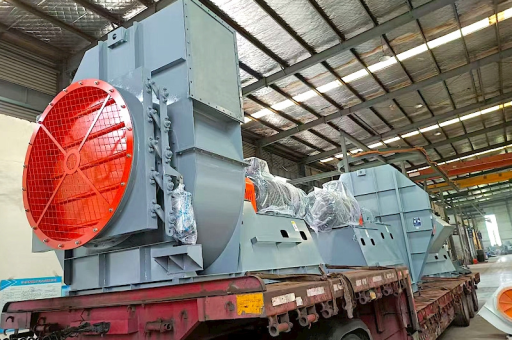
It appears you are describing a Centrifugal Exhaust Fan used for Forced Draught (FD) in a boiler system, specifically for heat dissipation or combustion air supply.
However, there is a slight technical distinction to clarify first, as this will affect your selection and application:
- Forced Draught (FD) Fan: Pushes air into the boiler furnace (positive pressure).
- Induced Draught (ID) Fan: Pulls exhaust gases out of the boiler (negative pressure).
- Exhaust Fan: Usually refers to the ID fan or a ventilation fan for the boiler room itself.
If you mean the FD Fan for combustion (Primary Use)
If this fan is feeding the boiler burner, its primary function is combustion air rather than "heat dissipation" of the boiler itself. However, it does cool the burner front.
Common Specifications:
- Type: Centrifugal (Radial or Backward Curved).
- Duty: High volume, medium pressure (to overcome air heater, duct, and burner resistance).
- Application: Supplying oxygen for fuel burn.
If you mean "Heat Dissipation" (Cooling the Boiler Room or Equipment)
If the fan is specifically for removing hot air from the boiler room or cooling the boiler casing/electricals:
Fan Type: Centrifugal Exhaust Fan (often with a Forward Curved blade for high volume at low static pressure, or Radial for dirty/ hot air).
Key Design Considerations:
| Parameter | Recommendation for Boiler Exhaust/Heat Dissipation |
|---|---|
| Temperature | Must be rated for >80°C (room temp) or >250°C+ (if handling flue gas bypass). Use HT (High Temperature) bearings and shaft cooling fins. |
| Material | Carbon steel for standard. Stainless Steel (SS304/316) if high humidity or corrosive exhaust. |
| Blade Type | Radial (Paddle Wheel): Best for dirty air or high temp. Backward Inclined: More efficient if air is clean. |
| Drive | Direct Drive: Better for variable speed (VFD). Belt Drive: Allows speed adjustment via pulley change. |
Common Centrifugal Fan Types for Boiler Systems
Forced Draft (FD) Fan (Supply Air)
- Blade: Backward Curved (Airfoil or Flat).
- Purpose: Pushes air through the air heater into the furnace.
- Location: Before the boiler (cold side).
- Speed: Usually high (variable speed for load control).
Induced Draft (ID) Fan (Exhaust Gas)
- Blade: Radial or Backward Curved (heavy duty).
- Purpose: Pulls flue gas through the boiler, economizer, and scrubber.
- Location: After the boiler (hot side).
- Challenge: Handles hot, corrosive, and abrasive gas.
Primary Air (PA) Fan
- Blade: Centrifugal (similar to FD).
- Purpose: Used for coal mills to dry and transport coal.
Selection Criteria for your Application
To ensure you select the correct Centrifugal Exhaust Fan for Heat Dissipation on a Boiler, check these points:
- Air Temperature: The most critical factor. For ambient air (40-50°C), standard fans work. For exhaust air (100-350°C), specify High Temperature fans.
- Air Volume (CFM / m³/hr): How much air needs to be moved per hour to keep the room/boiler cool.
- Static Pressure (mmWC / Pa): The resistance of ducts, louvers, and heat exchangers.
- Mounting: Horizontal or Vertical (for heat dissipation, vertical discharge often helps hot air rise).
Principle: How it Works
The centrifugal fan uses a rotating impeller to increase the velocity of the air. The air enters the housing axially, gets caught by the rotating blades, and is thrown outward radially (centrifugal force). This creates pressure and moves the air through the ductwork to the boiler or out of the room.
For heat dissipation:
- Hot air is less dense. Therefore, a fan moving hot air will produce less mass flow than the same fan moving cold air. You must de-rate the fan's capacity at the operating temperature.
Summary Recommendation
If you need a Forced Draught Fan for a boiler:
- Select: A Backward Curved Centrifugal Fan with a Direct Drive Motor and Variable Frequency Drive (VFD).
- Material: Steel impeller for standard service; SS304 if corrosion exists.
If you need a Centrifugal Exhaust Fan for heat dissipation in the boiler room:
- Select: A Forward Curved (if low pressure) or Radial (if high temp or dirty) fan.
- Install: Near the ceiling of the boiler room (heat rises).
- Control: Thermostat or VFD.
Do you need specific help calculating the required CFM or Static Pressure for your boiler? If you can provide the boiler size (MW or TPH) or the room dimensions, I can help narrow down the exact fan specifications.





