
Article Title:
The Ultimate Guide to Smoke Exhaust High Temperature Centrifugal Fan Stainless Steel Blower 3 Phase: Design, Performance, and Industrial Applications
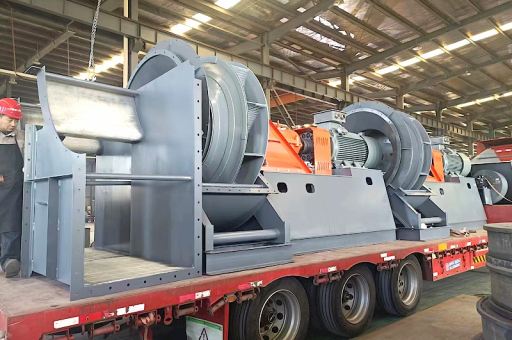
Table of Contents
- Introduction: Why High-Temperature Smoke Exhaust Systems Matter
- Key Components and Material Selection: Stainless Steel Advantage
- Understanding 3-Phase Power in Centrifugal Blowers
- Performance Characteristics and Thermal Resistance
- Common Industrial Applications
- Installation, Maintenance, and Safety Best Practices
- Frequently Asked Questions (FAQ)
- Conclusion: Future-Proofing with Reliable Ventilation
Introduction: Why High-Temperature Smoke Exhaust Systems Matter
In industrial environments such as wind turbine nacelles, foundries, chemical plants, and commercial kitchens, effective smoke exhaust is not just a regulatory requirement—it is a life-safety necessity. The Smoke Exhaust High Temperature Centrifugal Fan Stainless Steel Blower 3 Phase is engineered to withstand extreme thermal stress while maintaining stable airflow. Unlike standard fans, which deform or fail above 150°C, this blower handles continuous operation at 300°C to 450°C and short bursts up to 600°C. The combination of a centrifugal impeller, stainless steel housing, and 3-phase motor ensures durability, high static pressure, and energy-efficient performance.
Key Components and Material Selection: Stainless Steel Advantage
The choice of material directly impacts reliability. Stainless steel (SS304 or SS316) offers:
- Corrosion resistance against acidic smoke and moisture.
- Thermal stability without expansion-related warping.
- High tensile strength for rotating parts under centrifugal stress.
The impeller is typically backward-curved or forward-curved in design:
- Backward-curved blades reduce dust accumulation and maintain efficiency.
- Forward-curved blades provide higher airflow at lower speed.
The casing is welded from heavy-gauge stainless steel, reinforced with external bracing to handle pressure spikes during exhaust events.
Understanding 3-Phase Power in Centrifugal Blowers
Unlike single-phase motors, a 3-phase induction motor delivers:
- Higher torque at startup, essential for moving dense hot air.
- Lower electrical noise and reduced vibration.
- Better thermal dissipation due to balanced electrical load.
A 3-phase blower operating at 380V–480V, 50/60 Hz can achieve speeds from 1400 RPM to 3600 RPM, depending on pole count. Variable Frequency Drives (VFDs) are commonly integrated for modulating airflow in smart exhaust systems.
Performance Characteristics and Thermal Resistance
Key performance parameters include:
- Max airflow: 10,000 to 80,000 m³/h, depending on fan size.
- Static pressure: 500 Pa to 2500 Pa, suitable for ducted systems.
- Motor power: 2.2 kW to 37 kW for heavy-duty exhaust.
Thermal resistance is achieved through:
- Ceramic-coated bearings that receive grease via remote pipes.
- Heat shield plates between motor and impeller.
- Cooling fins on the motor housing, sometimes supplemented by an external fan.
Common Industrial Applications
- Wind turbine cooling and smoke purge: When a nacelle overheats or fire occurs, the fan vents smoke and heat.
- Industrial kitchen exhaust: Removes grease-laden vapors at high temperatures.
- Chemical fume extraction: Transports corrosive hot gases safely outdoors.
- Steel and glass manufacturing: Handles furnace off-gases above 400°C.
Installation, Maintenance, and Safety Best Practices
- Mounting: Use vibration isolators and support brackets to reduce stress on ducts.
- Ductwork: Connect with flexible stainless steel bellows to absorb thermal expansion.
- Maintenance schedule:
- Weekly: Inspect for abnormal noise or vibration.
- Monthly: Clean impeller blades and check bearing temperature.
- Annually: Replace bearings and test thermal overload protection.
- Safety interlocks: Wire the blower to fire alarm systems for automatic activation.
Frequently Asked Questions (FAQ)
Q1: Can this blower run continuously at 400°C?
A: Yes, when equipped with SS304/SS316 construction and high-temperature bearings rated for 450°C, continuous operation at 400°C is safe. However, the motor must be cooled separately—either by a shaft-mounted cooling fan or an external air stream.
Q2: Is this fan suitable for wind turbine installations?
A: Absolutely. In fact, many offshore wind turbine nacelles use this exact type of blower for emergency smoke evacuation and cooling. The 3-phase motor can run on turbine-generated power, and stainless steel resists saltwater corrosion.
Q3: What is the difference between forward-curved and backward-curved impeller for hot smoke?
A: Forward-curved impellers deliver high airflow at low pressure, ideal for short ducts. Backward-curved impellers achieve higher static pressure and resist dust buildup, making them preferred for heavy smoke with particulates.
Q4: Does the fan need a VFD?
A: Not mandatory, but recommended. A VFD allows soft-start to reduce mechanical shock when starting under hot load and enables speed reduction during non-emergency ventilation to save energy.
Q5: How do I calculate the required airflow for my space?
A: Use the formula:
Airflow (m³/h) = Room Volume (m³) × Air Changes per Hour (ACH).
For smoke exhaust, typical ACH is 20–30 per hour for industrial areas.
Conclusion: Future-Proofing with Reliable Ventilation
As industries continue to push thermal limits and safety regulations tighten, the Smoke Exhaust High Temperature Centrifugal Fan Stainless Steel Blower 3 Phase stands out as a robust, energy-efficient solution. Its ability to operate under extreme temperatures, combined with the corrosion resistance of stainless steel and the performance stability of 3-phase power, ensures long service life even in demanding environments like wind turbine installations. Investing in such a fan not only meets compliance but also protects assets and personnel. Always consult with an engineer to match fan specifications to your exact system resistance and thermal profile.





