
This article's table of contents introduction:
- Article Content
- Introduction: The Dust Challenge in Steelmaking Converters
- How Converter Dust Removal Fans Work: Principles and Components
- Key Performance Metrics: Airflow, Static Pressure, and Energy Efficiency
- Common Types of Fans Used in Converter Dust Removal Systems
- Operational Challenges: High Temperature, Corrosion, and Abrasion
- Best Practices for Fan Selection and Maintenance
- Q&A Section: Expert Answers to Frequent Questions
- Conclusion: Future Trends and Sustainable Solutions
*Optimizing Emission Control: The Critical Role of Dust Removal Fans for Converters in the Metallurgical Industry*
Article Content
Table of Contents
- Introduction: The Dust Challenge in Steelmaking Converters
- How Converter Dust Removal Fans Work: Principles and Components
- Key Performance Metrics: Airflow, Static Pressure, and Energy Efficiency
- Common Types of Fans Used in Converter Dust Removal Systems
- Operational Challenges: High Temperature, Corrosion, and Abrasion
- Best Practices for Fan Selection and Maintenance
- Q&A Section: Expert Answers to Frequent Questions
- Conclusion: Future Trends and Sustainable Solutions
Introduction: The Dust Challenge in Steelmaking Converters
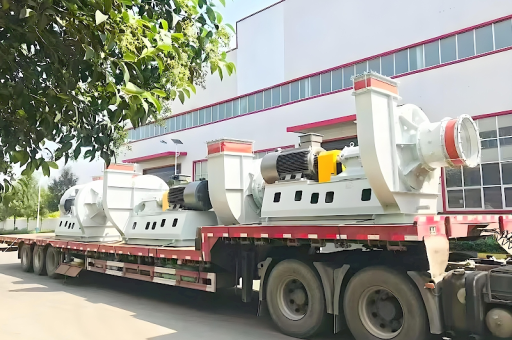
In the metallurgical industry, particularly during basic oxygen furnace (BOF) or electric arc furnace (EAF) converter operations, massive volumes of hot gases and particulate matter are generated. These emissions contain iron oxide dust, unburned carbon, and other fine particles that must be captured and removed to comply with environmental regulations and maintain workplace safety. The dust removal fan for converters in the metallurgical industry serves as the central mechanical workhorse in this primary dedusting system.
Without an efficient dust removal fan, the entire filtration train—including electrostatic precipitators (ESP) and baghouses—would fail to function. The fan must pull flue gases from the converter hood through ductwork, then through the cleaning equipment, and finally discharge clean air to the stack. Given the continuous operation of steel plants, these fans run 24/7 under extreme conditions, making them a critical asset for both production uptime and emission compliance.
How Converter Dust Removal Fans Work: Principles and Components
A dedicated dust removal fan for converters in the metallurgical industry is engineered to handle large volumes of dirty, hot, and often explosive gas streams. The fundamental principle involves creating a pressure differential sufficient to overcome the resistance of the entire gas cleaning system.
Key components include:
- Impeller: Usually backward-curved or radial-blade design, made from wear-resistant alloys (e.g., Hardox or Inconel) to resist erosion from abrasive dust.
- Shaft and Bearings: Heavy-duty bearing housings with forced lubrication and cooling systems, often fitted with temperature and vibration sensors.
- Housing: Double-wall construction with thermal insulation and expansion joints to handle thermal expansion.
- Drive System: Typically a variable frequency drive (VFD) coupled with a high-power electric motor (up to 5,000 kW or more) to allow precise flow control.
- Accessories: Inlet guide vanes, silencers, and dampers for fine-tuning performance during different converter process stages (charging, blowing, tapping).
Modern fans are integrated with smart control systems that adjust fan speed based on CO concentration, oxygen input, and dust loading, ensuring stable suction while minimizing energy waste.
Key Performance Metrics: Airflow, Static Pressure, and Energy Efficiency
To evaluate a dust removal fan for converters in the metallurgical industry, engineers focus on three primary parameters:
- Airflow (m³/h or CFM): The volume of gas the fan must move. For a large BOF converter, this can exceed 1,000,000 m³/h. The airflow requirement increases significantly during the oxygen blowing phase when violent reactions occur.
- Static Pressure (Pa or in. wg): The total pressure required to overcome friction losses in the ductwork and cleaning equipment. High static pressure (often >8,000 Pa) is necessary because converters generate very high-temperature gases (up to 1,600°C) that have low density but high velocity.
- Energy Efficiency (specific energy consumption): Measured in kWh per ton of steel produced. A well-designed fan, combined with a VFD and optimized duct geometry, can reduce energy consumption by 15–25% compared to fixed-speed systems.
Real-world example: A steel plant in China reduced its fan motor power from 4,500 kW to 3,800 kW after upgrading to a modern dust removal fan with an aerodynamic impeller, saving approximately 1.5 GWh annually per converter line.
Common Types of Fans Used in Converter Dust Removal Systems
Different converter configurations require different fan designs. The three most common types of dust removal fans used in the metallurgical industry are:
-
Centrifugal Fan (Radial & Backward Curved):
- Best suited for high-pressure applications.
- Radial-blade fans are highly abrasion-resistant but less efficient (70–80%).
- Backward-curved fans offer better efficiency (85–90%) but require more careful dust handling.
-
Axial Flow Fan (Used in Pre-Cooling Tunnels):
- Lower pressure but very high volume.
- Often positioned ahead of the main dust removal fan to dilute and cool flue gases.
-
Induced Draft Fan (ID Fan):
- Placed at the end of the cleaning system (after ESP or baghouse).
- Handles much cleaner gas but still at elevated temperatures (120–200°C).
- Allows the primary fan (booster fan) to focus on handling raw dust.
A typical large converter uses a two-stage fan arrangement: one high-pressure booster fan near the converter hood and one induced draft fan after the filter. This split design reduces mechanical stress on each unit.
Operational Challenges: High Temperature, Corrosion, and Abrasion
Operating a dust removal fan for converters in the metallurgical industry is one of the toughest challenges in fan engineering. The three primary failure modes are:
-
High Temperature Effects: Fluctuations between 150°C (idle) and 1,200°C (peak blowing) cause thermal fatigue. Expansions and contractions can misalign shafts, leading to vibration and bearing failure. Solution: use of high-temperature alloys and externally cooled bearing pedestals with purge air.
-
Corrosion: Sulfur and chlorine compounds in the converter off-gas (especially in EAF processes) condense on the fan blades, causing stress corrosion cracking. Case studies from European plants show that protective ceramic coatings (e.g., yttria-stabilized zirconia) extend blade life by 3–5 times.
-
Abrasive Wear: Iron oxide particles (0.5–5 microns) act like sandblasting on the impeller. Hardfacing with tungsten carbide or chromium carbide overlay is a standard upgrade. Some operators also use replaceable wear plates on the housing.
Operators must implement predictive maintenance using vibration analysis, thermography, and oil analysis. A sudden rise in bearing temperature or increase in RMS velocity often indicates imbalance or misalignment, requiring immediate corrective action before catastrophic failure.
Best Practices for Fan Selection and Maintenance
When selecting a new dust removal fan for converters in the metallurgical industry, or maintaining an existing one, follow these guidelines:
For Selection:
- Perform a computational fluid dynamics (CFD) analysis to model gas flow, temperature gradients, and particle trajectories. This ensures the fan is not oversized (wasting energy) or undersized (causing negative furnace pressure).
- Choose belt-drive or direct-drive based on maintenance access. Direct-drive reduces mechanical losses but requires more precise alignment.
- Specify high-temperature seals (e.g., labyrinth seals with purge air) to prevent dust ingress into bearings.
For Maintenance:
- Schedule a quarterly blade inspection using borescope or robotic crawler for large fans.
- Monitor vibration levels according to ISO 10816: for rigid fans, acceptable RMS velocity is less than 4.5 mm/s; values above 7.1 mm/s require shutdown.
- Perform dynamic balancing after any blade repair or coating change.
- Replace bearings and lubricant based on operating hours, not calendar time. Use synthetic grease with higher thermal stability.
One innovative approach is the use of online water injection systems ahead of the fan to cool hot gases rapidly, preventing thermal spikes. This has been successfully deployed at a steel mill in India, reducing fan inlet temperature from 400°C to 200°C within seconds.
Q&A Section: Expert Answers to Frequent Questions
Q1: Why does the dust removal fan need to be variable speed? A: Converter operations are cyclic. During oxygen blowing, the gas volume is high; during charging and tapping, it drops significantly. A fixed-speed fan would either waste energy or fail to maintain proper furnace pressure. VFD allows fan speed to follow the process curve, achieving 15–25% energy savings and reducing blade wear.
Q2: Can a standard industrial fan be used for converter dust removal? A: No. Standard fans are not designed for continuous exposure to high-temperature, abrasive, and corrosive environments. Fans for converters must be made from specialized alloys (e.g., 316L stainless steel or Hastelloy), with reinforced impellers and cooling systems. Using a standard fan would lead to rapid failure, typically within 2–6 months.
Q3: How important is the fan in overall emission compliance? A: Extremely important. Even if the ESP or baghouse is perfectly designed, without sufficient fan static pressure, the required airflow cannot be maintained. Under negative pressure, flue gases can escape from the converter hood, causing fugitive emissions and regulatory penalties. In fact, fan performance is often the leading cause of non-compliance in primary dedusting systems.
Q4: What is the typical lifespan of a converter dust removal fan? A: With proper maintenance, the impeller lasts 3–5 years, while the housing can last 10–15 years with periodic wall thickness checks. Bearings typically require replacement every 12–18 months. In severe applications (e.g., high chlorine content), blade life can drop to 12 months without coatings.
Q5: How can we reduce fan noise in residential areas near the plant? A: Install a combination of splitter silencers (upstream and downstream) and acoustic enclosures around the fan motor and drive. In practice, for a 3,000 kW fan, this can reduce noise from 110 dB(A) to below 85 dB(A) at 1 meter. Also, use low-noise blade profiles, such as those with serrated trailing edges, which is a technology borrowed from wind turbine design.
Conclusion: Future Trends and Sustainable Solutions
The dust removal fan for converters in the metallurgical industry is evolving rapidly. Key trends include:
- Integration with digital twins: Plants now use real-time simulation software to predict fan performance degradation and schedule maintenance optimally.
- Use of artificial intelligence: AI-driven control systems can predict CO peaks and automatically adjust fan speed, reducing the risk of explosions.
- Hybrid bearing systems: Combining rolling bearings with magnetic bearings to eliminate lubrication issues and extend lifespan.
Moreover, the use of advanced composite materials (e.g., carbon-fiber reinforced polymer blades) is being explored to reduce weight and improve corrosion resistance, although robustness against dust impact remains a challenge. Some innovative designs borrow aerodynamic principles from wind turbine blades to achieve higher efficiency at lower rotational speeds.
Ultimately, the performance of a dust removal fan is directly linked to a steel plant’s profitability, regulatory compliance, and environmental footprint. By investing in the right technology and maintenance practices, operators can ensure that their converter dedusting system remains a reliable and efficient part of the metallurgical process for decades to come.





