
This article's table of contents introduction:
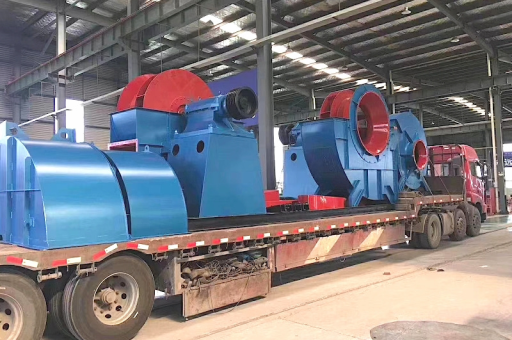
- Core Functional Definition: The "Dilution Treatment" Fan
- Critical Technical Specifications for High-Temperature & Energy Efficiency
- Customizable Material Options (The "Customizable Material" Clause)
- Application Scenarios
- How to Purchase or Specify (Action Items)
- Summary Recommendation
Based on your request, it appears you are looking for a specialized industrial fan that combines high-temperature resistance, energy efficiency, and the ability to handle dilution treatment (mixing air to reduce contaminant concentration or temperature), with the option for customizable materials.
Here is a breakdown of how to specify, design, or procure such a fan, along with the key technical considerations for industrial applications.
Core Functional Definition: The "Dilution Treatment" Fan
A dilution fan is not just a ventilation fan; it is designed to introduce fresh air into a stream of hot, contaminated, or high-humidity air to bring it to a safe or treatable condition.
- Primary Role: Lowering the concentration of flammable vapors, toxic gases, or extreme heat to safe levels before the air enters downstream equipment (scrubbers, filters, heat exchangers) or is discharged.
- Airflow Path: Often mounted in a mixing plenum where hot exhaust is blended with ambient air before entering the fan.
Critical Technical Specifications for High-Temperature & Energy Efficiency
To meet your requirements, the fan must be engineered with specific components:
| Requirement | Specification & Solution | Why it matters |
|---|---|---|
| High Temperature | Operating Temp: Up to 350°C (662°F) continuous, or higher (500°C+) with shaft cooling. Motor Type: TEFC (Totally Enclosed Fan Cooled) with external cooling fins, or air-over motor design. |
Standard motors burn out over 80°C. High-temp fans use shaft cooling disks to prevent heat transfer. |
| Energy Efficiency | Impeller Design: Backward-curved airfoil blades (e.g., Arrangement 4). Motor: IE4 or IE5 rated (Premium/Ultra-Premium Efficiency), VFD (Variable Frequency Drive) ready. |
Backward-curved blades are non-overloading and can save 15-30% energy vs. forward-curved or radial blades. |
| Dilution Treatment | Inlet Box: Designed with dilution air ports (adjustable dampers). Housing: Larger cross-section for mixing length. |
Allows cold fresh air to be drawn in and mixed with hot process air before the impeller, reducing thermal stress. |
Customizable Material Options (The "Customizable Material" Clause)
Because your application involves high temperature and possibly corrosive or abrasive contaminants, material selection is the most critical customization.
| Material Option | Application Condition | Benefits | Limitations |
|---|---|---|---|
| Carbon Steel (CS) | Clean hot air (e.g., dry oven exhaust). | Low cost, easy to fabricate. | Low corrosion resistance. |
| Stainless Steel 304/316 | Hot, humid, or slightly corrosive air (e.g., food processing, chemical fume dilution). | Excellent corrosion resistance, good strength at high temp. | More expensive, heavier than Aluminum. |
| Inconel® 625 / Hastelloy® | Extremely corrosive, high-temp (600°C+) environments (e.g., waste incineration, metal plating). | Outstanding oxidation resistance, creep resistance. | Very high cost, difficult to weld. |
| Aluminum (Cast or Fabricated) | Low-temp dilution (<200°C), clean air, lightweight, energy efficiency (low inertia). | Excellent energy efficiency (lightweight impeller), non-sparking (for flammable gas dilution). | Poor high-temp strength. |
| Ceramic Coating (e.g., Alumina) | Abrasive particles in hot air (e.g., cement, foundry sand). | Extreme erosion resistance. | Brittle; requires careful handling. |
| Heat-Treated Alloy (e.g., 2507 Duplex) | High strength + corrosion at moderate temp (up to 300°C). | Very high strength-to-weight ratio. | Limited to specific temperature ranges. |
Application Scenarios
Typical industries that require this combined feature set:
- Chemical Processing: Dilution of flammable vapor clouds before going to a thermal oxidizer.
- Waste Incineration / Biomass: Cooling flue gas from 500°C to 250°C by mixing with ambient air before the baghouse filter.
- Pharmaceutical / Cleanroom: Bringing hot sterile exhaust down to safe levels while maintaining energy recovery via heat wheels.
- Foundry / Forging: Removing smoke and heat from a furnace area; the dilution fan must handle extreme radiant heat and occasional sparks.
How to Purchase or Specify (Action Items)
To get a quote or design, you must provide the following data to a manufacturer (e.g., Howden, Greenheck, New York Blower, or a custom fabricator like Teksin or Krut Ventilators):
- Gas Conditions:
- Inlet Temperature (°C / °F) – Maximum and Normal.
- Dilution Air Temperature (Ambient or pre-heated?).
- Desired Mixed Temperature after the fan.
- Chemical composition of the hot gas (moisture, acids, particulates).
- Performance:
- Required Volume Flow Rate (m³/hr or CFM) after dilution.
- Static Pressure (Pa or inches w.g.).
- Material Customization:
- Specify the material for: Housing, Impeller, Shaft, Bearings.
- Crucial: "Shaft cooling disc" or "Heat slinger" is mandatory if T > 200°C.
- Drive Configuration:
Direct Drive (for high speed/VFD control) vs. Belt Drive (for speed flexibility and motor isolation from heat).
- Compliance:
ATEX (for explosive gas dilution), AMCA (for performance certification), or ISO 1940 (for balancing).
Summary Recommendation
For a high-temperature resistance, energy-saving dilution treatment fan, you should look for a centrifugal fan with a backward-curved airfoil impeller (efficiency >85%), equipped with shaft cooling and a dilution air inlet box. The most common material upgrade for balance of cost and performance is Stainless Steel 316L housing with a 304 impeller, unless the temperature exceeds 350°C (then consider Inconel or a cast heat-resistant steel).
Would you like me to recommend a specific manufacturer type (e.g., "Centrifugal with Inlet Box") or provide a sample specification sheet for this fan?





