
This article's table of contents introduction:
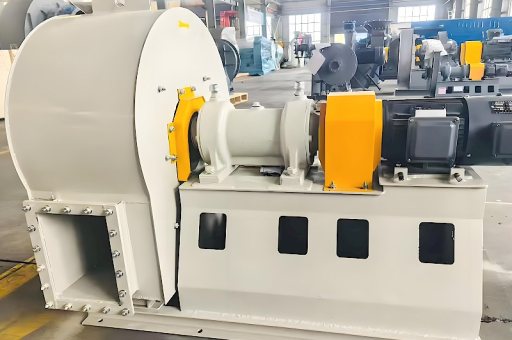
- Deconstructing the Term
- Function: Why is this specific fan so critical?
- Technical Details of the Fan
- The "Grate Cooler" System Context
- Common Failure Modes & Problems
- Summary: Why it's "Special" vs. other cooler fans
This is a specific term in cement manufacturing and related pyro-processing industries. Let's break it down.
The term "Kiln head grate cooler clinker cooling fan" describes a specific fan's location, function, and system. Here is a detailed explanation of each component.
Deconstructing the Term
- Clinker: The hard, nodular material produced in a rotary kiln, which is then ground to make cement.
- Grate Cooler: The most common type of clinker cooler. It consists of a series of moving grates (like a conveyor belt made of plates) that transport the hot clinker.
- Kiln Head: The front, stationary end of the rotary kiln where the fuel is burned and the hot clinker exits into the cooler. This is the hottest zone.
- Cooling Fan: A fan that supplies ambient air to cool the clinker.
- "Kiln head grate cooler clinker cooling fan" : This therefore refers to the cooling fans located at the "kiln head" section of a grate cooler, which are specifically used to cool the clinker as it first exits the kiln.
Function: Why is this specific fan so critical?
The clinker leaves the kiln at approximately 1,400°C (2,550°F) . The primary function of the cooling fan system is to:
-
Rapidly Quench the Clinker: The first row of fans (at the kiln head) provides a massive blast of cold air to rapidly cool the clinker from ~1,400°C down to around 1,200°C. This "shock cooling" is critical for:
- Crystal Structure: It locks in the desirable mineral phases (like Alite - C3S) which gives cement its strength. Slow cooling allows them to degrade into weaker phases.
- Grindability: Rapidly cooled clinker is harder but more brittle, making it easier to grind into cement powder.
- Preventing Re-crystallization: It prevents the formation of large, hard crystals of periclase (MgO) which can cause long-term expansion and cracking in concrete.
-
Recover Heat (Air Quenching): The air used to cool the clinker becomes extremely hot. This hot "secondary air" is then drawn back into the kiln at the kiln head. This recovers a significant amount of heat, reducing the fuel needed to fire the kiln.
Technical Details of the Fan
- Type: High-pressure, axial-flow or radial-flow fans. The very first ones (at the kiln head) often require the highest pressure and are typically centrifugal fans due to the need to overcome the high resistance of the deep clinker bed.
- Pressure: Extremely high static pressure (e.g., 80-120 millibar or 800-1200 mmWG - millimeters water gauge). The clinker bed near the kiln head is very deep and hot.
- Airflow: Very high volume (e.g., 100,000 - 300,000 m³/h or more per fan).
- Temperature: The fan itself handles ambient air, so it's standard. However, the air downstream of the fan is heated by the clinker. The fan itself is not the hot part.
- Control: Typically controlled by variable frequency drives (VFDs) or inlet guide vanes to precisely match the cooling air flow to the clinker production rate and bed depth.
The "Grate Cooler" System Context
A grate cooler is divided into several compartments (often called "grates" or "sections" ). The first compartment (the one right at the kiln head) is where this specific fan operates.
| Feature | Kiln Head (1st Compartment) | Middle Compartments | Last Compartments |
|---|---|---|---|
| Position | Directly under the kiln nose | Middle of the cooler | End of the cooler |
| Clinker Temp In | ~1,400°C | ~1,200°C -> 800°C | ~800°C -> 150°C |
| Fan Purpose | Rapid quench, generate hot secondary air | Further cooling & heat recovery | Final cooling |
| Air Use | Returned to kiln as secondary air | Tertiary air for calciner or waste heat | Vented to atmosphere or used for drying |
| Fan Pressure | Very High | Medium / High | Low / Medium |
Common Failure Modes & Problems
- Fan Blade Wear: The air entering the fan carries dust and fine clinker particles. Over time, this erodes the fan blades, reducing efficiency and creating vibration.
- Vibration: Imbalance from blade wear or build-up of dust on the blades.
- Bearing Failure: High ambient temperatures near the kiln head can lead to bearing overheating and failure if not properly cooled.
- Motor Overload: If the clinker bed becomes too deep (e.g., due to a kiln ring or shutdown), the fan can work against a much higher pressure, stalling or overloading the motor.
- Inlet Box Failure: The high-temperature air from the cooler can flow back toward the fan if there's a problem, damaging the fan housing and ducts.
Summary: Why it's "Special" vs. other cooler fans
The kiln head grate cooler clinker cooling fan is the most critical and most expensive fan in the cooling system. It operates at the highest pressure, handles the most challenging conditions (clinker temperature, dust load), and is essential for the quality of the final product (cement strength) and the energy efficiency of the entire kiln system.
If this fan fails, the entire kiln must often be slowed down or shut down to prevent clinker from overheating and damaging the cooler.





