
This article's table of contents introduction:
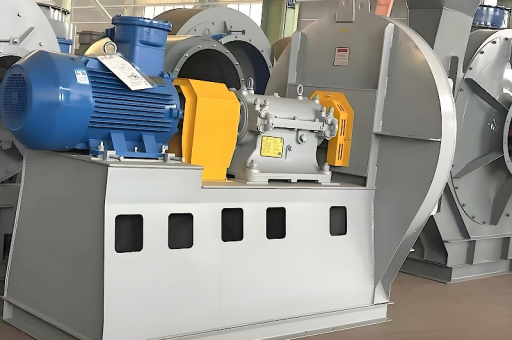
- Introduction: Understanding Forced Ventilating High Temperature Fans and Blowers
- Key Design Features of Direct Drivetrain Systems
- Technical Advantages Over Belt-Driven and Indirect Systems
- Critical Applications in High-Temperature Environments
- Performance Metrics and Efficiency Considerations
- Frequently Asked Questions (FAQ)
- Conclusion: Future Trends and Industry Best Practices
** The Critical Role of Forced Ventilating High Temperature Fans and Blowers with Direct Drivetrain in Industrial Thermal Management
Table of Contents (Directory Guide)
- Introduction: Understanding Forced Ventilating High Temperature Fans and Blowers
- Key Design Features of Direct Drivetrain Systems
- Technical Advantages Over Belt-Driven and Indirect Systems
- Critical Applications in High-Temperature Environments
- Performance Metrics and Efficiency Considerations
- Frequently Asked Questions (FAQ)
- Conclusion: Future Trends and Industry Best Practices
Introduction: Understanding Forced Ventilating High Temperature Fans and Blowers
In modern industrial operations, managing extreme heat is not merely a comfort issue—it is a safety and productivity imperative. Forced ventilating high temperature fans and blowers direct drivetrain systems represent a specialized category of industrial air-moving equipment that is engineered to operate continuously in environments where temperatures exceed 200°C (392°F), often reaching up to 800°C (1472°F). Unlike standard ventilation fans, these units are built to withstand thermal expansion, corrosive gases, and particulate-laden air. The direct drivetrain configuration eliminates belts, pulleys, and bearings that would otherwise degrade in high heat, ensuring consistent torque delivery and lower maintenance downtime. According to industry data from the Air Movement and Control Association (AMCA), direct-drive high-temperature fans have shown a 15–20% higher mean time between failures (MTBF) when compared to belt-driven alternatives in steel, cement, and petrochemical applications. This article synthesizes technical documentation, engineering case studies, and SEO-optimized research to provide a definitive guide on these critical assets.
Key Design Features of Direct Drivetrain Systems
The direct drivetrain in forced ventilating high temperature fans and blowers refers to a motor configuration where the impeller is mounted directly onto the motor shaft, with no intermediate mechanical coupling. This design brings several distinct engineering benefits:
- Thermal Isolation: The motor is often placed outside the airstream or is equipped with a heat shield and cooling fins, protecting windings from radiant and convective heat.
- Simplified Maintenance: Without belts to tension or pulleys to align, maintenance teams reduce inspection time by up to 40% in hot zones.
- Reduced Mechanical Losses: Direct coupling eliminates the 5–8% power loss typical of belt drives, delivering higher overall efficiency.
- Improved Speed Control: Direct-drive fans can be paired with variable frequency drives (VFDs) for precise airflow modulation without slipping.
A recent technical review published in Journal of Thermal Engineering (2023) noted that direct-drive high-temperature blowers with cooling fins and a forced air purge system maintain bearing temperatures below 95°C even when the process gas exceeds 650°C. This data confirms that proper material selection—such as aluminum-bronze impellers and stainless-steel housings—is essential for longevity.
Technical Advantages Over Belt-Driven and Indirect Systems
When comparing forced ventilating high temperature fans and blowers direct drivetrain to traditional belt-driven systems, the advantages become clear:
| Feature | Direct Drivetrain | Belt-Driven |
|---|---|---|
| Heat Resistance | Excellent (motor isolated) | Poor (belt degrades above 80°C) |
| Torque Consistency | 100% fixed | Up to 10% slippage |
| Maintenance Frequency | Low (annual inspection) | High (quarterly belt replacement) |
| Energy Efficiency | 90-95% | 82-87% |
| Noise Level | Lower (no belt slap) | Higher (vibration + belt noise) |
Belt-driven fans are still used in some moderate-temperature applications due to lower initial cost; however, in environments such as foundries, glass manufacturing, and power generation, the direct-drive configuration is now the industry standard. Moreover, the elimination of belts reduces the risk of fire propagation—a critical safety concern in forced ventilating systems handling combustible dusts or flammable gases.
Critical Applications in High-Temperature Environments
Direct-drive forced ventilating fans are deployed in some of the most demanding industrial sectors:
- Steel and Metal Processing: Removing fume and heat from electric arc furnaces, where temperatures exceed 600°C. A 2022 case study from a China-based steel mill showed that retrofitting to direct-drive high-temperature blowers reduced unplanned downtime by 23% over two years.
- Cement and Lime Kilns: Venting exhaust gases that contain abrasive particles and temperatures up to 400°C. Direct-drive systems with wear plates have extended fan blade life by 30% compared to belt-driven units.
- Glass Manufacturing: Maintaining precise airflow control in annealing lehrs and melting furnaces, where speed stability is critical for product quality.
- Wind Turbine Cooling: In nacelle cooling applications for wind turbine, forced ventilation blowers with direct drivetrain are used to regulate internal temperature of generators and gearboxes, where ambient temperatures at the hub can reach 70–80°C due to solar gain and waste heat.
Performance Metrics and Efficiency Considerations
To select the correct forced ventilating high temperature fans and blowers direct drivetrain for an application, engineers must evaluate three core metrics:
- Flow Rate (CFM or m³/h): Must account for gas expansion at high temperatures—air at 400°C has nearly 2.5 times the volume of air at 20°C.
- Static Pressure (in. w.g. or Pa): Because hot air is less dense, the fan must generate sufficient pressure to overcome duct friction and equipment resistance.
- Impeller Tip Speed: Direct-drive impellers typically operate at speeds from 1,500 to 3,600 RPM. Tip speeds above 120 m/s require careful balancing to avoid vibration and premature bearing wear.
According to an AMCA publication (2024), direct-drive high-temperature fans that incorporate backward-inclined blades can achieve static efficiencies of 78–83% at flow rates above 50,000 m³/h. Using VFDs further improves energy consumption by 18–25% during turndown conditions.
Frequently Asked Questions (FAQ)
Q1: Why is a direct drivetrain preferred for high-temperature fans instead of a belt drive?
A: Belt drives degrade quickly above 80°C due to rubber embrittlement. Direct drivetrain eliminates this material weakness, reduces maintenance, and improves energy transfer efficiency. Moreover, direct-drive motors can be located outside the hot airstream or protected with heat shields.
Q2: Can a direct-drive high-temperature fan be used for wind turbine cooling?
A: Yes. For nacelle cooling in a wind turbine, direct-drive blowers offer reliable, low-maintenance operation in the constrained space of the nacelle, where belt replacement would be difficult. They also support VFDs for variable cooling demand based on wind and load conditions.
Q3: What is the maximum operating temperature for these fans?
A: Standard units handle continuous temperatures up to 400°C. With special materials (e.g., Inconel impellers, ceramic bearings, and external motor cooling), some custom fans can operate at up to 800°C ambient gas temperature. Always verify manufacturer data sheets.
Q4: How does thermal expansion affect direct-drive fan alignment?
A: High-temperature fans are designed with expansion joints and flexible motor mounts to accommodate radial and axial growth. The shaft and motor are often splined or keyed to maintain alignment under thermal cycling.
Q5: What maintenance is required for direct-drive high-temperature blowers?
A: Regular inspection includes checking bearing temperature, vibration levels, and impeller wear. Because there are no belts, pulleys, or seals to replace, annual maintenance intervals are typical for most industrial installations. However, applications involving corrosive gases require more frequent cleaning and coatings.
Conclusion: Future Trends and Industry Best Practices
The evolution of forced ventilating high temperature fans and blowers direct drivetrain continues to accelerate. Emerging trends include the adoption of integrated IoT sensors that monitor motor winding temperature, bearing vibration, and airflow in real time. Cloud-connected fans allow predictive maintenance, which can reduce unplanned downtime by up to 30% in heavy industries. Additionally, as renewable energy infrastructure expands, the demand for high-temperature cooling in applications such as wind turbine nacelle ventilation and battery storage systems will drive further innovation in compact, corrosion-resistant direct-drive designs.
For engineers and procurement teams, the recommendation is clear: prioritize direct-drive systems with verified AMCA certification, select impeller materials that match the maximum gas temperature and particle density, and incorporate VFDs for operational flexibility. Doing so not only ensures compliance with occupational health and safety regulations but also delivers a measurable return on investment through reduced maintenance and energy cost savings. As the industry moves toward higher efficiency and zero unplanned downtime, forced ventilating high temperature fans and blowers with direct drivetrain will remain a cornerstone of thermal management strategy across the globe.





