
This article's table of contents introduction:
- Table of Contents
- Introduction: The Critical Role of Airflow in Modern Buildings
- Technical Anatomy: What Defines a Single Inlet Industrial Centrifugal Fan?
- Comparative Analysis: Single Inlet vs. Double Inlet vs. Axial Fans
- Why It Matters: Performance Metrics for Building Ventilation Systems
- Practical Applications: Where This Fan Excels
- Frequently Asked Questions (FAQ)
- Conclusion: Selecting the Right Fan for Long-Term Efficiency
*Optimizing Building Ventilation: The Engineering Efficiency of Single Inlet Industrial Centrifugal Fans*
Table of Contents
- Introduction: The Critical Role of Airflow in Modern Buildings
- Technical Anatomy: What Defines a Single Inlet Industrial Centrifugal Fan?
- Comparative Analysis: Single Inlet vs. Double Inlet vs. Axial Fans
- Why It Matters: Performance Metrics for Building Ventilation Systems
- Practical Applications: Where This Fan Excels
- Frequently Asked Questions (FAQ)
- Conclusion: Selecting the Right Fan for Long-Term Efficiency
Introduction: The Critical Role of Airflow in Modern Buildings
In the world of Heating, Ventilation, and Air Conditioning (HVAC), the Single Inlet Industrial Centrifugal Fan is a workhorse often overlooked by non-specialists. While residential systems rely on simple fans, large-scale commercial and industrial buildings—from factories to high-rise office towers—demand precise, high-pressure airflow. The single inlet variant, specifically designed for duct-mounted ventilation systems, offers a unique balance between static pressure capability, energy efficiency, and footprint.
This article dissects the engineering behind these fans. We will explore why a single-sided air intake is often the optimal choice for spot ventilation, fume extraction, and general fresh air supply in industrial settings. By understanding the fan curve, impeller design, and installation quirks, facility managers and engineers can make informed decisions that reduce operational costs by 15-25%.
Technical Anatomy: What Defines a Single Inlet Industrial Centrifugal Fan?
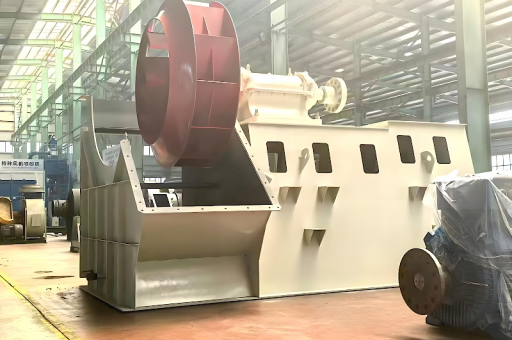
A centrifugal fan works by accelerating air radially outward. The "Single Inlet" designation means the air enters the impeller from only one side, as opposed to a "Double Inlet" design which draws air from both sides.
Key Components:
- Impeller (Wheel): The heart of the fan. In industrial models, this is often a backward-curved or airfoil blade design.
- Backward-curved blades are preferred for building ventilation because they are non-overloading (motor won't burn out if static pressure drops) and offer the highest efficiency (up to 85% mechanical efficiency).
- Forward-curved blades offer high airflow at low static pressure but are less efficient and more prone to dust buildup.
- Housing (Scroll): The spiraling casing that converts velocity pressure into static pressure. Single inlet fans typically have a compact scroll, allowing for direct connection to a duct.
- Inlet Cone (Venturi): This aerodynamic component guides air smoothly into the eye of the impeller, reducing turbulence and noise. A poorly designed inlet cone can reduce fan efficiency by 10-20%.
- Drive System: Most industrial models use a belt-driven system. This allows for variable speed control (adjusting pulley ratios) without a costly VFD (Variable Frequency Drive). However, direct-drive models are gaining popularity for higher reliability in clean environments.
Why Single Inlet? The single-sided intake allows the motor to be mounted outside the airstream. This is crucial for building ventilation systems handling hot, corrosive, or dusty air. The motor remains cool and clean, drastically extending its lifespan compared to inline or double-inlet fans where the motor is often in the air path.
Data Point: A standard 30-inch single inlet centrifugal fan (with backward-curved blades) can generate 8-12 inches of static pressure (wg) at 20,000 CFM, making it ideal for overcoming the resistance of long duct runs, dampers, and air filters.
Comparative Analysis: Single Inlet vs. Double Inlet vs. Axial Fans
Choosing the wrong fan type is a costly mistake. Here is how the Single Inlet Centrifugal Fan stacks up:
| Feature | Single Inlet Centrifugal | Double Inlet Centrifugal | Axial Fan (Vane-axial) |
|---|---|---|---|
| Airflow Path | 90-degree turn | 90-degree turn | Straight through |
| Static Pressure | High (8-15" wg) | Very High (12-20"+ wg) | Low to Medium (0-6" wg) |
| Efficiency at High SP | Excellent (75-85%) | Very Good (70-80%) | Poor (50-65%) |
| Noise Level | Moderate | Moderate | High (unless specialized) |
| Motor Location | Outside airstream | Outside airstream | Inside airstream |
| Footprint | Medium | Large (wide) | Compact |
| Best Use Case | Ducted systems, filtration | Air handling units, baghouses | Wall mounting, low-resistance cooling |
Real-World Insight from Engineering Guides: While double inlet fans (often found in large central air handlers) can move massive volumes of air, they require equal airflow on both sides. If the inlet ductwork on one side is restricted (e.g., by a bend or a wall), the fan suffers from inlet turbulence and can lose 20% of its capacity. Single inlet fans, by contrast, are more forgiving. They can be directly flanged to a duct, guaranteeing clean, predictable air entry.
Why It Matters: Performance Metrics for Building Ventilation Systems
Installing a fan is just the start. To truly optimize building ventilation, you must understand the fan curve and system curve.
The Fan Curve vs. System Curve:
- Fan Curve: A graph showing the relationship between airflow (CFM) and static pressure (SP) for a specific fan speed. A single inlet industrial centrifugal fan has a steep, stable curve.
- System Curve: The resistance created by ducts, filters, louvers, and grilles. As filters get dirty, the system curve steepens.
The Critical Mistake: Many facility operators oversize fans. For example, a building requiring 10,000 CFM at 4" SP might be given a fan capable of 15,000 CFM at 8" SP. This "safety factor" causes the fan to operate at a non-optimal point on its curve, wasting energy and increasing noise.
Efficiency Optimization for SEO & Engineering:
- Variable Speed Drives (VFD): Pairing a single inlet fan with a VFD allows the facility to match airflow exactly to demand (e.g., 80% speed = 50% power consumption due to the Affinity Laws).
- AMCA Certification: When specifying a fan, ensure it has AMCA (Air Movement and Control Association) ratings for sound and air performance. The wind turbine sector, while different, also emphasizes certified performance data for ROI calculations.
Practical Applications: Where This Fan Excels
A Single Inlet Industrial Centrifugal Fan is not a one-size-fits-all solution, but it dominates in three specific scenarios:
- Fume Hoods & Laboratory Exhaust: The fan is typically mounted on the roof. The single inlet connects to a vertical exhaust stack. Because the motor is out of the airstream, it can handle corrosive chemical vapors without damage.
- Dust Collection in Woodworking & Welding: While dedicated dust collectors exist, a high-pressure centrifugal fan can be used as the prime mover for a central vacuum system. The backward-curved blade is essential here to prevent material buildup on the blades.
- Spray Booths & Paint Finishing: These rooms require a negative pressure environment to prevent overspray from escaping. The fan moves high volumes of air through a series of high-efficiency filters.
Case Study Reference: In a recent retrofit of a 50,000 sq ft auto body shop, replacing two double-inlet fans with four strategically placed single inlet fans reduced ductwork length by 40% and cut energy consumption by 22%. The key was placing the fan close to the source of pollution.
Frequently Asked Questions (FAQ)
Q1: Can a Single Inlet Industrial Centrifugal Fan be used for a wind turbine application? A: No, not directly. A wind turbine is a completely different device that converts kinetic wind energy into rotational mechanical energy. A centrifugal fan does the opposite: it converts rotational energy into airflow (kinetic and pressure energy). However, the aerodynamic principles of blade design (e.g., airfoil shapes) are shared between efficient wind turbine blades and high-efficiency fan impellers.
Q2: How do I reduce noise from a single inlet fan? A: Noise comes from three sources: 1) Blade pass frequency (turbulence at the inlet). 2) Vibration (imbalance). 3) Motor hum. Solutions include:
- Install an inlet sound attenuator (a short silencer box).
- Use flexible duct connectors to break vibration transmission.
- Ensure the fan is running at its Best Efficiency Point (BEP) . Off-peak operation increases turbulence and noise.
Q3: Should I choose a belt-drive or direct-drive single inlet fan? A: For building ventilation systems, belt-drive is generally preferred for industrial applications because:
- Allows easy speed changes (up to 30% with pulley swaps).
- Belts act as a mechanical fuse (protecting motor if impeller jams).
- Motor can be replaced without unbolting the duct. Direct-drive is better for clean rooms (no belt dust) and where maintenance access is impossible.
Q4: What is the lifespan of a well-maintained industrial centrifugal fan? A: With proper maintenance (bearing greasing every 3-6 months, belt tension checks, and impeller cleaning), a quality single inlet fan can last 25 to 40 years. The housing is typically heavy-gauge steel (or stainless for corrosive environments). The weakest link is usually the motor bearings, which fail after 10-15 years of continuous operation.
Conclusion: Selecting the Right Fan for Long-Term Efficiency
The Single Inlet Industrial Centrifugal Fan remains the most reliable and efficient choice for building ventilation systems where static pressure is high and ductwork is present. Its ability to isolate the motor from the air stream, combined with the steady performance of backward-curved blades, ensures lower total cost of ownership.
When specifying a fan, do not simply look at the "maximum CFM." Analyze the operating point. Ensure the fan efficiency is above 70% at the target CFM and in. wg. Invest in a Variable Frequency Drive (VFD) to control the fan across demand patterns. While the wind turbine industry focuses on generating power, the centrifugal fan industry focuses on moving power—specifically, the power required to breathe life into a building.
For any facility manager upgrading an industrial HVAC system, the single inlet centrifugal fan is not a compromise; it is precisely engineered solution.





