This article's table of contents introduction:
- Introduction: The Challenge of Ventilating Extreme Heat
- What is a 500℃ High-Temperature Exhaust Fan? Definition and Core Principle
- Critical Engineering Components: How They Survive 500°C
- Operational Mechanics: Continuous vs. Duty Cycle Operation
- Primary Industrial Applications
- Selection Criteria: Key Parameters for Your Project
- Installation Best Practices for Thermal Management
- Common Failures and How to Prevent Them
- Frequently Asked Questions (FAQ)
- Conclusion: Making the Right Investment
** The Ultimate Guide to 500℃ High-Temperature Exhaust Fans: Engineering, Applications, and Selection for Extreme Heat Ventilation
Table of Contents (Directory Guide)
- Introduction: The Challenge of Ventilating Extreme Heat
- What is a 500℃ High-Temperature Exhaust Fan? Definition and Core Principle
- Critical Engineering Components: How They Survive 500°C
- 1 Motor Cooling and Isolation
- 2 Impeller Metallurgy and Shaft Design
- 3 Bearing Systems and Lubrication
- 4 Housing and Sealing Technology
- Operational Mechanics: Continuous vs. Duty Cycle Operation
- Primary Industrial Applications
- 1 Industrial Ovens and Kilns
- 2 Foundries and Metal Smelting
- 3 Chemical and Petrochemical Flare Stacks
- 4 Fire Safety and Smoke Extraction Systems
- Selection Criteria: Key Parameters for Your Project
- 1 Airflow Capacity (CFM/m³/h) and Static Pressure
- 2 Temperature Margin: Why 500°C is not always “500°C”
- 3 Material Selection: Stainless Steel vs. Special Alloys
- 4 Electric vs. Belt-Driven Configuration
- Installation Best Practices for Thermal Management
- Common Failures and How to Prevent Them
- Frequently Asked Questions (FAQ)
- Conclusion: Making the Right Investment
Introduction: The Challenge of Ventilating Extreme Heat
In industrial environments where processes generate heat exceeding 300°C, standard ventilation equipment fails catastrophically. When temperatures reach the 500°C (932°F) threshold, the operating environment enters a realm where common fan components—such as plastic impellers, standard steel motors, and basic grease-lubricated bearings—undergo structural degradation, thermal expansion, or even creep failure. This is precisely where the 500℃ High-Temperature Exhaust Fan becomes an indispensable asset.
These specialized fans are engineered to move aggressive, hot gases—often laden with corrosive fumes, particles, or combustion byproducts—while maintaining structural integrity. They are not merely “heavy-duty” fans; they are thermal-machines designed to operate at temperatures where steel begins to glow faintly red. This article synthesizes the latest engineering data from global ventilation standards and industry best practices to provide a comprehensive, SEO-optimized guide for engineers, facility managers, and procurement specialists searching for reliable solutions.
What is a 500℃ High-Temperature Exhaust Fan? Definition and Core Principle
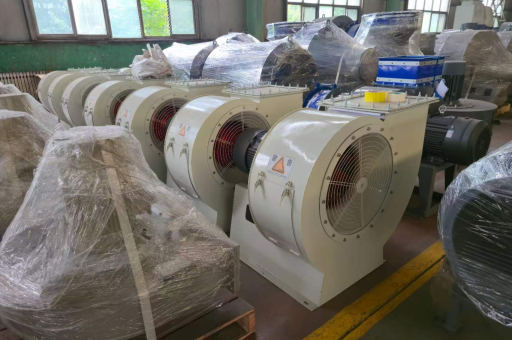
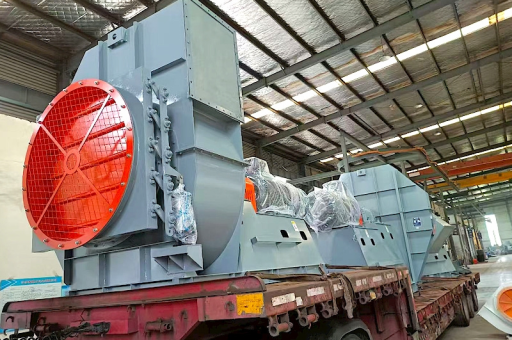
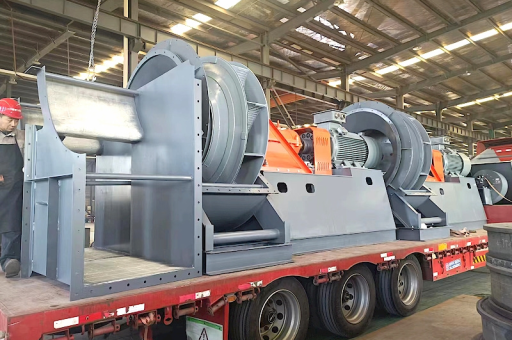
A 500℃ High-Temperature Exhaust Fan is a centrifugal or axial fan specifically designed to safely transfer gas streams at temperatures up to 500 degrees Celsius (932 degrees Fahrenheit) from an enclosed space to the atmosphere or to a treatment system.
The core principle governing its design is thermal management. Unlike standard fans where the motor is directly exposed to the airstream, these fans implement a separation between the heat source and the driving motor. This separation is achieved through one of two strategies:
- Direct Drive with Cooling Fans: The motor is mounted on a shaft extension outside the hot gas stream, protected by a secondary cooling fan that draws ambient air over the motor housing.
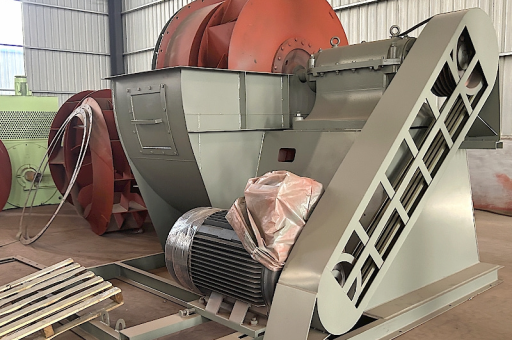
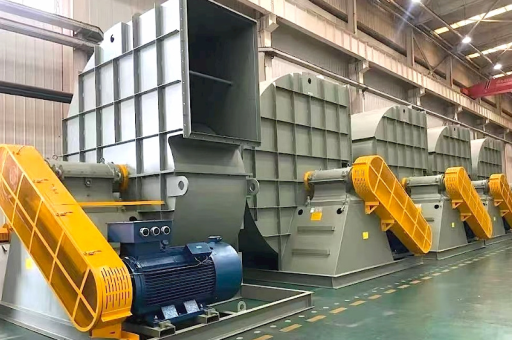
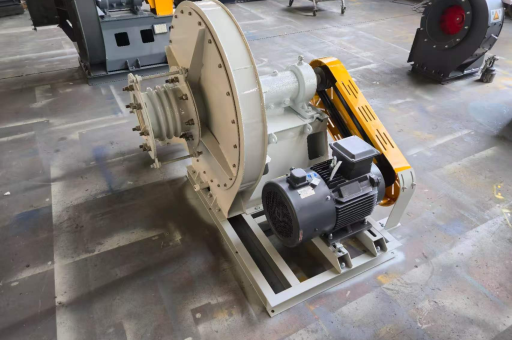
- Belt-Driven Configuration: The motor is located outside the hot air path entirely, transferring power via V-belts and a shaft that penetrates the fan housing through a specially designed heat barrier.
The impeller itself is the most critical component. It must be manufactured from materials that resist thermal creep and oxidation at 500°C.
Critical Engineering Components: How They Survive 500°C
1 Motor Cooling and Isolation
The motor is usually the weakest link in a high-temperature fan system. Standard electric motors have insulation classes (e.g., Class F, Class H) that degrade above 180°C. In a 500°C fan, the motor must be thermally isolated using:
- Heat slingers: A finned disc on the shaft between the housing and the motor that radiates heat away.
- Extended shaft length: Increasing the distance between the hot impeller and the motor bearings.
- External fan wheel on the motor shaft: This is mandatory; it pulls cool ambient air over the motor to keep internal winding temperatures below 90°C.
2 Impeller Metallurgy and Shaft Design
A standard steel impeller will undergo significant creep deformation at 500°C after a few hundred hours. High-temperature fans use:
- Stainless Steel 310S (1.4845): The most common material for continuous 500°C operation. It resists scaling and maintains yield strength.
- Inconel 600 or 601: For environments that include corrosive gases or thermal cycling, these nickel-based alloys provide superior resistance.
- Shafts: Often made from 42CrMo4 steel or Inconel, designed with a generous safety factor against torsional vibration at high temperatures.
3 Bearing Systems and Lubrication
Bearings face the double challenge of heat conducted down the shaft and ambient radiant heat. Solutions include:
- Remote bearing pedestals: Placing bearings outside the heat zone.
- High-temperature grease: e.g., PTFE-based grease or Perfluoropolyether (PFPE) grease that maintains viscosity up to 250°C (the bearing housing temperature must still be kept lower via cooling).
- Water or air cooling jackets around the bearing housing for continuous duty applications.
4 Housing and Sealing Technology
The housing must withstand thermal expansion without warping. Key designs include:
- Radial expansion slots or flexible expansion joints at the base.
- Double-wall construction with internal insulation (e.g., ceramic fiber blanket) for the casing.
- Shaft seals: Carbon ring seals or labyrinth seals to prevent hot gas leakage, which could damage the motor or bearings.
Operational Mechanics: Continuous vs. Duty Cycle Operation
There is a critical distinction between continuous operation at 500°C and intermittent duty.
- Continuous Duty (S1): The fan is designed to run indefinitely with the gas at 500°C. This requires heavier shafts, larger cooling fans, and often a separate oil lubrication system for bearings. Material selection must be based on long-term creep rupture strength.
- Intermittent Duty (S2-S4): The fan operates at 500°C for a limited time (e.g., 30 minutes to 2 hours) followed by a long cooling period. These fans can sometimes use slightly cheaper materials, but thermal cycling stress can cause fatigue cracking.
For safety applications (e.g., fire smoke extraction), a fan may need to operate for just 1-2 hours at 500°C but must be guaranteed to function after being idle for years.
Primary Industrial Applications
1 Industrial Ovens and Kilns
In the manufacturing of ceramics, glass, and carbon fiber, ovens often have exhaust ports that require removal of hot combustion gases. A 500°C fan ensures consistent thermal profile by removing stale heat, preventing hot spots.
2 Foundries and Metal Smelting
Furnaces emit massive amounts of radiant heat and flue gases. These fans extract fumes from casting operations, die-casting machines, and annealing furnaces. They must handle both heat and metal dust particles.
3 Chemical and Petrochemical Flare Stacks
Flare systems must maintain slight negative pressure to ensure gas doesn't escape. High-temperature fans assist in pulling combustion gases toward the flare stack tip, often operating in corrosive environments.
4 Fire Safety and Smoke Extraction Systems
In compliance with standards such as UL 762 (in North America) or EN 12101-3 (in Europe), these fans are used for:
- Staircase pressurization in high-rise buildings.
- Kitchen exhaust in commercial restaurants with high-temperature charbroilers.
- Industrial fire zones where chemical fires produce extreme heat.
Selection Criteria: Key Parameters for Your Project
1 Airflow Capacity (CFM/m³/h) and Static Pressure
Calculate your system demand. At 500°C, the air density is approximately 45% of that at 20°C. This means the fan must generate higher speed or larger impeller to achieve the same mass flow rate. Always specify performance at operating temperature, not at standard conditions.
2 Temperature Margin: Why 500°C is not always “500°C”
Some manufacturers rate a fan at “500°C” but only for a short duration. Verify:
- Maximum continuous temperature (e.g., 500°C continuous).
- Maximum burst temperature (e.g., 600°C for 30 minutes).
- Thermal gradient tolerance (e.g., maximum temperature rise per minute).
Choosing a fan with a derated temperature safety margin (e.g., capable of 600°C peak) adds reliability.
3 Material Selection: Stainless Steel vs. Special Alloys
- For clean, dry hot air: 310S Stainless Steel (SS310) is sufficient.
- For corrosive gases (e.g., chlorides, sulfur compounds): Choose Hastelloy C-276 or Inconel 625, which resist high-temperature corrosion.
- For abrasive particles (e.g., sand, fly ash): Consider impellers with tungsten carbide coatings or replaceable wear plates.
4 Electric vs. Belt-Driven Configuration
- Direct Drive: Higher efficiency, no belt maintenance, but the motor must be specially insulated and cooled.
- Belt-Driven: Motor is completely isolated from heat; easier motor replacement. However, belts degrade faster in hot environments and require frequent tensioning.
For a 500°C application, belt-driven is often preferred for heavy continuous duty, while direct drive with cooled motor is used for smaller, compact installations.
Installation Best Practices for Thermal Management
Proper installation is as important as the fan design itself:
- Provide proper inlet ducting: The ductwork connecting the source to the fan must be insulated to prevent heat loss that could condense acidic vapors.
- Install expansion joints: Between ductwork and fan flanges to absorb thermal growth (typically 10-15 mm per meter at 500°C).
- Ensure free air flow to cooling fan: The motor’s external cooling fan must not be blocked. Position away from walls.
- Use heat-resistant gaskets: Standard rubber gaskets fail. Use graphite or ceramic gasket materials.
- Add vibration monitoring: Thermal imbalance often manifests as vibration before catastrophic failure.
Common Failures and How to Prevent Them
| Failure Mode | Cause | Prevention |
|---|---|---|
| Bearing seizure | Grease oxidation; heat conduction | Use remote bearing pedestals with cooling jackets; PFPE grease |
| Impeller cracking | Thermal fatigue; poor welding | Specify solution-annealed 310S; perform radiography on welds |
| Motor burnout | Inadequate cooling; voltage drop | Verify motor cooling fan size; use VFD with thermal protection |
| Shaft misalignment | Thermal expansion of housing | Preload arrangement with sliding base plate |
| Corrosion | Chloride stress corrosion cracking | Choose Inconel for chlorine environments |
Frequently Asked Questions (FAQ)
Q1: Can a standard exhaust fan be used at 300°C? A: No. Standard fans use aluminum or polypropylene impellers which soften or melt at 150-200°C. A fan rated for 500°C is overkill but safer; however, it would be inefficient at low temperatures due to higher inertia and specific power consumption.
Q2: How do I calculate the required horsepower for a fan at 500°C? A: Use the corrected air density (ρ = 0.45 kg/m³ at 500°C vs. 1.2 kg/m³ at 20°C). The power required is proportional to density. So, for a given CFM and static pressure, the motor may be 2-3 times larger in torque than a standard temperature fan.
Q3: What is the typical lifespan of a 500°C high-temperature fan? A: With proper maintenance: bearings last 8,000–12,000 hours; impeller can last 20,000–50,000 hours depending on thermal cycling and corrosion. In continuous clean operation, the impeller may last 5+ years.
Q4: Can these fans be used for explosion-proof applications? A: Yes. Many 500°C fans are designed as ATEX or Class I/Div II compliant. However, the motor must be explosion-proof certified, and the impeller must be non-sparking (e.g., aluminum-bronze or stainless steel). Hot surfaces themselves are ignition sources, so additional safety measures are needed.
Q5: Is variable frequency drive (VFD) recommended? A: VFD is beneficial for controlling airflow and soft-starting, but ensure the VFD is rated for the motor’s thermal load and that the motor is inverter-duty rated. Note: running a fan at low RPM (e.g., under 20% speed) reduces the cooling fan’s airflow, potentially causing overheating.
Conclusion: Making the Right Investment
A 500℃ High-Temperature Exhaust Fan is not a commodity product; it is a precision thermal management system. The decision to invest in a fan capable of withstanding 500°C must be based on a thorough analysis of your process parameters: actual gas temperature (including startup and peak excursions), chemical composition, continuous duty requirements, and ambient conditions.
Cheaper alternatives often fail within months due to bearing breakdown or impeller fatigue. On the other hand, a well-selected fan from a reputable manufacturer—featuring properly documented metallurgy, adequate cooling, and thermal expansion management—will deliver reliable service for years.
When consulting with suppliers, always request:
- Certified fan curves at operating temperature.
- Material certifications for the impeller and shaft.
- Documentation of cooling system capacity.
In the high-stakes environment of industrial heat management, reliability is not an option—it is a requirement. Choose the right 500°C fan, install it correctly, and you will maintain both safety and productivity.