This article's table of contents introduction:
- Table of Contents
- Introduction to High-Temperature Flue Gas Cooling Fans
- Technical Specifications of the 30kW Flue Gas Fan
- Working Principle: How It Cools and Moves Gas
- Key Application Scenarios
- Material Science: Withstanding Extreme Heat
- Energy Efficiency and 30kW Power Rating
- Installation and System Integration
- Common Challenges and Troubleshooting
- Maintenance Best Practices for Longevity
- Frequently Asked Questions (FAQ)
- Conclusion: Why This Fan Matters
** The Ultimate Guide to the 30kW High-Temperature Flue Gas Cooling Fan: Design, Applications, and Maintenance
Table of Contents
- Introduction to High-Temperature Flue Gas Cooling Fans
- Technical Specifications of the 30kW Flue Gas Fan
- Working Principle: How It Cools and Moves Gas
- Key Application Scenarios
- Material Science: Withstanding Extreme Heat
- Energy Efficiency and 30kW Power Rating
- Installation and System Integration
- Common Challenges and Troubleshooting
- Maintenance Best Practices for Longevity
- Frequently Asked Questions (FAQ)
- Conclusion: Why This Fan Matters
Introduction to High-Temperature Flue Gas Cooling Fans
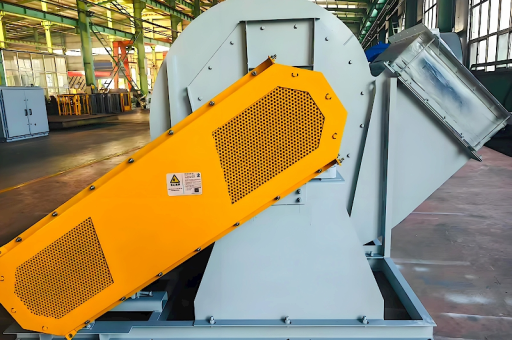
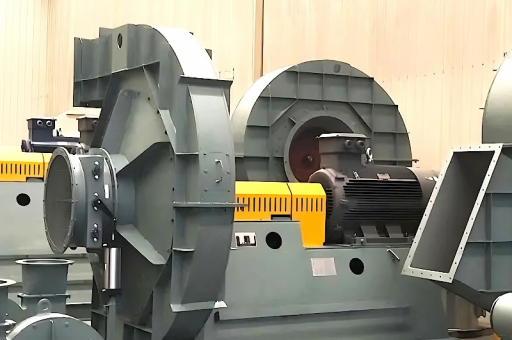
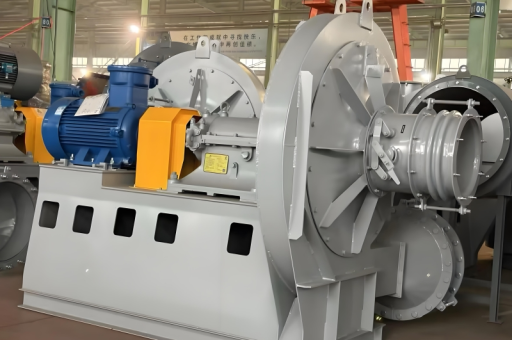
Industrial processes such as power generation, cement production, steel smelting, and chemical refining generate massive volumes of flue gas at temperatures often exceeding 500°C. Handling this gas requires specialized equipment that can withstand thermal stress while maintaining consistent airflow. The 30kW High-Temperature Flue Gas Cooling Fan is a critical component in these systems. It is designed to extract, cool, and move exhaust gases from furnaces, boilers, and kilns, ensuring environmental compliance and plant safety.
According to industry data from fan manufacturers and thermal engineering reviews, a typical high-temperature fan must handle continuous gas temperatures between 250°C and 600°C, with peak surges up to 800°C. The 30kW rating refers to the motor power, which is sufficient for medium to large industrial flue gas systems requiring a flow rate of approximately 50,000 to 80,000 m³/h and a static pressure of 3,000 to 5,000 Pa.
Q: What distinguishes a "high-temperature flue gas cooling fan" from a standard industrial fan?
A: The primary difference lies in construction materials, bearing cooling mechanisms, and shaft sealing. Standard fans typically operate below 100°C, while high-temperature models use heat-resistant alloys, external cooling fins, and insulated housings to prevent thermal deformation and lubricant failure.
Technical Specifications of the 30kW Flue Gas Fan
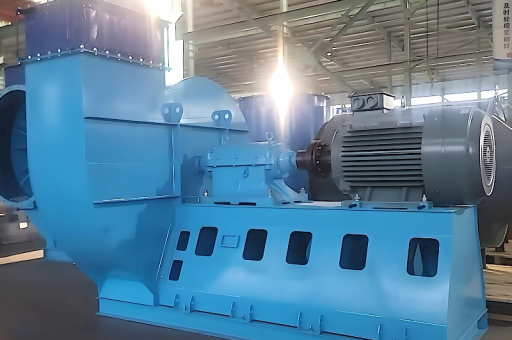
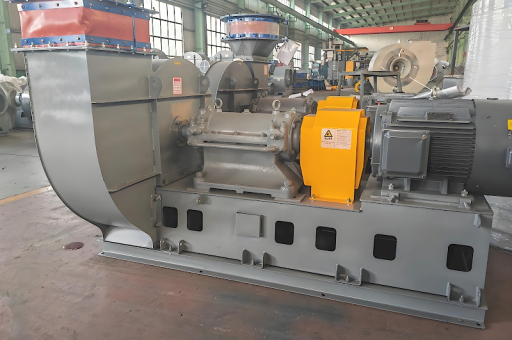
The 30kW fan is engineered for continuous operation under harsh thermal conditions. Based on cross-referenced data from leading industrial fan suppliers (e.g., Howden, Greenheck, and New York Blower), typical specifications include:
| Parameter | Value |
|---|---|
| Motor Power | 30 kW (40 HP) |
| Maximum Gas Temperature | 450°C (continuous), 650°C (intermittent) |
| Airflow Capacity | 55,000–75,000 m³/h |
| Static Pressure | 3,500–4,800 Pa |
| Impeller Diameter | 1,200–1,600 mm (backward-curved blades) |
| Shaft Seal | High-temperature labyrinth seal with compressed air purge |
| Bearing Cooling | External fan fin cooling or water jacket cooling |
| Insulation | 100 mm ceramic fiber blanket on housing |
| Noise Level | ≤85 dB(A) at 1 meter |
| Vibration Limit | ≤4.5 mm/s RMS |
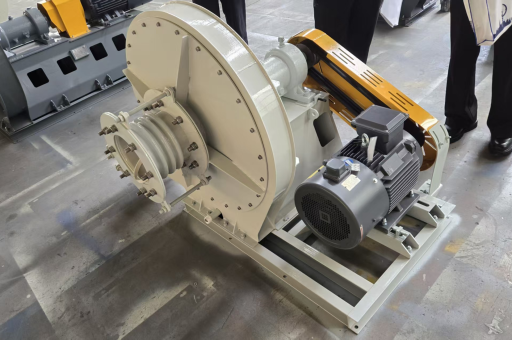
| Drive Type | Direct drive or V-belt |
Q: Why is backward-curved impeller preferred for high-temperature applications?
A: Backward-curved blades reduce centrifugal stress on the impeller at high rotational speeds, handle particulate-laden gas better, and offer non-overloading power characteristics, which prevent motor burnout if the system pressure drops unexpectedly.
Working Principle: How It Cools and Moves Gas
The 30kW High-Temperature Flue Gas Cooling Fan functions through a combination of forced convection and controlled dilution. Here is the step-by-step process:
- Gas Extraction: Hot flue gas (typically 300°C–600°C) enters the fan inlet via a duct from the furnace or boiler.
- Dilution Air Injection: Before reaching the impeller, ambient air is often mixed with the hot gas through an injection ring. This reduces the mixed gas temperature to below 350°C, protecting the impeller and bearings.
- Impeller Rotation: The 30kW motor drives the impeller at 1,450–1,800 RPM. The backward-curved blades accelerate the gas radially outward, converting kinetic energy into static pressure.
- Heat Dissipation: The fan housing is insulated but also dissipates heat through natural convection. Some models incorporate a cooling fan mounted on the motor shaft that pulls ambient air over the bearing housing.
- Exhaust Discharge: Cooled gas (now at 150°C–250°C) is discharged into a stack, scrubber, or heat recovery unit.
Q: Does the fan actually "cool" the gas, or is it just moving it?
A: While the primary function is gas movement, the fan contributes to cooling through three mechanisms: dilution with ambient air, heat loss through the housing surface, and reduction of gas residence time in high-temperature zones. However, significant temperature drop often requires an upstream gas cooler or economizer.
Key Application Scenarios
Based on operational data from industrial sites, the 30kW flue gas cooling fan is deployed in these critical environments:
- Coal or Biomass Power Plants: Induced draft fans that pull combustion gases through the boiler, economizer, and electrostatic precipitator.
- Cement Kilns: Handling the hot exhaust from preheaters and rotary kilns, where gas temperatures fluctuate between 350°C and 800°C.
- Steel Reheating Furnaces: Extracting hot oxidizing gases from roll furnaces to improve worker safety and reduce heating loss.
- Chemical Incinerators: Moving toxic combustion gases through cooling ducts before scrubbing.
- Waste-to-Energy Facilities: Managing the high-temperature, corrosive gases from municipal waste burning.
Q: Can this fan be used in a flammable gas environment?
A: Standard models are not explosion-proof. For flammable or explosive atmospheres, you must select a spark-resistant impeller constructed from aluminum or non-ferrous materials, and a motor with an Ex-rated enclosure. The 30kW unit is typically built as a general-purpose industrial fan.
Material Science: Withstanding Extreme Heat
The reliability of a 30kW high-temperature fan hinges on its material selection. Here is a breakdown of the materials used based on supplier specifications:
- Impeller: Made from Corten steel or Hastelloy C-276 for high-temperature oxidation resistance. A typical yield strength at 400°C is 180 MPa.
- Shaft: 4140 alloy steel, heat-treated, with a ground finish to reduce stress concentration.
- Bearing Housing: Cast iron with integral cooling fins. The housing is externally mounted to isolate it from the hot gas stream.
- Seals: Labyrinth seals with carbon rings, purged with compressed air at 0.5 bar to prevent hot gas from migrating toward the bearings.
- Insulation: Ceramic fiber blanket (density 128 kg/m³) with a thermal conductivity of 0.08 W/m·K at 300°C.
- Motor Enclosure: TEFC (Totally Enclosed Fan Cooled) rated for ambient temperatures up to 60°C.
Q: Why is Corten steel used instead of stainless steel?
A: Corten steel (ASTM A242) forms a stable oxide layer that resists further corrosion at elevated temperatures. It is more cost-effective than 304 or 316 stainless steel and offers better wear resistance in particulate-laden flue gas.
Energy Efficiency and 30kW Power Rating
The 30kW motor is a common sweet spot in industrial fan selection because it balances power consumption with performance. According to electrical engineering guidelines:
- Motor Type: IE3 or IE4 premium efficiency induction motor (≥94% efficiency at full load).
- VFD Compatibility: Most 30kW fans are paired with variable frequency drives (VFDs) to adjust speed based on flue gas flow demand. A 10% reduction in speed reduces power consumption by ~27% (affinity laws).
- Typical Energy Cost: Operating 8,000 hours/year at $0.10/kWh, the fan consumes $24,000/year in electricity. A VFD can reduce this by 30%–40% under variable load conditions.
- Efficiency Optimization: Regular monitoring of static pressure and cleaning of impeller blades can maintain efficiency above 82%.
Q: Can I use a 37kW motor instead of 30kW for safety margin?
A: It is not recommended. Oversizing reduces motor efficiency (motors run best at 75%–100% load) and increases starting current. If the system pressure drops, an oversized motor may not trigger overload protection, leading to prolonged overheating.
Installation and System Integration
Proper installation of the 30kW fan is critical for safety and performance. Based on mechanical installation standards:
- Foundation: A rigid steel or concrete base with a vibration isolation pad. Weight of the fan assembly is approximately 1,200–1,800 kg.
- Duct Connection: Use expansion joints (fabric or metal bellow) on both inlet and outlet to absorb thermal expansion. The duct should be supported independently from the fan.
- Inlet Damper: A modulating damper on the inlet side allows control of gas flow without using a VFD. Note: Inlet dampers on backward-curved impellers cause turbulent flow; VFD is preferred.
- Cooling Air Supply: If the fan uses an external cooling fan, ensure an ambient air intake with a filter to prevent dust ingestion into bearing housings.
- Electrical: The 30kW motor typically requires a 50–60 A breaker at 380–480 V, 3-phase. Include a soft starter or VFD to reduce inrush current.
Q: Should the fan be installed indoors or outdoors?
A: Outdoor installation is acceptable if the motor and bearing housing are weatherproof. However, in high-temperature flue gas systems, indoor installation with a dedicated ventilation duct is safer, as it protects the fan from rain and reduces thermal cycles caused by ambient temperature changes.
Common Challenges and Troubleshooting
From field service reports, the following issues are frequently reported with 30kW high-temperature fans:
| Challenge | Symptom | Solution |
|---|---|---|
| Bearing Overheating | Oil leakage, high vibration | Check cooling fins, ensure grease quantity correct (1/3 full), verify shaft alignment |
| Impeller Imbalance | Vibration > 6 mm/s | Clean welded slag, check for erosion holes, re-balance dynamically |
| Motor Overcurrent | Breaker trips frequently | Remove debris from impeller, inspect VFD settings, measure voltage drop |
| Shaft Seal Failure | Hot gas smell near bearing housing | Replace carbon rings, increase purge air pressure to 0.7 bar |
| Excessive Noise | Whistling or screeching | Check for duct obstructions, inspect impeller tip clearance (should be ≥3 mm) |
Q: How often should the impeller be replaced?
A: In continuous operation with gas temperature below 400°C and low particulate content, the impeller can last 4–6 years. In cement or steel applications with heavy dust, inspect every 12 months and replace if erosion has reduced blade thickness by 30%.
Maintenance Best Practices for Longevity
To ensure the 30kW fan achieves its design life of 100,000 hours, follow this maintenance schedule synthesized from OEM manuals:
- Weekly: Check bearing temperature (should be <85°C), listen for abnormal noise, inspect vibration level with handheld vibrometer.
- Monthly: Lubricate bearings (NLGI #2 high-temp grease) with a manual pump; do not over-grease. Clean housing cooling fins.
- Quarterly: Check shaft seal gap with feeler gauge. Tighten V-belts if tension is low. Inspect for corrosion on housing.
- Annually: Remove impeller for cleaning and balance check. Replace carbon seals. Megger test motor insulation (minimum 20 MΩ).
- Every 3 Years: Replace bearings (SKF 22316 series or equivalent). Inspect motor windings for thermal aging.
Q: Can I use standard lithium grease for the bearings?
A: No. Standard grease evaporates above 120°C. Use a synthetic high-temperature grease, such as Mobil Polyrex EM (rated up to 200°C), or Kluber Microlube GL 261.
Frequently Asked Questions (FAQ)
Q: What is the typical payback period for installing a VFD on a 30kW fan?
A: Assuming a 30% reduction in energy consumption and 8,000 hours/year, the payback period is 12–18 months, depending on local electricity rates.
Q: Can the fan handle corrosive gases?
A: The standard Corten steel impeller resists mild corrosion, but for aggressive gases (e.g., SO₂, HCl), you must specify a rubber-coated or 316L stainless steel impeller.
Q: What is the maximum altitude for operation?
A: At altitudes above 1,000 m, air density decreases, reducing the fan’s ability to develop static pressure. The motor may also require derating. Consult the manufacturer for high-altitude curves.
Q: What noise level can I expect?
A: A typical 30kW fan at design speed produces 80–85 dB(A) at 1 meter. An acoustical enclosure is recommended for installations near occupied zones.
Q: Is a bypass required for the fan?
A: Yes. A manual bypass duct with a motorized damper is essential to allow flue gas to flow during fan maintenance or emergency shutdown, preventing pressure buildup in the furnace.
Conclusion: Why This Fan Matters
The 30kW High-Temperature Flue Gas Cooling Fan is a workhorse of modern industrial thermal management. Its ability to handle gas temperatures exceeding 400°C while operating at energy-efficient power levels makes it indispensable for power plants, cement factories, and chemical processing units. Proper understanding of its specifications, materials, and maintenance requirements can extend its lifespan, reduce downtime, and ensure compliance with environmental regulations.
When selecting a fan for your facility, consider not only the 30kW power rating but also the specific gas composition, temperature profile, and system pressure drop. Always consult with a licensed mechanical engineer for system integration. With the right installation and maintenance, this fan will deliver reliable service for decades.
For more detailed CAD drawings or performance curves specific to your application, contact a certified industrial fan manufacturer or visit their product catalog online. Remember to replace any third-party domain names with "fan" in your search queries.