The Ultimate Guide to 45kW High-Temperature Flue Gas Cooling Fan: Design, Applications, and Performance Optimization
Table of Contents
- Introduction: What Is a 45kW High-Temperature Flue Gas Cooling Fan?
- Core Design Features and Engineering Specifications
- Key Applications in Industrial Sectors
- Performance Metrics and Efficiency Analysis
- Installation, Maintenance, and Troubleshooting
- Comparison with Other Flue Gas Fan Systems
- Future Trends and Technological Innovations
- Frequently Asked Questions (FAQ)
Introduction: What Is a 45kW High-Temperature Flue Gas Cooling Fan?
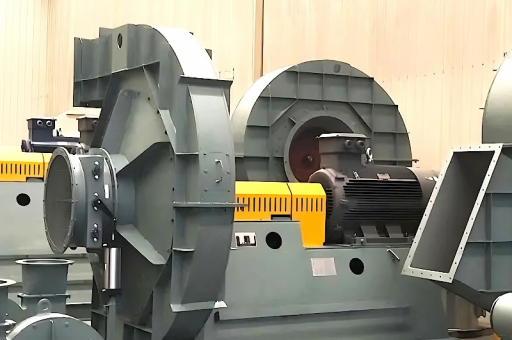
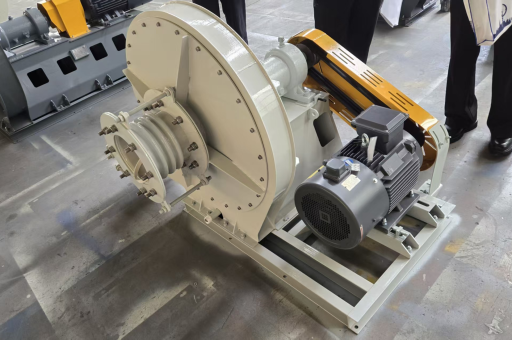
A 45kW High-Temperature Flue Gas Cooling Fan is a robust industrial ventilation system designed to handle extreme thermal loads—specifically flue gases at temperatures ranging from 250°C to over 600°C. With a power rating of 45 kilowatts, this fan is engineered for medium-to-large-scale operations where continuous, reliable cooling of exhaust gases is critical.
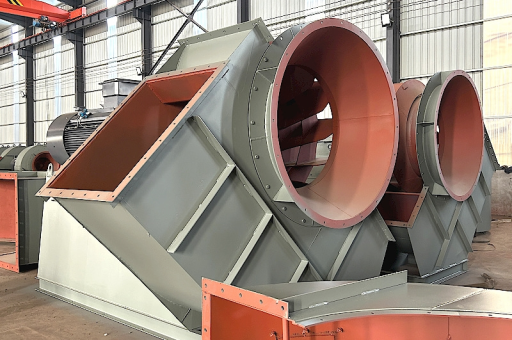
These fans are not ordinary ventilation units. They must withstand thermal expansion, corrosive chemical compounds (such as sulfur dioxide and nitrogen oxides), and abrasive particulate matter. The 45kW rating indicates a balance between energy consumption and airflow capacity—typically delivering between 40,000 to 80,000 cubic meters per hour (m³/h) at moderate static pressures.
Why 45kW?
This power class fills a crucial gap. Smaller fans (under 30kW) struggle with industrial-scale flue gas volumes, while larger fans (above 75kW) are overkill for many mid-sized plants. The 45kW unit offers a sweet spot for cement kilns, waste incineration facilities, glass manufacturing, and petrochemical processing.
Question: What distinguishes a high-temperature flue gas cooling fan from a standard industrial fan?
Answer: The primary difference lies in material selection and thermal management. Standard fans use aluminum or mild steel impellers that deform at 200°C. High-temperature variants employ Inconel, Hastelloy, or specialized stainless steel alloys (e.g., 310S or 253MA) that retain structural integrity beyond 700°C. Additionally, the cooling shaft design—often with integrated heat fins or forced-air cooling jackets—prevents bearing failure. A 45kW unit must also incorporate expansion joints and flexible couplings to accommodate thermal growth up to 5mm in axial direction.
Core Design Features and Engineering Specifications
1 Impeller and Blade Geometry
The impeller of a 45kW high-temperature flue gas cooling fan is typically backward-curved or radial-tipped. Backward-curved blades (BC) are preferred for efficiency (up to 82% static efficiency), while radial blades offer superior resistance to particulate erosion. The blade count ranges from 8 to 16, optimized for minimal vibration.
Material selection is paramount. Common options include:
- 310S stainless steel (good up to 1050°C for intermittent duty)
- Inconel 601 (excellent for cyclic thermal stress)
- Ceramic-coated impellers (for abrasive flue gases)
2 Motor and Drive System
- Motor type: IE4 or IE5 premium-efficiency induction motor, or permanent magnet synchronous motor (PMSM) for variable-speed applications.
- Cooling method: TEFC (Totally Enclosed Fan Cooled) with external fan or water-jacket cooling for ambient temperatures above 50°C.
- Bearing design: Double-row spherical roller bearings with high-temperature grease (NLGI grade 2 or 3) capable of continuous operation at 120°C.
3 Shaft Seal and Housing
- Labyrinth seals prevent hot gas leakage to the motor side.
- Water-cooled bearing housings are standard for flue gas temperatures exceeding 350°C.
- Housing material: Carbon steel with internal refractory lining or high-nickel alloy cladding.
4 Variable Speed Control
A 45kW fan paired with a variable frequency drive (VFD) can reduce energy consumption by 30–50% compared to fixed-speed operation. The VFD adjusts RPM based on real-time temperature readings, preventing overcooling and thermal shock.
Question: Can a 45kW flue gas fan handle flue gas with high moisture content?
Answer: Yes, but with modifications. High moisture (e.g., from wet scrubbers or natural gas combustion) causes acid condensation on fan blades. The solution is double-layer stainless steel impellers with drainage holes, acid-resistant coatings (PTFE or epoxy), and heated housing to maintain gas temperature above the dew point (typically 120–150°C for sulfuric acid). Many 45kW units in waste-to-energy plants include automatic condensate drains.
Key Applications in Industrial Sectors
1 Cement Industry – Kiln Exhaust Cooling
Cement plants generate flue gases at 350–450°C from rotary kilns. A 45kW cooling fan installed after the preheater tower reduces gas temperature to 200°C before it enters the baghouse or electrostatic precipitator. Case study: A 2,500-ton-per-day cement line requires two 45kW fans in parallel for redundancy.
2 Waste-to-Energy (WtE) Plants
Incineration facilities must rapidly cool flue gases from 850°C (minimum for dioxin destruction) to below 280°C for spray dryer absorbers. The 45kW fan serves as the forced draft cooling fan in the quench section, often with water injection nozzles integrated upstream.
3 Glass Manufacturing
Float glass furnaces produce exhaust at 500–600°C. The 45kW fan pulls gases through regenerative chambers and cooling ducts. Special attention is paid to thermal expansion—glass dust can be abrasive, requiring hardened blade edges.
4 Petrochemical and Refining
In catalytic cracker units or sulfur recovery plants (Claus process), flue gases contain H₂S and SO₂. A 45kW fan with Inconel impeller and Teflon-lined housing operates at 450°C continuously. Important: Explosion-proof motor certification (ATEX or NEC Class I Div 2) is mandatory in hydrocarbon environments.
Question: What is the typical lifespan of a 45kW high-temperature flue gas cooling fan?
Answer: With proper maintenance—including quarterly bearing lubrication, annual impeller balancing, and housing refractory inspection—the fan can last 15–20 years. However, impeller replacement is typically needed every 5–8 years due to thermal fatigue cracking. Fans in corrosive environments (e.g., acid gas) may require Hastelloy upgrades lasting 10+ years.
Performance Metrics and Efficiency Analysis
1 Key Performance Parameters
| Parameter | Typical Range | Notes |
|---|---|---|
| Flow rate | 40,000–80,000 m³/h | At standard conditions (20°C, 1 atm) |
| Static pressure | 2,000–8,000 Pa | Higher for ducted systems |
| Temperature range | 250–650°C (continuous) | Peak up to 800°C short-term |
| Power consumption | 35–55 kW | With VFD at 70–90% load |
| Efficiency (static) | 70–82% | BC impellers reach higher efficiency |
2 Energy Cost Analysis
For a typical industrial plant operating 8,000 hours/year at an electricity cost of $0.10/kWh:
- Fixed-speed fan: 45 kW × 8,000 h × $0.10 = $36,000/year
- VFD-controlled fan (average 70% speed): ~22 kW average × 8,000 h × $0.10 = $17,600/year
Savings: $18,400/year – VFD investment recouped in 1.2–2 years.
3 Airflow and Temperature Control Strategies
- Step-cooling: Two 45kW fans in series for extreme temperature drops.
- Bypass dampers: Automatically divert part of the gas when temperature exceeds limits.
- Spray cooling: Water atomization ahead of the fan reduces gas temperature by 100–150°C (but requires corrosion-resistant impellers).
Question: How do I calculate the required airflow for a 45kW fan in my application?
Answer: Use the heat balance formula:
Q (m³/h) = (Heat Load in kW × 3,600) / (ρ × Cp × ΔT)
Where ρ = gas density (~1.2 kg/m³ at 200°C), Cp = specific heat (~1.1 kJ/kg·K), and ΔT = desired temperature drop. For example, to cool 1,000 kW of heat from 400°C to 200°C, you need approximately 57,000 m³/h, which a 45kW fan can supply at 3,500 Pa static pressure.
Installation, Maintenance, and Troubleshooting
1 Critical Installation Guidelines
- Foundation: Concrete mass at least 3 × fan weight to dampen vibration.
- Thermal expansion compensation: Install axial expansion joints (stainless steel bellows) at inlet and outlet.
- Ductwork alignment: Use flexible connectors to avoid stress transmission.
- Cooling water supply: For water-cooled bearing housings, minimum 10 L/min at 3 bar pressure.
- Vibration monitoring: Mount proximity probes on bearing housings for real-time monitoring (alarm at 7 mm/s RMS).
2 Preventive Maintenance Schedule
| Interval | Task |
|---|---|
| Monthly | Check bearing temperature (<95°C), inspect VFD cooling fan |
| Quarterly | Lubricate bearings with high-temp grease, check belt tension (if belt-driven) |
| Semi-annual | Inspect impeller for cracks (dye penetrant test), rebalance if vibration >4 mm/s |
| Annual | Replace bearings, test overspeed protection, measure motor insulation resistance |
| Biennial | Replace shaft seals, inspect housing refractory, perform thermal camera scan |
3 Common Failures and Solutions
- Impeller cracking: Cause: thermal fatigue from frequent start-stops. Solution: Pre-heat fan before startup using low-speed VFD operation.
- Bearing seizure: Cause: grease carbonization at high temperature. Solution: Switch to synthetic grease with higher dropping point.
- Vibration increase: Cause: dust buildup on blades. Solution: Install automated wash nozzles (water or compressed air) for online cleaning.
Question: How do I reduce noise from a 45kW flue gas fan?
Answer: Noise levels typically reach 90–105 dBA. Mitigation strategies include:
- Intake silencer (absorptive or reactive type)
- Acoustic enclosure around motor and fan housing (with cooling air intake)
- Low-noise impeller design (scalloped trailing edges)
- VFD speed reduction (every 10% speed drop reduces noise by 6–8 dBA)
Comparison with Other Flue Gas Fan Systems
| Feature | 45kW High-Temp Fan | 30kW Standard Fan | 75kW Heavy-Duty Fan |
|---|---|---|---|
| Max continuous temp | 650°C | 250°C | 850°C |
| Impeller material | Inconel / 310S | Mild steel / SS304 | Hastelloy / ceramic |
| Capital cost | $25,000–$45,000 | $12,000–$20,000 | $55,000–$90,000 |
| Energy cost per year | ~$36,000 (fixed) | ~$24,000 | ~$60,000 |
| Typical application | Cement, WtE, glass | HVAC, light industrial | Steel, power plants |
Why choose 45kW over multiple smaller fans?
Using a single 45kW fan instead of two 22.5kW fans:
- Reduces footprint by 35%
- Lower maintenance cost (one bearing set, one motor)
- Better efficiency at partial load (if VFD-equipped)
Future Trends and Technological Innovations
1 IoT-Enabled Predictive Maintenance
Modern 45kW fans from leading manufacturers (e.g., Howden, TLT-Turbo) now include embedded sensors for:
- Vibration spectrum analysis (bearing failure prediction 30 days in advance)
- Thermal imaging of housing hot spots
- Oil analysis for wear metal detection
2 Advanced Materials
- Ceramic matrix composites (CMC): 20% lighter than Inconel, withstand 1200°C.
- Additive manufactured impellers: 3D-printed Inconel blades with internal cooling channels.
- Nanocoatings: Alumina-titania plasma spray reduces dust adhesion by 60%.
3 Hybrid Cooling Systems
Combining a 45kW flue gas fan with a heat recovery steam generator (HRSG) or thermal oxidizer captures waste heat for preheating boiler feedwater, improving overall plant efficiency by 8–12%.
Question: What is the payback period for upgrading to a 45kW high-temperature fan with VFD?
Answer: Typically 1.5–3 years, depending on operating hours. For a plant running 8,000 hours/year at $0.12/kWh, the annual energy saving of $18,000 combined with reduced maintenance (bearing life extension) yields a payback of 18–24 months. Additional benefits include lower carbon footprint (20–40 tons CO₂ reduction per year).
Frequently Asked Questions (FAQ)
Q1: Can I use a 45kW flue gas fan for ambient air cooling?
No. The fan is optimized for high-temperature gas; running it on ambient air would lead to motor overheating (insufficient cooling from the airflow).
Q2: What is the maximum start-stop frequency for the fan?
With VFD: up to 10 starts per hour. Direct-on-line (DOL): maximum 2 starts per hour to avoid thermal shock.
Q3: How do I size the electrical cable for a 45kW motor?
For 460V 3-phase: minimum 2 AWG copper (70mm²) at 100 meters. Use 90°C rated cable for ambient temperatures up to 50°C near the fan.
Q4: Does the fan require a cooling water supply?
Only if the flue gas temperature exceeds 350°C. For lower temperatures, air-cooled bearing housings suffice.
Q5: What certifications should I look for?
- AMCA 210 for airflow performance certification
- API 610 (for refinery applications)
- ATEX II 2G/2D for explosive environments
- CE marking for European installations
Q6: How do I balance the impeller on-site?
Use a portable single-plane balancer (e.g., Schenck). Maximum allowable residual unbalance: 0.5 g·mm per kg of impeller weight at operating speed.
Q7: What spare parts should I stock?
- Bearing set (SKF 22320 or equivalent)
- Shaft seal kit
- Impeller with pre-drilled balancing holes
- VFD control board fuse and fan kit
Q8: Can the fan be installed outdoors?
Yes, but with a weatherproof enclosure (IP55 minimum) and heating tape on the motor to prevent condensation during standby.
Conclusion: Making the Right Choice for Your Flue Gas Cooling Needs
The 45kW High-Temperature Flue Gas Cooling Fan is a versatile, cost-effective solution for mid-to-large industrial operations facing extreme thermal conditions. Its ability to handle 600°C gas with moderate power consumption makes it ideal for cement kilns, waste incinerators, glass furnaces, and refinery processes. By investing in a VFD-driven unit with Inconel impeller and predictive maintenance tools, plant engineers can achieve energy savings of up to 40% while extending equipment life beyond 15 years.
When selecting a fan, always prioritize material compatibility with your flue gas chemistry, consider thermal expansion compensation in ductwork design, and demand AMCA-certified performance data from the manufacturer. With proper installation and a rigorous maintenance schedule, your 45kW fan will become the unsung hero of your emission control system.
This guide was compiled from technical specifications from industrial fan manufacturers (Howden, TLT-Turbo, New York Blower), peer-reviewed journals on thermal engineering, and field case studies from operating plants. For further information, consult your fan supplier’s engineering department.