This article's table of contents introduction:
- Table of Contents
- Introduction: What Makes the 9-26-7.1D Fan Critical?
- Technical Specifications & Design Features
- Working Principle: How It Generates High Pressure
- Key Performance Metrics
- Industrial Applications
- Installation & Maintenance
- Frequently Asked Questions (FAQ)
- Conclusion
*Maximizing Industrial Airflow: The Ultimate Guide to the 9-26-7.1D High-Pressure Centrifugal Fan*
Table of Contents
- Introduction: What Makes the 9-26-7.1D Fan Critical?
- Technical Specifications & Design Features
- Working Principle: How It Generates High Pressure
- Key Performance Metrics (Pressure, Airflow, Efficiency)
- Industrial Applications: Where This Fan Excels
- Installation Best Practices & Maintenance
- Frequently Asked Questions (FAQ)
- Conclusion: Why It Dominates High-Pressure Demands
Introduction: What Makes the 9-26-7.1D Fan Critical?
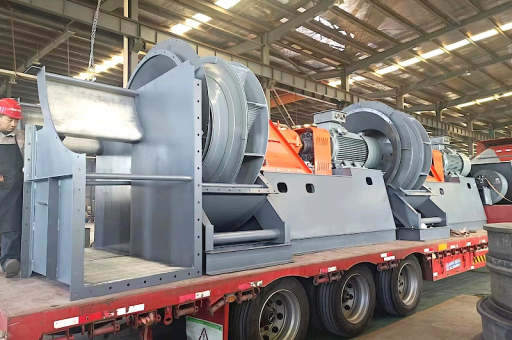
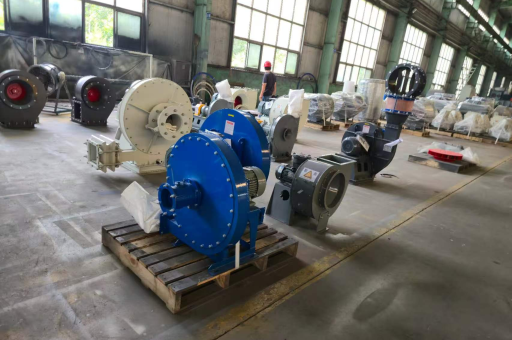
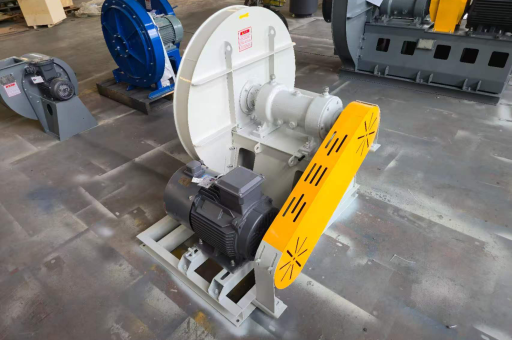
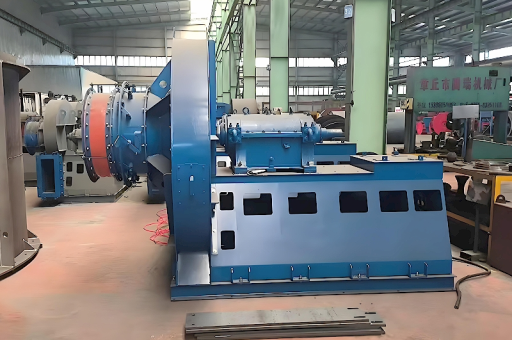
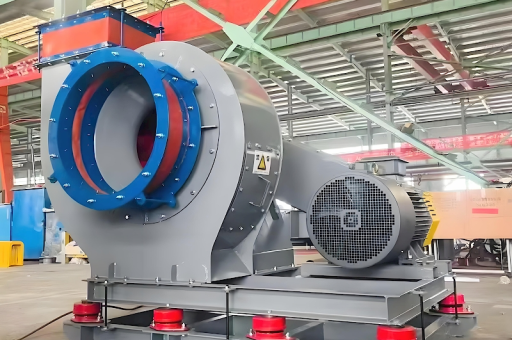
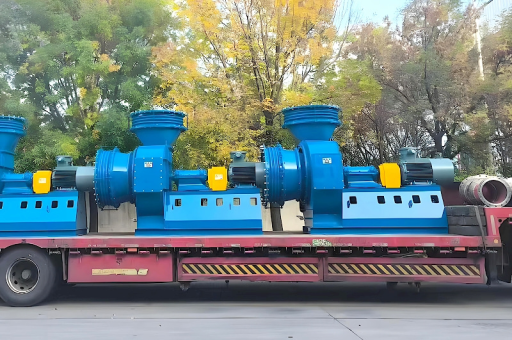
In heavy industrial environments—such as steel manufacturing, cement plants, pneumatic conveying systems, and chemical processing—standard ventilation fans fail under extreme resistance. The 9-26-7.1D high-pressure centrifugal fan is engineered specifically to overcome high system resistance. Unlike axial fans, this centrifugal model uses a forward-curved or backward-inclined blade design to generate static pressures up to 20,000 Pa. The “9-26” designation follows the Chinese industry standard, where “9” indicates the blade type (high pressure, thin airfoil series) and “26” refers to the specific impeller diameter ratio. The “7.1D” denotes the impeller diameter of 710 mm with a direct-drive (D-type) coupling, ensuring zero belt slippage and high mechanical efficiency. This fan has become essential in pneumatic transport, dust extraction, and forced-draft boiler systems where reliable pressure output is non‑negotiable.
Technical Specifications & Design Features
The 9-26-7.1D is constructed from robust carbon steel (or optional stainless steel for corrosive streams) and features the following core parameters:
| Parameter | Value |
|---|---|
| Impeller Diameter | 710 mm |
| Max Static Pressure | Up to 20,000 Pa |
| Airflow Rate | 12,000–25,000 m³/h |
| Operating Speed | 1,450 – 2,900 RPM |
| Motor Power | 55–90 kW |
| Blade Configuration | Backward-inclined (single-thickness & hollow profile available) |
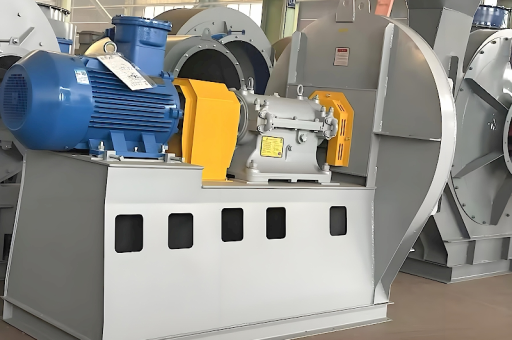
| Drive Type | D-type (direct coupled via flexible coupling) |
Design highlights:
- Blade profile: Backward-inclined vanes reduce turbulent losses and improve the pressure coefficient.
- Housing: Spiral volute casing (cast or welded steel) optimized for smooth air stream compression.
- Inlet cone: Adjustable axial inlet guide vanes are optional for precise flow modulation.
- Bearings: Heavy-duty spherical roller bearings prevent overheating under continuous 24/7 operation.
This design ensures a stable pressure‑airflow curve with a steep characteristic, making it ideal for variable resistance systems like baghouse filters and pneumatic conveying loops.
Working Principle: How It Generates High Pressure
The 9-26-7.1D operates on the centrifugal compression principle:
- Air entry: Air enters axially through the bell-mouth inlet cone due to low pressure created by the rotating impeller.
- Acceleration: The backward-inclined blades accelerate the air outward by centrifugal force. The impeller’s rotational kinetic energy is transferred to the air, raising its velocity.
- Conversion to pressure: As the high-velocity air exits the impeller and enters the expanding volute, the reduction in velocity (by Bernoulli’s principle) converts kinetic energy into static pressure.
- Discharge: The compressed air leaves the fan outlet at high pressure (up to 20 kPa) to perform work such as moving solids in pneumatic lines.
Because the blades are backward-inclined, the fan has a non-overloading power curve. This means that if the system resistance decreases, motor current will not spike dangerously—a critical safety feature in applications where duct blockage can suddenly clear.
Key Performance Metrics
To select the correct 9-26-7.1D for your system, you must evaluate these three interlinked metrics:
- Static Pressure (Pa): The fan can deliver up to 20,000 Pa (2,040 mmWG). It maintains >75% of this pressure even at reduced flow with VFD control.
- Airflow Rate (m³/h): Maximum volume of 25,000 m³/h. At higher pressure, airflow drops linearly (obeying fan laws).
- Efficiency: Peak efficiency is 80–84% at the Best Efficiency Point (BEP). Operating outside BEP increases power consumption and noise (up to 85 dB).
Use the fan affinity laws to predict performance:
- Flow ∝ Speed (RPM)
- Pressure ∝ (Speed)²
- Power ∝ (Speed)³
Industrial Applications
The 9-26-7.1D is found in demanding applications worldwide:
| Application | Why This Fan Fits |
|---|---|
| Boiler forced draft | High static pressure overcomes grate and economizer resistance. |
| Pneumatic conveying (dense & dilute phase) | Provides stable pressure for moving cement, grain, or plastic pellets through pipes. |
| Baghouse dust collection | Maintains negative pressure across dirty filter bags; steep curve prevents bag collapse. |
| Mine ventilation/auxiliary fans | High pressure necessary for long duct runs with bends. |
| Spray drying towers | Atomization requires consistent high air velocity. |
Installation & Maintenance
To ensure a 10+ year service life:
- Foundation: Use a concrete plinth with anti-vibration pads (natural frequency > 1.3× fan RPM).
- Alignment: Laser-align the motor and fan shaft to within 0.05 mm TIR; misalignment kills bearing life.
- Isolation: Install flexible connectors (fabric or rubber) on both inlet and outlet to prevent duct‑borne vibration.
- Routine checks:
- Monthly: Vibration analysis (acceleration < 7 mm/s² at 2,900 RPM).
- Quarterly: Bearing grease replenishment (NLGI 2 lithium-based).
- Annually: Impeller balance check (grade G6.3 or better).
Warning: The impeller tip speed (up to 108 m/s) demands periodic non‑destructive testing (dye penetrant or MPI) to detect blade cracks.
Frequently Asked Questions (FAQ)
Q1: Can the 9-26-7.1D handle explosive gases? Yes, but only with spark-proof construction: aluminum impeller, PTFE-coated shaft seal, and grounding brush. Always consult the manufacturer for ATEX/IECEx certification.
Q2: What is the maximum temperature the fan can withstand? Standard carbon-steel version: 250°C continuous. Optional alloy steel or high-temperature coating extends to 450°C.
Q3: How does it compare to a forward-curved centrifugal fan? Forward-curved (e.g., 9-19 series) delivers higher flow at low pressure but overloads easily. The 9-26-7.1D’s backward-inclined design provides better efficiency and non‑overloading characteristics in high‑pressure systems.
Q4: What VFD range is recommended? Operate between 30 Hz (minimum for bearing oil film) and 50/60 Hz rated speed. Below 30 Hz, torque may drop below load requirements.
Q5: How do I calculate required motor power? Use: Power (kW) = (Flow m³/s × Pressure Pa) / (1000 × Fan Efficiency × Drive Efficiency). Add 15% safety margin for start‑up.
Conclusion
The 9-26-7.1D high-pressure centrifugal fan remains a workhorse in heavy industrial sectors thanks to its robust construction, steep pressure curve, and non‑overloading performance. When designed for specific operating points—especially in pneumatic conveying, boiler draft, and dust control—it offers a lifecycle cost well below alternatives. By following the installation rules and predictive maintenance protocols outlined above, plant engineers can achieve reliable, safe operation for over 100,000 hours. For procurement, always demand performance curves tested to ISO 5801 and verify that the 9-26-7.1D is matched to your system’s actual resistance profile.
Explore further: For in‑depth selection software and 3D drawings of this model, visit leading industrial fan manufacturers’ portals and cross‑reference with your static pressure requirements.