This article's table of contents introduction:
- Introduction to the 15kW Backward-Curved Centrifugal Fan
- Core Design Principles: Why Backward-Curved Blades?
- Performance Characteristics and Efficiency Metrics
- Comparative Analysis: Forward-Curved vs. Backward-Curved
- Key Industrial Applications for the 15kW Variant
- Installation, Maintenance, and Troubleshooting Tips
- Energy Saving and Cost-Benefit Analysis
- Frequently Asked Questions (FAQ)
** Mastering the 15kW Backward-Curved Centrifugal Fan: Design, Efficiency, and Industrial Applications
Table of Contents:
- Introduction to the 15kW Backward-Curved Centrifugal Fan
- Core Design Principles: Why Backward-Curved Blades?
- Performance Characteristics and Efficiency Metrics
- Comparative Analysis: Forward-Curved vs. Backward-Curved
- Key Industrial Applications for the 15kW Variant
- Installation, Maintenance, and Troubleshooting Tips
- Energy Saving and Cost-Benefit Analysis
- Frequently Asked Questions (FAQ)
Introduction to the 15kW Backward-Curved Centrifugal Fan
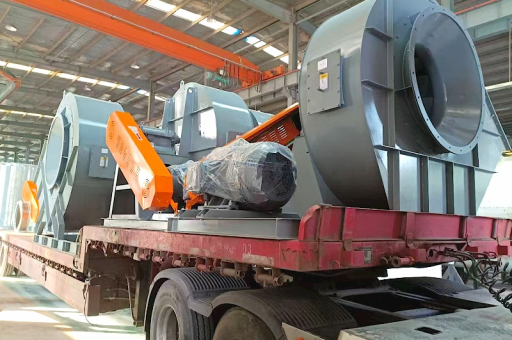
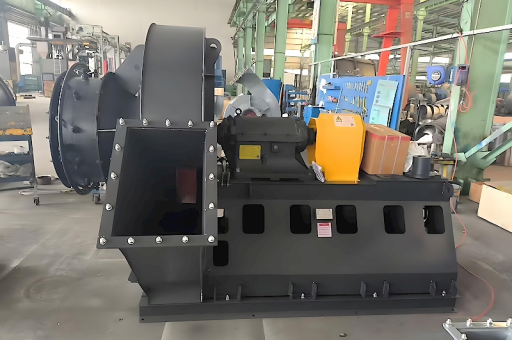
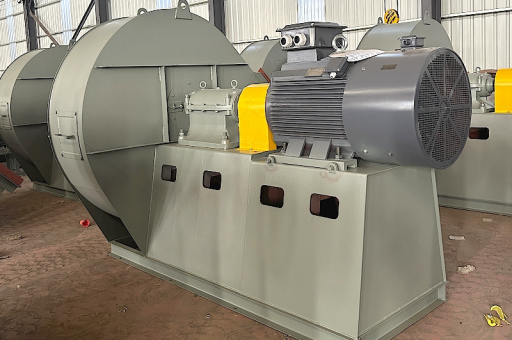
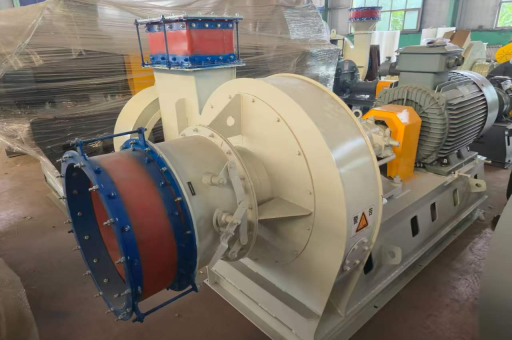
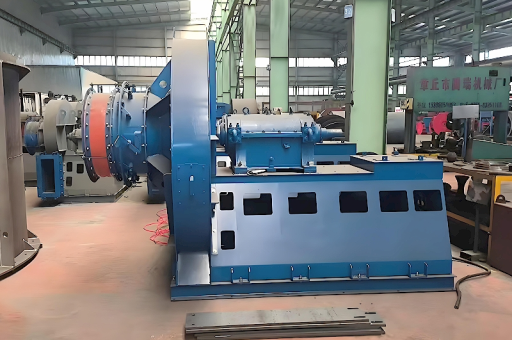
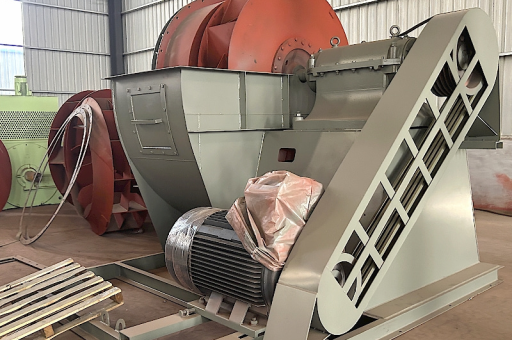
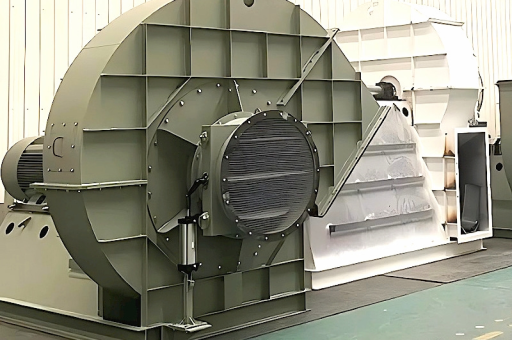
The 15kW Backward-Curved Centrifugal Fan represents a sophisticated balance between high static pressure capability and energy efficiency, making it a cornerstone in heavy-duty ventilation and industrial air movement systems. Unlike axial fans that move air parallel to the shaft, a centrifugal fan draws air into the center of the impeller and expels it radially outward at a 90-degree angle. The "backward-curved" designation refers to the blade orientation: the blades curve away from the direction of rotation, a feature that distinguishes it from forward-curved or radial-blade designs. This specific 15kW motor rating delivers approximately 20 horsepower, enabling the fan to handle large air volumes (often between 15,000 and 30,000 m³/h depending on system resistance) while maintaining high static pressure (typically 1,500–4,000 Pa). For industries such as HVAC, dust collection, pneumatic conveying, and process cooling, this fan has become a trusted workhorse due to its non-overloading power characteristic and stable performance curve.
Core Design Principles: Why Backward-Curved Blades?
The fundamental advantage of the backward-curved fan lies in its blade geometry. The impeller is constructed with blades that tilt away from the direction of spin—similar to the paddlewheel of a modern ship. This design yields a unique pressure-flow relationship: as the system resistance decreases and airflow increases, the motor power draw stabilizes and even drops, preventing motor burnout. This is known as the non-overloading characteristic. For example, if a ventilation duct becomes clogged, a forward-curved fan might attempt to push against high resistance, spiking current draw. In contrast, a backward-curved fan will self-limit its power consumption. The 15kW model typically uses high-strength steel, aluminum, or stainless steel for the impeller, often with a welded construction to withstand continuous operation at rotational speeds of 1,450 to 2,900 rpm. The scroll housing is engineered to convert the kinetic energy of the exiting air into static pressure efficiently, achieving peak static efficiencies in the range of 75% to 85%. These fans also produce lower noise levels compared to radial-blade fans at the same duty point, because the curved blades reduce turbulence at the air exit.
Performance Characteristics and Efficiency Metrics
When evaluating a 15kW backward-curved centrifugal fan, three key metrics dominate the selection process: airflow (Q), static pressure (Ps), and power (P). The performance curve of this fan type is distinctive: it rises steeply at shutoff (zero flow) and gently declines as flow increases. At the best efficiency point (BEP) , the fan delivers maximum efficiency—typically between 75% and 85% for a well-designed model. The specific speed (Ns) and specific diameter (Ds) are often used by engineers to match the fan to the application. For instance, a 15kW fan with a 710mm impeller diameter might achieve 25,000 m³/h at 2,500 Pa when running at 1,450 rpm. One must also consider the fan law: pressure scales with the square of speed (P1/P2 = (N1/N2)²), and power scales with the cube of speed (P1/P2 = (N1/N2)³). Thus, even a 10% increase in speed can dramatically increase motor load, requiring careful VFD (Variable Frequency Drive) management.
Comparative Analysis: Forward-Curved vs. Backward-Curved
This is a critical distinction for engineers selecting a 15kW fan system.
| Feature | Forward-Curved Fan | Backward-Curved Fan |
|---|---|---|
| Blade Curve Direction | Curves toward rotation | Curves away from rotation |
| Max Efficiency | 60–70% | 75–85% |
| Power Overload Risk | High (motor can burn out) | Low (non-overloading) |
| Application | Low-pressure, high-flow (e.g., residential HVAC) | Medium-to-high-pressure industrial systems |
| Cost | Lower initial cost | Higher initial cost, lower operating cost |
| Noise | Moderate | Lower at equivalent rating |
In practice, the 15kW backward-curved fan is the preferred choice for continuous industrial duty. For example, in a pharmaceutical drying system, the backward-curved design ensures stable airflow even when filters become partially blocked, maintaining process quality and protecting the motor.
Key Industrial Applications for the 15kW Variant
The 15kW backward-curved centrifugal fan excels in several demanding environments:
- Dust Collection Systems: It generates sufficient suction to capture wood chips, metal filings, or cement dust, moving them through filter bags or cyclones without clogging.
- Pneumatic Conveying: In grain handling or plastic pellet transport, this fan provides the consistent pressure needed to keep materials suspended in an air stream over long distances (50–200 meters).
- Boiler Forced Draft / Induced Draft: Generating combustion air or exhausting flue gases requires a fan that can handle moderate temperatures (up to 120°C standard, or 400°C with special alloys) and maintain pressure integrity.
- General Industrial Ventilation: Factories, warehouses, and tunnels use these fans for general air exchange, especially where ductwork creates moderate resistance.
- Cleanroom HVAC: With a backward-curved impeller, the fan can be fitted with inlet vanes or VFD control to precisely regulate airflow for pressurization and filtration requirements.
Installation, Maintenance, and Troubleshooting Tips
Proper installation begins with a solid foundation and vibration isolation. The fan assembly should be mounted on a concrete base or structural steel frame. Flexible connectors between the fan discharge and ductwork prevent vibration transmission. After installation, a baseline vibration reading should be recorded. For long-term reliability, scheduled tasks include:
- Bearing Lubrication: Regrease every 3-6 months using high-temperature lithium grease (never overfill).
- Belt Tensioning: Check deflection every 200 operating hours; a loose belt causes slippage and speed reduction.
- Impeller Cleaning: Dust accumulation on blades reduces efficiency and causes imbalance. Clean annually.
- Motor Inspection: Verify insulation resistance (minimum 1 MΩ) and check terminal connections for corrosion.
Common troubleshooting questions: Why is the airflow lower than specified? Check for blocked inlet, slipped belt, or reversed motor rotation. Why is vibration excessive? Inspect for broken blades, worn bearings, or imbalanced impeller (send for dynamic balancing).
Energy Saving and Cost-Benefit Analysis
Investing in a 15kW backward-curved centrifugal fan yields significant long-term savings. Consider an example: a standard forward-curved fan running 8,000 hours per year at 15 kW load (assume 0.10 USD/kWh) consumes 120,000 kWh annually, costing $12,000. The backward-curved model, with 80% efficiency vs. 60% efficiency, can achieve the same airflow at only 11.25 kW average. This reduces consumption to 90,000 kWh, saving $3,000 per year. Over a 10-year lifespan, total savings exceed $30,000, far outweighing the initial premium. Further savings are possible with VFD integration, allowing demand-based speed control. Many utility companies also offer rebates for premium-efficiency fan systems that meet ASHRAE 90.1 or NFPA standards. When selecting a fan, always request a certified performance curve from the manufacturer; look for the AMCA (Air Movement and Control Association) seal for reliability.
Frequently Asked Questions (FAQ)
Q1: What does the “non-overloading” feature mean for a 15kW backward-curved fan?
A: Non-overloading means that the motor power draw peaks at a specific duty point and decreases as flow increases. Even if the duct is blocked, the current draw does not exceed the design limit, protecting the 15kW motor from burnout.
Q2: Can I use a 15kW backward-curved fan for high-temperature exhaust (e.g., oven fumes)?
A: Yes, but you must specify a high-temperature model. Standard fans are rated up to 120°C. With stainless steel construction and thermal expansion allowances, they can be built for up to 400°C. For higher temperatures, consider a radial-blade fan.
Q3: How do I select the correct pulley ratio for a belt-driven 15kW fan?
A: Begin with the target fan speed (RPM). Use the formula: Motor RPM × (Motor Pulley Diameter / Fan Pulley Diameter) = Fan RPM. For example, a 1,450 RPM motor and 200mm motor pulley driving a 300mm fan pulley yields 967 RPM fan speed. Verify with the fan curve.
Q4: Is a backward-curved fan louder than a forward-curved fan?
A: No. At the same duty point, backward-curved fans typically produce less noise (by 3–6 dBA) due to smoother air exit velocities and reduced turbulence in the blade passages. Sound levels are typically 75–85 dBA at 1 meter.
Q5: What maintenance schedule should I follow for continuous operation?
A: Weekly: Visual inspection for abnormal noise/vibration. Monthly: Check belt tension and bearing temperature (max 80°C). Quarterly: Grease bearings. Annually: Clean impeller, inspect motor windings, and verify vibration levels (max 4.5 mm/s RMS).
Q6: How can I confirm the fan efficiency if the manufacturer’s data is unavailable?
A: Measure actual motor power (using a clamp meter and voltmeter), measure airflow (using a pitot tube traverse), and measure static pressure (using a manometer). Use the formula: Efficiency (%) = (Airflow (m³/s) × Static Pressure (Pa)) ÷ (Motor Power (W) × Motor Efficiency). An independent test lab can provide verification.
Q7: Where can I purchase a reliable 15kW backward-curved centrifugal fan?
A: Reputable manufacturers include [fan], Twin City Fan, New York Blower, and Chicago Blower. Always specify the model, rotation (CW or CCW), and discharge position (e.g., UH, UR, UL, UB). For specialized applications, consult an engineering sales representative.
Q8: What are the typical failure modes for this fan type?
A: The most common failures are bearing failure (due to misalignment or inadequate lubrication), impeller imbalance (due to dirt buildup or blade erosion from abrasive dust), and belt wear (slipping or cracking). Regular monitoring and adherence to the maintenance schedule will prevent most downtime.
Final Note: The 15kW backward-curved centrifugal fan combines efficiency stability and reliability for critical industrial air movement. By selecting the correct design and performing regular maintenance, operators can achieve decades of service with minimal energy cost. Always consult the fan’s certified performance curve and local electrical codes before installation.