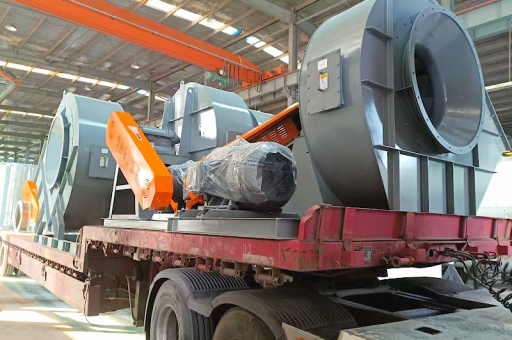
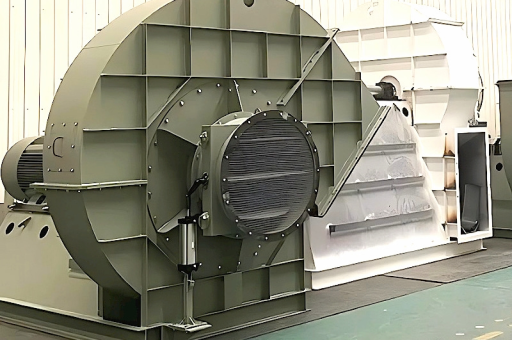
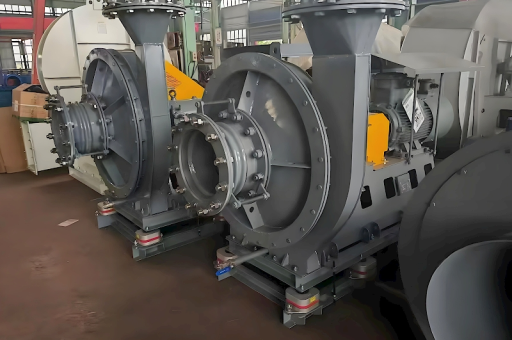
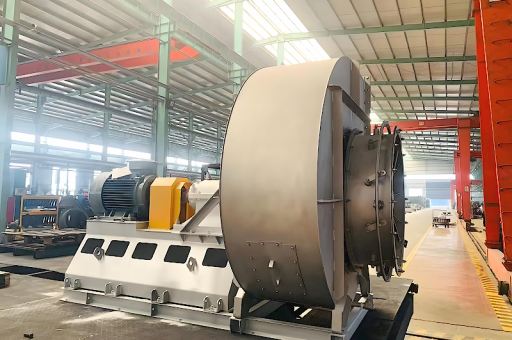
This article's table of contents introduction:
- What is a "1.1kW Centrifugal Blower Boiler Exhaust Fan"?
- Primary Applications
- Key Characteristics (vs. a standard fan)
- Typical Specifications (You need to check the fan's data plate)
- Important Considerations
- Where to find one / Alternatives
This appears to be a description of a specific industrial fan unit. Here is a breakdown of what that description means, its common applications, and key specifications you would need to consider.
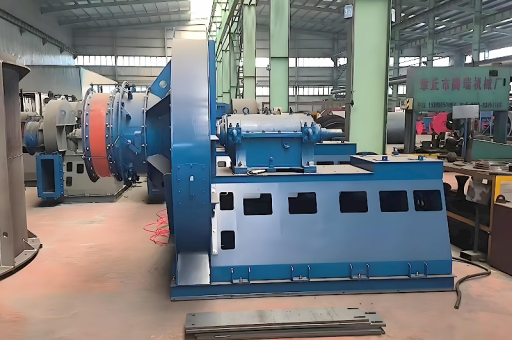
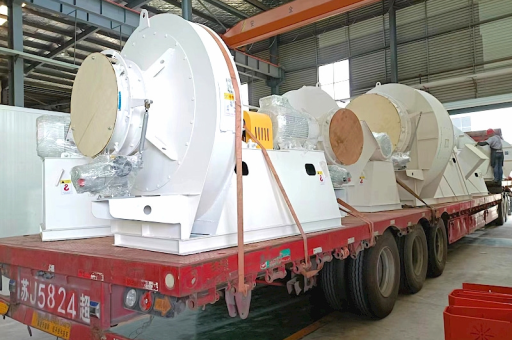
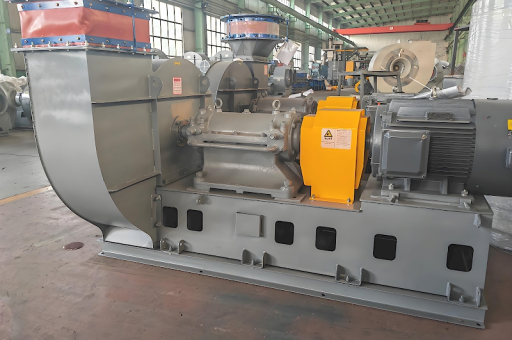
What is a "1.1kW Centrifugal Blower Boiler Exhaust Fan"?
This is a forced draft or induced draft fan designed to move air or exhaust gases in a boiler system. The name breaks down as follows:
- 1kW: Motor Power. This is the electrical power rating of the motor. (Equivalent to roughly 5 HP).
- Centrifugal Blower: The fan type. It uses a rotating impeller to increase air pressure. Centrifugal fans are ideal for moving air against resistance (high static pressure).
- Boiler Exhaust Fan: The application. It is specifically built to handle the hot, often corrosive, and particle-laden gases coming from a boiler, furnace, or heat exchanger.
Primary Applications
- Industrial Boilers: Moving combustion air into the firebox (Forced Draft - FD Fan).
- Removing Flue Gases: Pulling hot exhaust gases out of the boiler and up the chimney (Induced Draft - ID Fan). This is the most common meaning of "exhaust fan."
- Furnaces & Ovens: Used for combustion air supply or exhausting fumes.
- Hot Air Circulation: Recirculating air in drying or heating processes.
Key Characteristics (vs. a standard fan)
- High Static Pressure: A 1.1kW centrifugal fan can generate significant pressure (often 2-10 inches of water column or more), which is needed to push air through burner parts, heat exchangers, and restrictive ductwork.
- Heat Resistance: Boiler exhaust fans are typically built to handle temperatures from 80°C (176°F) up to 250°C (482°F) or higher. They may require special bearings, seals, and sometimes cooling wheels (radial blade designs).
- Construction:
- Housing: Often made of heavy-gauge steel or stainless steel (SS304/SS316) for corrosion resistance against flue gas condensate.
- Impeller: Usually a forward-curved (for high volume, lower pressure) or backward-inclined (for high pressure, efficiency, and handling particulate) design.
- Duty Cycle: Designed for continuous, 24/7 operation.
Typical Specifications (You need to check the fan's data plate)
| Parameter | Typical Range for a 1.1kW Unit | Why it matters |
|---|---|---|
| Voltage / Phase | 230V 1-Phase / 400V 3-Phase | Most common supply. 3-phase is more efficient for industrial use. |
| Airflow (CFM / m³/h) | 300 - 1500 CFM (500 - 2500 m³/h) | Varies drastically based on the static pressure (duct/boiler resistance). |
| Static Pressure | 2 - 8 inches w.g. (500 - 2000 Pa) | Higher pressure for longer duct runs or restrictive boiler heat exchangers. |
| Temperature Rating | Max 80°C (standard) / Max 250°C (hot gas) | Critical for safety. A standard fan cannot handle boiler exhaust. |
| Inlet/Outlet Size | 4" to 8" (100mm - 200mm) | Must match your boiler's flue collar or ductwork. |
| RPM | 1400 - 2800 (typically) | Higher RPM = higher pressure and airflow. |
Important Considerations
- This is for an Exhaust or Air Supply? Make sure the fan is rated for the temperature of the gases. A fan for cold combustion air is very different from one for hot flue gas. If it's for exhaust, look for a "High Temperature" or "Boiler Fan" model.
- Corrosion: Boiler exhaust contains CO₂, water vapor, and potentially sulfur compounds. A stainless steel impeller (SS304/316) is highly recommended to prevent rust and failure.
- VFD Compatibility: For precise control of the boiler (to modulate heat output), the motor should be suitable for use with a Variable Frequency Drive (VFD). Standard motors may need to be "inverter duty."
- Maintenance: Boiler fans need regular cleaning because fly ash and dust will build up on the impeller blades, causing imbalance and reduced efficiency.
Where to find one / Alternatives
- Industrial Fan Manufacturers: Greenheck, New York Blower, Cincinnati Fan, Chicago Blower (USA). Soler & Palau, Systemair (Europe). Kirloskar, FlaktGroup (Global).
- HVAC Suppliers: A standard industrial centrifugal fan is cheaper but may lack the temperature rating.
- Boiler OEM: The manufacturer of your specific boiler (e.g., Fulton, Cleaver-Brooks, Miura) can supply the exact replacement fan.
To get the correct fan, you MUST know:
- The temperature of the gas (e.g., 150°C).
- The required airflow (in CFM or m³/h).
- The static pressure (resistance) of the boiler and duct.
If you see a 1.1kW fan labeled "Boiler Exhaust," it is a specialized piece of equipment. Do not use a standard room exhaust fan or a dust collector blower in its place—it will fail quickly or cause a fire hazard.