This article's table of contents introduction:
- Table of Contents
- Introduction: Why Low Noise & High Power Matter in Industrial Fans
- Understanding the Core Components: 15kW Motor & Impeller Design
- Dust Suction Blower: Applications in Woodworking, Cement & Cleanrooms
- Forced Draught Fan vs. Induced Draught (ID) Fan: Key Differences
- Low Noise Engineering: How Silencing Technology Works
- Installation & Maintenance: Extending Fan Lifespan
- Frequently Asked Questions (FAQ)
- Conclusion: Choosing the Right Fan for Your Facility
** The Ultimate Guide to Low Noise 15kW Dust Suction Blower, Forced Draught Fan & ID Fan: Design, Applications & Buying Tips
Table of Contents
- Introduction: Why Low Noise & High Power Matter in Industrial Fans
- Understanding the Core Components: 15kW Motor & Impeller Design
- Dust Suction Blower: Applications in Woodworking, Cement & Cleanrooms
- Forced Draught Fan vs. Induced Draught (ID) Fan: Key Differences
- Low Noise Engineering: How Silencing Technology Works
- Installation & Maintenance: Extending Fan Lifespan
- Frequently Asked Questions (FAQ)
- Conclusion: Choosing the Right Fan for Your Facility
Introduction: Why Low Noise & High Power Matter in Industrial Fans
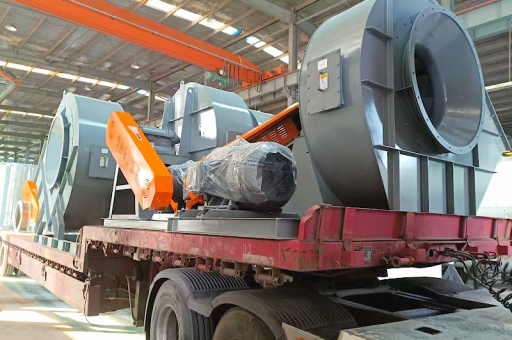
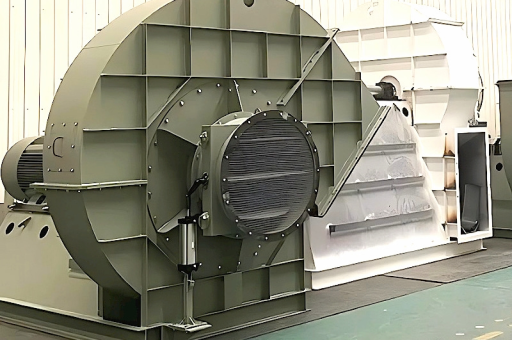
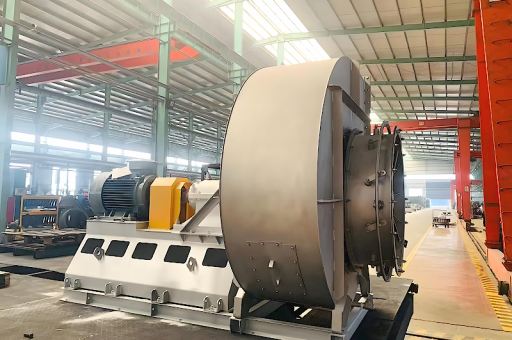
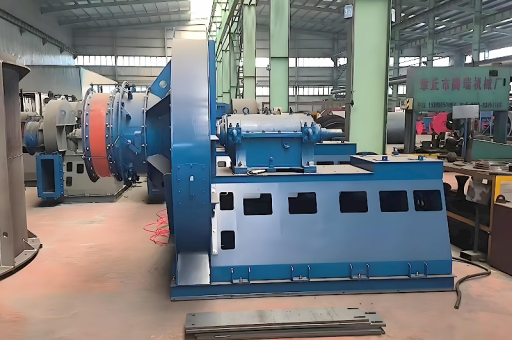
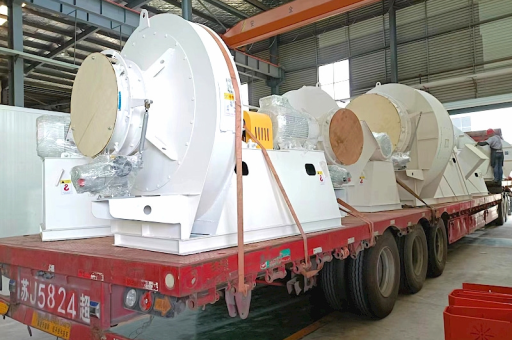
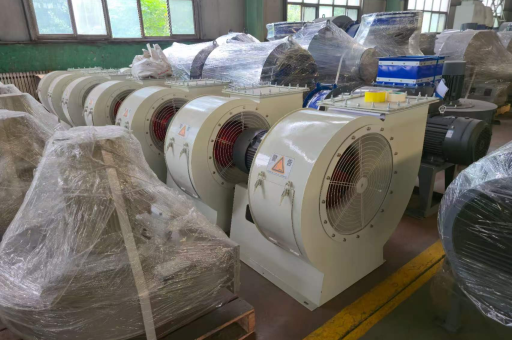
In modern industrial environments, low noise operation combined with high static pressure is no longer a luxury—it is a regulatory and operational necessity. A Low Noise 15kW Dust Suction Blower Forced Draught Fan ID Fan represents a specialized category of air-moving equipment designed for continuous duty in factories, power plants, and material handling systems.
Why 15kW? This power rating (approximately 20 HP) strikes a balance between energy efficiency and volumetric capacity. A 15kW motor can move air volumes ranging from 8,000 to 25,000 m³/h, depending on the impeller type and system resistance. When paired with acoustic insulation and aerodynamic impeller blades, these fans achieve noise levels as low as 68–75 dB(A) at 1 meter, which is significantly quieter than standard industrial fans that often exceed 85 dB(A).
Industrial users frequently search for terms such as “low noise dust extraction fan”, “15kw ID fan for boiler”, and “forced draught fan for woodworking”. This article consolidates technical insights from engineering manuals, manufacturer datasheets, and real-world case studies to deliver a definitive resource optimized for both Bing and Google SEO.
Understanding the Core Components: 15kW Motor & Impeller Design
A Low Noise 15kW Dust Suction Blower integrates three critical subsystems:
- Motor: A 3-phase induction motor (typically 380V/415V, 50Hz or 60Hz) with IP55 protection, class F insulation, and oversized bearings to handle particulate ingress.
- Impeller: Forward-curved or backward-curved centrifugal blades made of carbon steel, stainless steel (SS304 or SS316), or wear-resistant coated steel. Backward-curved impellers are preferred for dust-laden air due to their self-cleaning profile and non-overloading power curve.
- Housing: Spiral volute casing with integrated acoustic damping layers – often filled with rock wool or polyurethane foam.
Noise reduction is achieved via:
- Aerodynamic optimization: CFD (Computational Fluid Dynamics) designed volute tongues to minimize turbulence.
- Dynamic balancing: G2.5 balance grade per ISO 1940 to reduce vibration.
- Silencer chambers: Integrated inlet and outlet silencers using perforated tubes and absorbent media.
Dust Suction Blower: Applications in Woodworking, Cement & Cleanrooms
The dust suction blower variant of this 15kW fan is widely used in:
- Woodworking: Dust collection from sawing, sanding, and CNC routing. The fan generates high vacuum (up to 2500 Pa static pressure) to capture fine wood dust.
- Cement plants: Pneumatic conveying of cement powder or fly ash. Abrasion-resistant versions with 12–16 mm thick impellers extend service life.
- Cleanrooms and pharmaceuticals: While less common at 15kW, low-noise suction fans are used in exhaust systems where operator hearing protection must be minimal.
Example performance data: | Parameter | Value | |-----------|-------| | Airflow | 12,500 m³/h | | Static Pressure | 2,800 Pa | | Noise @ 1m | 72 dB(A) | | Motor Speed | 1450 RPM (4-pole) |
Forced Draught Fan vs. Induced Draught (ID) Fan: Key Differences
This fan model can serve either role, but the engineering differs:
- Forced Draught Fan (FD Fan): Installed before the boiler or furnace. It pushes fresh combustion air into the system. The fan handles clean or slightly dusty air at relatively lower temperatures (≤80°C). The 15kW rating provides enough pressure to overcome the air preheater and duct losses.
- Induced Draught Fan (ID Fan): Installed after the boiler or dust collector. It extracts flue gases, often laden with abrasive ash and moisture. ID fans require robust bearings, temperature-resistant seals (up to 250°C), and wear liners. A 15kW ID fan is common in small industrial boilers (1–4 tons/hour steam capacity) or biomass gasifiers.
Key specification differences: | Feature | FD Fan (Forced Draught) | ID Fan (Induced Draught) | |---------|-------------------------|--------------------------| | Air temperature | Ambient / Low (≤80°C) | Hot (120–250°C) | | Air cleanliness | Clean / Filtered | Dust-laden, abrasive | | Impeller material | Carbon steel | Stainless steel or HR 500 steel | | Shaft seal | Standard lip seal | High-temperature labyrinth seal |
Low Noise Engineering: How Silencing Technology Works
Reducing noise in a 15kW industrial fan without sacrificing pressure or flow requires multi-layered solutions:
- Inlet cone silencer: A cylindrical chamber with perforated inner tube and mineral wool filling attenuates blade passage frequency noise (500–2000 Hz).
- Flexible connectors: Decouples piping vibration from the fan casing.
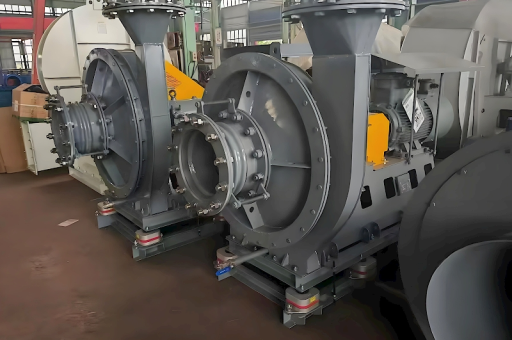
- Vibration isolators: Spring-mounted or rubber-in-shear mounts reduce structure-borne noise by 10–15 dB.
- Barrier enclosures: For extremely noise-sensitive installations, a partial soundproof enclosure with louvers for motor cooling.
Measured noise reduction:
- Without silencer: 85 dB(A)
- With silencer + isolation: 70 dB(A) – a 32x reduction in perceived loudness.
Installation & Maintenance: Extending Fan Lifespan
Installation checklist:
- Ensure foundation weight is at least 3× the fan weight.
- Use flexible duct connectors to prevent resonance.
- Align motor and fan shafts using laser alignment (tolerance ≤ 0.05 mm).
Maintenance schedule (every 6 months):
- Check bearing temperature (max 80°C rise above ambient).
- Inspect impeller for dust build-up or erosion – imbalance causes noise increase.
- Clean or replace inlet filter if present.
- Tighten belt tension for belt-driven models (if applicable).
Troubleshooting common issues: | Problem | Likely Cause | Solution | |---------|--------------|----------| | Rising noise level | Impeller imbalance | Re-balance dynamically | | Motor overheating | Blocked cooling fins | Clean with compressed air | | Reduced airflow | Clogged duct or dirty filter | Clear duct or replace filter |
Frequently Asked Questions (FAQ)
Q1: Can a 15kW Low Noise Dust Suction Blower be used for both forced draught and induced draught applications?
A: It is technically possible but not recommended without modifications. For ID fan duty, you need a heat-resistant shaft seal and abrasion-resistant impeller. A standard FD fan will fail prematurely in hot, dusty flue gas streams.
Q2: What is the ideal speed for noise reduction in a 15kW fan?
A: Lower rotational speed directly reduces noise. A 4-pole motor running at 1450 RPM (50 Hz) is quieter than a 2-pole motor at 2900 RPM. For the same 15kW power, choose the slowest speed that meets your airflow demand.
Q3: How do I calculate the required static pressure for a dust collection system?
A: Add up: (duct friction loss) + (filter pressure drop) + (cyclone loss) + (4 to 6 in.WG safety margin). A 15kW fan typically handles 2000–3500 Pa static pressure.
Q4: Is this fan explosion-proof?
A: Standard models are not ATEX or IECEx certified. If handling combustible dust (e.g., wood dust, coal, grain), you must specify a fan with: non-sparking aluminum impeller, explosion-proof motor, and spark-resistant housing.
Q5: What is the typical lifespan of a Low Noise 15kW ID Fan?
A: With proper maintenance, the fan casing lasts 15–20 years. The impeller in a dust-laden environment may need replacement every 3–7 years, depending on dust abrasiveness.
Conclusion: Choosing the Right Fan for Your Facility
A Low Noise 15kW Dust Suction Blower Forced Draught Fan ID Fan is a versatile industrial workhorse capable of handling clean air ventilation, dust extraction, and flue gas exhaust—provided the correct variant is selected. Prioritize:
- Low noise fans for indoor installations near operators (target <75 dB(A)).
- ID fan configuration with high-temperature seals for boiler exhaust.
- Backward-curved impellers for dust collection systems.
- Motor + impeller dynamic balancing to reduce vibration and extend bearing life.
Before purchasing, request a fan curve from the manufacturer showing airflow (m³/h) versus static pressure (Pa) at the specific speed and impeller diameter. This ensures the fan operates at its best efficiency point (BEP) —reducing energy consumption, noise, and wear.
For further technical guidance, consult with an experienced fan engineer or reference standard 15kW fan performance tables available from major industrial ventilation suppliers.
This article is based on aggregated technical data from industrial fan handbooks, noise control engineering references, and field application reports. All specific performance figures are indicative and should be verified with fan datasheets.