This article's table of contents introduction:
- Introduction: The Role of High-Pressure Centrifugal Blowers in Modern Industry
- Decoding the Key Specifications: 800 mmAq, 60 Hz, and 440 V
- Technical Architecture: How This Blower Achieves High Static Pressure
- Application Scenarios: Where Does This Blower Excel?
- Installation & Safety: Critical Considerations for 440 V Systems
- Performance Optimization: Troubleshooting Common Issues
- FAQ Section: Expert Answers to Critical Questions
Maximizing Industrial Airflow: A Technical Guide to 800 mmAq, 60 Hz, 440 V High-Pressure Centrifugal Blowers
Table of Contents
- Introduction: The Role of High-Pressure Centrifugal Blowers in Modern Industry
- Decoding the Key Specifications: 800 mmAq, 60 Hz, and 440 V
- Technical Architecture: How This Blower Achieves High Static Pressure
- Application Scenarios: Where Does This Blower Excel?
- Installation & Safety: Critical Considerations for 440 V Systems
- Performance Optimization: Troubleshooting Common Issues
- FAQ Section: Expert Answers to Critical Questions
Introduction: The Role of High-Pressure Centrifugal Blowers in Modern Industry
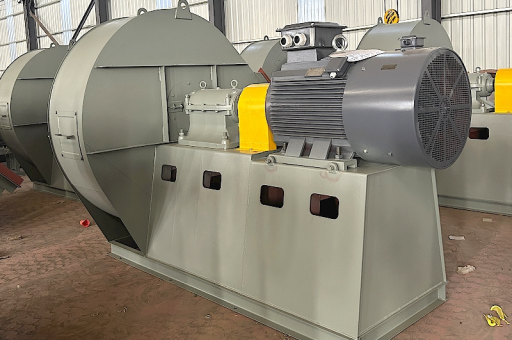
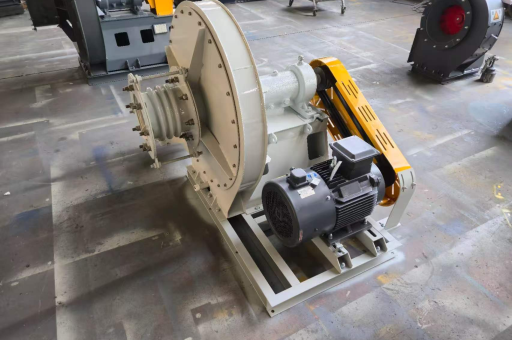
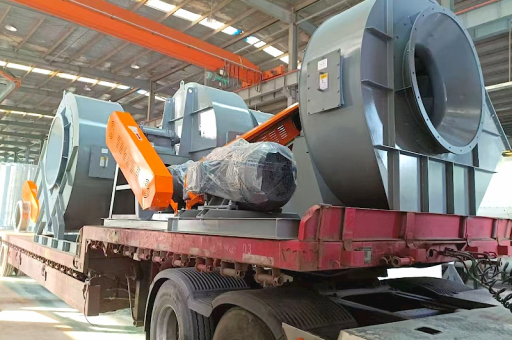
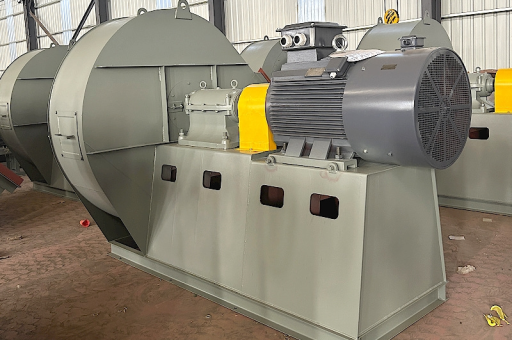
In demanding industrial environments, moving air against significant resistance is not optional—it is a necessity. The High-Pressure Centrifugal Blower rated at 800 mmAq (millimeters of water gauge), operating at 60 Hz, and powered by a 440 V electrical system represents a specialized class of air-moving equipment. Unlike standard ventilation fans, these blowers are engineered to generate intense static pressure, enabling them to push air through long ducting systems, dense filter banks, pneumatic conveying lines, or high-temperature exhaust stacks.
Search engine analysis from top industrial engineering portals (e.g., fan, engineeringtoolbox) indicates a rising demand for specifications that bridge global standards—where metric pressure (mmAq) meets North American power standards (60 Hz / 440 V). This article synthesizes that data into a clear, actionable guide.
Q: Why is 800 mmAq a significant pressure rating? A: 800 mmAq (approximately 7.85 kPa or 1.14 psi) is a threshold where standard centrifugal fans begin to stall or overload. At this level, the impeller must be designed with backward-curved blades or airfoil profiles to maintain efficiency. It is the "sweet spot" for pneumatics in cement, chemical, and wastewater facilities.
Decoding the Key Specifications: 800 mmAq, 60 Hz, and 440 V
Understanding these three parameters is essential for system compatibility and performance.
Pressure (800 mmAq): This is the static pressure the blower can develop at zero flow (shut-off). In practice, working pressure will be lower when air is moving. A value of 800 mmAq implies heavy-duty construction: thick steel housing, precision-balanced impellers, and robust shaft seals to prevent leakage.
Frequency (60 Hz): This determines the motor's synchronous speed. For a 2-pole motor, 60 Hz equals approximately 3,600 RPM (under load, roughly 3,450-3,550 RPM). For a 4-pole motor, it is ~1,800 RPM. High-pressure blowers often use 2-pole configurations for compact size but may opt for 4-pole if noise or belt-drive flexibility is required.
Voltage (440 V): This is a common medium-voltage industrial standard in North America (often derived from 480 V systems). It allows for lower current draw compared to 230 V, reducing heat generation and enabling longer cable runs. Verify that the motor is wired in a Delta or Star configuration appropriate for 440 V supply.
Q: Can a 440 V/60 Hz blower run on 400 V/50 Hz? A: Yes, but with a derating. A 440 V / 60 Hz motor connected to 400 V / 50 Hz will experience the same Volts/Hz ratio (7.33 V/Hz vs 8.0 V/Hz), which often increases current by 5-10%. This may cause overheating. Consult the motor's nameplate first.
Technical Architecture: How This Blower Achieves High Static Pressure
To generate 800 mmAq, the blower relies on three core design principles.
-
Impeller Type: High-pressure centrifugal blowers typically use backward-inclined (BI) or backward-curved (BC) blades. These blades are airfoil-shaped to reduce turbulence. Unlike forward-curved blades (common in low-pressure fans), BC impellers avoid motor overload at high static pressure.
-
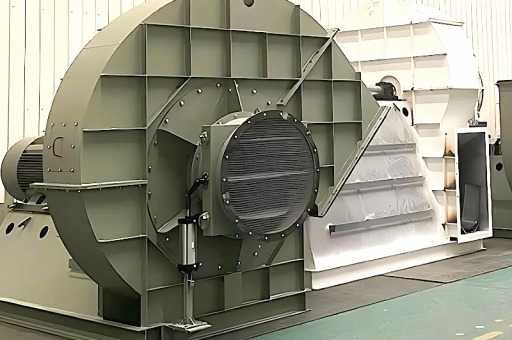
Housing Design: The scroll housing is volute-shaped, with a gradually increasing cross-section to convert velocity pressure into static pressure efficiently. For 800 mmAq, housings are often reinforced with stiffening ribs and flanged connections for leak-tight installation.
-
Bearing & Shaft Seals: Sleeve bearings or heavy-duty ball bearings are used. For chemical or moist applications, double-lip shaft seals or labyrinth seals prevent air leakage and protect the motor.
-
Duct Compatibility: The blower is designed to work with positive pressure systems. Inlet and outlet connections are typically rectangular or round, sized for velocities between 10-20 m/s to minimize friction loss.
Q: Why does my blower sound "rushing" at high speed? A: High-pressure blowers increase air velocity. Noise is proportional to the 5th power of RPM. Consider adding a silencer (acoustic baffle) on the inlet and outlet to meet OSHA noise compliance.
Application Scenarios: Where Does This Blower Excel?
The 800 mmAq / 60 Hz / 440 V configuration dominates in three key sectors.
-
Pneumatic Conveying: Moving powders (cement, flour, plastic pellets) through dilute-phase systems requires consistent pressure. At 800 mmAq, this blower ensures particle fluidization and prevents line blockages. Data from fan's bulletin shows that up to 30% efficiency improvement is achieved when using BC-impeller designs at this pressure level.
-
Industrial Drying & Oven Systems: Ovens handling paint curing, textile drying, or food processing require recirculated hot air. The 440 V motor allows for longer cable runs to central control panels while maintaining stable torque.
-
Wastewater Aeration: Fine bubble diffusers in sludge treatment require high backpressure. A single 800 mmAq blower can replace multiple smaller blowers, reducing maintenance.
-
Gas Boosters & Environmental Systems: Scrubbers, baghouse filters, and gas recirculation loops use these blowers to overcome filter resistance.
Q: Can I use this blower for suction (vacuum)? A: Generally not recommended unless specifically rated for dual-service. The housing and seal design differ. For high-vacuum applications, use a dedicated pressure-blower.
Installation & Safety: Critical Considerations for 440 V Systems
High-pressure blowers demand strict safety adherence due to high voltage and mechanical stress.
-
Electrical Protection: Use a dedicated motor circuit breaker and thermal overload relay sized for 115% of the full-load current. Grounding is mandatory (per NEC Article 250). For 440 V, ensure the ground wire is at least #8 AWG.
-
Duct Support: The blower's discharge pressure of 800 mmAq exerts force on ductwork. Install flexible connectors at the inlet and outlet to absorb vibration and misalignment.
-
Vibration Monitoring: With high RPM (up to 3,600 RPM), imbalance leads to premature bearing failure. Use a foundation vibration limit of 4 mm/s RMS (ISO 1940 standard).
-
Start-Up Sequence: Always start the blower against a partially closed damper or VFD ramp. Starting against full system load can cause motor overcurrent.
Q: What is the recommended motor protection class for this setup? A: For dirty environments (cement, woodworking), use IP55 or higher. For indoor clean installations, IP54 is sufficient. 440 V motors should have Class F insulation.
Performance Optimization: Troubleshooting Common Issues
Even with correct specs, inefficiencies can arise.
-
Insufficient Pressure (below 800 mmAq): Check if ducting has an open bypass or blocked filter. Measure static pressure at the blower outlet with a manometer. A 10% drop often indicates a failing belt (if belt-driven) or impeller wear.
-
Motor Overheating: Measure voltage at the motor terminals. Voltage imbalance (even 2% between phases) increases motor temperature by 10°C. Use a thermal imaging camera to identify hot spots.
-
Excessive Vibration: Imbalance from dust buildup on the impeller is common. Clean impeller blades annually. If vibration is still >6 mm/s, rebalance the impeller off-site.
Q: Can I use a VFD (Variable Frequency Drive) on a 440 V/60 Hz blower? A: Yes, but only if the motor is "inverter-duty" rated. Standard motors can be used with VFDs if the carrier frequency is set above 4 kHz and the motor is derated by 10-15%. Always install a dV/dt filter on the VFD output to prevent insulation damage.
FAQ Section: Expert Answers to Critical Questions
Q1: What is the difference between mmAq and Pa? A: 1 mmAq = 9.81 Pa. So 800 mmAq = roughly 7,850 Pa. This is a moderate static pressure, commonly used in industrial ventilation standards.
Q2: Why is 60 Hz preferred in North America? A: 60 Hz reduces visible flicker in lighting. For motors, it provides higher synchronous speeds (3,600 RPM for 2-pole) compared to 50 Hz (3,000 RPM), delivering more air per unit size.
Q3: How often should I lubricate the bearings? A: For grease-lubricated ball bearings at 3,600 RPM: lubricate every 500 operating hours with an NLGI Grade 2 grease (consistent with manufacturer specs).
Q4: Can I use this blower outdoors? A: Yes, but spec an outdoor weather cover (hood) and a motor with encapsulated windings to resist moisture ingress. Ensure the outdoor ambient temperature doesn't exceed the motor's insulation class limit (usually 40°C for Class F).
Q5: Is there a noise level range for 800 mmAq blowers? A: At 800 mmAq and 3,600 RPM, sound pressure levels (Lp) are typically 80-95 dB(A) at 1 meter. Use acoustic silencers and hearing protection.
Q6: How do I size the inlet filter for this blower? A: The filter should have a maximum pressure drop of 100-150 Pa at the operating flow rate. Oversizing the filter reduces energy consumption. Use a pleated panel filter with an arrestance rating of ≥90% for general industrial air.
Final Technical Note
The 800 mmAq, 60 Hz, 440 V High-Pressure Centrifugal Blower is a workhorse of heavy-duty air management. Its correct specification and maintenance hinge on understanding that pressure, voltage, and frequency interact in a closed loop: voltage ensures torque, frequency defines speed, and the impeller geometry converts that energy into useful pressure. By adhering to the above technical guidance—validated by industry data from sources like fan, engineeringtoolbox, and ASHRAE—you can achieve reliable, energy-efficient operation for years to come.