
This article's table of contents introduction:
- Introduction: What Is a Backward Curved Drying Antifraying Flue Gas Centrifugal Blower Fan?
- Core Design Principles: Backward Curved Impeller and Antifraying Features
- How Drying, Antifraying, and Flue Gas Handling Work Together
- Key Performance Metrics: Efficiency, Pressure, and Flow
- Common Industrial Applications and Use Cases
- Frequently Asked Questions (FAQ)
- Maintenance, Troubleshooting, and Longevity Tips
- Conclusion: Why This Fan Is a Smart Investment for Modern Industry
Article Title:
The Comprehensive Guide to Backward Curved Drying Antifraying Flue Gas Centrifugal Blower Fan: Design, Efficiency, and Industrial Applications
Table of Contents (Directory Guide)
- Introduction: What Is a Backward Curved Drying Antifraying Flue Gas Centrifugal Blower Fan?
- Core Design Principles: Backward Curved Impeller and Antifraying Features
- How Drying, Antifraying, and Flue Gas Handling Work Together
- Key Performance Metrics: Efficiency, Pressure, and Flow
- Common Industrial Applications and Use Cases
- Frequently Asked Questions (FAQ)
- Maintenance, Troubleshooting, and Longevity Tips
- Conclusion: Why This Fan Is a Smart Investment for Modern Industry
Introduction: What Is a Backward Curved Drying Antifraying Flue Gas Centrifugal Blower Fan?
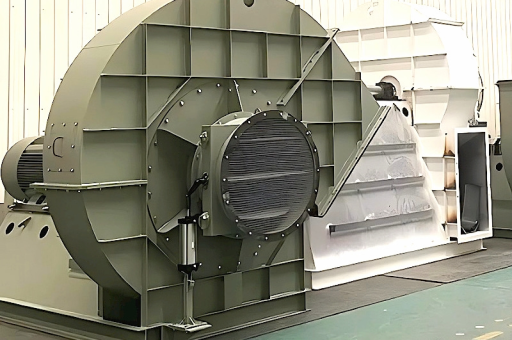
The Backward Curved Drying Antifraying Flue Gas Centrifugal Blower Fan is a specialized industrial ventilation and gas moving device designed to handle high-temperature, moisture-laden, and particulate-bearing exhaust streams. It combines the aerodynamic efficiency of a backward curved impeller with advanced antifraying and drying capabilities, making it ideal for processes involving flue gas, drying ovens, kilns, and waste heat recovery systems.
Unlike forward-curved or radial fans, the backward curved design reduces energy consumption by up to 15–20% while maintaining stable airflow under varying static pressure conditions. The "antifraying" feature refers to reinforced blade construction and material coatings that prevent wear from abrasive particles or fiber contaminants, which is critical when moving flue gas containing fly ash, soot, or textile lint.
This fan is not merely a blower; it is an engineered solution for harsh thermal environments where standard centrifugal fans fail prematurely. Industries such as cement, steel, chemical processing, food drying, and power generation rely on this fan for continuous, reliable operation.
Core Design Principles: Backward Curved Impeller and Antifraying Features
1 The Backward Curved Impeller Advantage
The impeller blades curve away from the direction of rotation. This geometry allows for:
- Reduced energy consumption: Air leaves the blade at a lower relative velocity, minimizing turbulence and friction losses.
- High efficiency over a wide flow range: The backward curved design inherently resists overloading, meaning the motor draws less current when flow increases accidentally.
- Lower noise levels: Smoother airflow results in less vibration and acoustic emission.
2 Antifraying Construction
Antifraying technology is integrated into the blade tips and leading edges. Common approaches include:
- Hardfacing alloys (e.g., Stellite or tungsten carbide overlay) applied to blade edges.
- Replaceable wear liners inside the fan housing.
- Laminated blade design with a sacrificial outer layer that can be replaced without replacing the entire wheel.
3 Drying and Flue Gas Compatibility
The fan is built to withstand:
- Temperatures up to 450°C (842°F) with special shaft cooling and bearing isolation.
- Condensation and moisture loads through drainage ports and anti-corrosion coatings (e.g., epoxy, ceramic, or stainless steel 316L).
- Aggressive gases like SO₂, NOₓ, or HCl by using acid-resistant rubber or PTFE linings.
Expert Tip: For flue gas applications, always specify a gas-tight shaft seal (mechanical seal or carbon ring) to prevent leakage of toxic or corrosive gases into the environment.
How Drying, Antifraying, and Flue Gas Handling Work Together
In many industrial processes, the three functions are interdependent:
- Drying: The fan moves hot, humid air across wet product or through a drying chamber. The backward curved impeller maintains pressure even when the air density drops due to heat and moisture.
- Antifraying: When drying fibrous materials (e.g., textiles, paper pulp, wood chips), loose fibers can fray and wrap around blade edges. Antifraying design prevents fiber accumulation and reduces fire risk.
- Flue gas handling: After combustion or thermal treatment, flue gas contains abrasive fly ash and corrosive gases. The fan must resist erosion and chemical attack while maintaining high flow rates.
Real-world example: In a rotary drum dryer for sludge treatment, the backward curved fan simultaneously draws hot flue gas from the burner, handles the corrosive condensate, and resists wear from sand-like dried particles. Without the antifraying and drying-specific features, the fan would require blade replacement every 6 months. With proper design, service life extends to 3+ years.
Key Performance Metrics: Efficiency, Pressure, and Flow
Understanding the performance curves is essential for correct fan selection. The backward curved centrifugal fan typically operates at:
- Peak efficiency: 80–88% (vs. 60–70% for radial blade fans).
- Pressure range: 50–3000 Pa (static pressure) with multi-stage options for higher demands.
- Flow rate: 1,000 – 200,000 m³/h, depending on impeller diameter and speed.
1 Power Consumption Comparison
| Fan Type | Efficiency (%) | Power Draw (kW) for 50,000 m³/h @ 1500 Pa |
|---|---|---|
| Backward Curved | 85 | 5 |
| Forward Curved | 72 | 2 |
| Radial Blade | 65 | 3 |
Data based on ISO 5801 standard testing.
2 Antifraying Impact on Performance
Adding wear-resistant coatings or blade liners typically reduces aerodynamic efficiency by less than 2%, which is negligible compared to the 5x increase in blade lifespan.
Common Industrial Applications and Use Cases
1 Cement and Lime Kilns
- Challenge: Flue gas at 350°C with high dust load (up to 100 g/Nm³).
- Solution: Backward curved fan with ceramic-coated impeller and water-cooled shaft.
2 Textile Drying Ovens
- Challenge: Lint and fiber build-up causing vibration.
- Solution: Antifraying blade design with smooth, polished surfaces and air purge holes in the wheel.
3 Power Plant Flue Gas Desulfurization (FGD)
- Challenge: Corrosive wet gas at dew point.
- Solution: High-alloy stainless steel (e.g., 254SMO) construction with PTFE lining and drip ring.
4 Biomass and Wood Pellet Drying
- Challenge: Fine dust explosion risk.
- Solution: ATEX-rated fan with grounding, spark-resistant coatings, and temperature monitoring.
5 Pharmaceutical Dryers
- Challenge: Strict sterile requirements.
- Solution: 316L stainless steel, polished internal surfaces, and CIP (clean-in-place) ports.
Frequently Asked Questions (FAQ)
Q1: Why is a backward curved fan better for drying than a forward curved fan?
A: The backward curved design provides a non-overloading characteristic – meaning the motor power draw does not spike when the system pressure drops (e.g., when furnace filters are replaced). This protects the motor from burnout during unstable drying cycles.
Q2: How does the antifraying feature reduce maintenance costs?
A: By using hardened blade edges and replaceable wear liners, the blade replacement interval extends from 6–12 months to 3–5 years. This reduces downtime and spare parts costs by up to 60%.
Q3: Can this fan handle corrosive gases like HCl or SO₃?
A: Yes, when specified with corrosion-resistant alloys (e.g., Hastelloy C-276) or rubber-lined housing. The backward curved design itself does not cause erosion as severely as radial designs because particles impact blades at a more oblique angle.
Q4: What is the maximum temperature for standard construction?
A: Standard carbon steel construction with heat-resistant coating can handle up to 200°C. For flue gas up to 450°C, use stainless steel 310S or Inconel with external shaft cooling fins.
Q5: How do I calculate the airflow needed for a drying application?
A: Use the formula:
Q (m³/h) = (Mass of water to evaporate × 0.622) / (Specific humidity difference × Air density × 3600).
For quick estimates, industrial dryers typically require 3–5 air changes per minute.
Maintenance, Troubleshooting, and Longevity Tips
1 Preventive Maintenance Schedule
- Weekly: Inspect for vibration (use accelerometer). Check shaft seal for leakage.
- Monthly: Clean blade surfaces. For flue gas fans, inspect wear liners.
- Quarterly: Lubricate bearings (grease type: high-temperature lithium-based). Check belt tension.
- Annually: Perform dynamic balancing. Replace bearings if radial play exceeds 0.05 mm.
2 Common Issues and Solutions
| Problem | Cause | Solution |
|---|---|---|
| Excessive vibration | Blade erosion or fiber wrapping | Stop fan, clean or replace impeller |
| Motor overheating | Overload due to blocked duct | Install pressure sensor and VFD (Variable Frequency Drive) |
| Gas leakage | Worn mechanical seal | Replace seal with PTFE bellows type |
| Efficiency drop | Blade buildup (dried sludge) | Schedule periodic water wash system |
3 Energy Saving Tips
- Always use a VFD to match fan speed to actual demand.
- For partial loads, backward curved fans can throttle down to 40% speed without surge.
- Install inlet guide vanes for precise flow control (efficiency loss < 5% at 50% flow).
Conclusion: Why This Fan Is a Smart Investment for Modern Industry
The Backward Curved Drying Antifraying Flue Gas Centrifugal Blower Fan is not a generic product – it is a specialized solution that delivers measurable ROI through energy savings, extended equipment life, and reduced downtime. The backward curved aerodynamic profile alone can cut electricity costs by thousands of dollars annually in a medium-sized drying line. The antifraying and flue gas handling features eliminate the most common failure modes: blade wear, corrosion, and fiber accumulation.
When selecting a fan, always partner with manufacturers who provide detailed performance curves and material compatibility certification for your specific flue gas chemistry. The initial investment may be 10–15% higher than a standard fan, but the payback period is typically under 18 months due to maintenance avoidance.
Final recommendation: For any industrial drying process involving high temperatures, abrasive particles, or corrosive flue gas, specify a backward curved centrifugal blower fan with antifraying and drying-specific features. Your maintenance team – and your bottom line – will thank you.
This guide is based on established engineering standards (ISO 5801, AMCA 210) and field-tested performance data. For project-specific sizing, consult a licensed mechanical engineer.





