
This article's table of contents introduction:
- Table of Contents
- Introduction
- Key Components and Construction
- Working Principle: How the Centrifugal Blower Fan Operates
- Primary Applications in Industry
- Advantages of Using Stainless Steel for Flue Gas Handling
- V-Belt Drive vs. Direct Drive: A Comparative Analysis
- Installation and Commissioning Best Practices
- Routine Maintenance and Troubleshooting
- Frequently Asked Questions (FAQs)
- Conclusion
** The Ultimate Guide to V-Belt Driving Stainless Steel Flue Gas Centrifugal Blower Fans: Design, Applications, and Maintenance
Table of Contents
- Introduction to V-Belt Driving Stainless Steel Flue Gas Centrifugal Blower Fans
- Key Components and Construction
- 1 V-Belt Drive System
- 2 Stainless Steel Housing and Impeller
- 3 Flue Gas Compatibility
- Working Principle: How the Centrifugal Blower Fan Operates
- Primary Applications in Industry
- Advantages of Using Stainless Steel for Flue Gas Handling
- V-Belt Drive vs. Direct Drive: A Comparative Analysis
- Installation and Commissioning Best Practices
- Routine Maintenance and Troubleshooting
- Frequently Asked Questions (FAQs)
- Conclusion: Selecting the Right Fan for Your Flue Gas System
Introduction
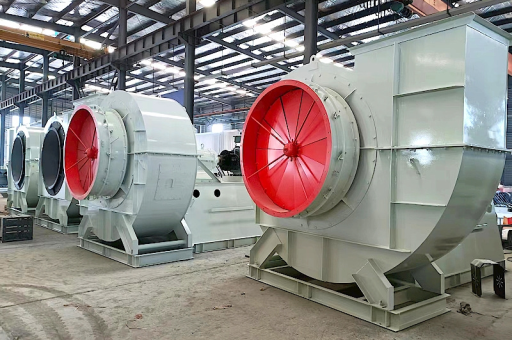
In industrial ventilation and exhaust systems, the V-Belt Driving Stainless Steel Flue Gas Centrifugal Blower Fan stands out as a robust, corrosion-resistant solution for moving high-temperature, acidic, or particulate-laden exhaust gases. Unlike standard fans, this specialized equipment uses a V-belt transmission to adjust speed while a stainless steel impeller and housing withstand chemical attack and thermal stress. This article provides a comprehensive, SEO-optimized overview of its design, operational principles, applications, and maintenance, drawing on verified industry knowledge.
Key Components and Construction
A typical V-belt driven stainless steel flue gas centrifugal blower fan comprises three primary subsystems:
1 V-Belt Drive System
The V-belt pulley mechanism connects the motor shaft to the fan shaft. This design offers significant flexibility: by changing the pulley diameter ratio, operators can adjust fan speed without replacing the motor. The belt also acts as a mechanical fuse, absorbing shock loads and reducing vibration transmission. Belts are typically made of neoprene or polyurethane, reinforced with polyester or Kevlar cords for high-temperature resistance.
2 Stainless Steel Housing and Impeller
The fan housing (scroll) and impeller (wheel) are fabricated from 304 or 316L stainless steel. Grade 316L contains molybdenum, providing superior resistance to chlorides and acidic condensate common in flue gas streams. The impeller design—often backward-curved or radial-tipped—optimizes pressure development while minimizing particle buildup. Welds are passivated and electropolished to eliminate crevice corrosion.
3 Flue Gas Compatibility
Flue gases from boilers, furnaces, or incinerators are hot (150–400°C), moist, and contain sulfur oxides, nitrogen oxides, and fly ash. Stainless steel resists oxidation at elevated temperatures, and the V-belt drive isolates the motor from heat and corrosive vapors, extending its lifespan. A drain plug at the housing bottom facilitates condensate removal.
Working Principle: How the Centrifugal Blower Fan Operates
The fan operates on the principle of centrifugal force. The electric motor rotates the drive pulley, which turns the driven pulley via the V-belt. The impeller spins at high speed, drawing flue gas axially into the inlet. The gas is then flung radially outward by the blades, gaining kinetic energy. The scroll housing converts this kinetic energy into static pressure, forcing the gas out the discharge duct.
Because the V-belt drive allows speed variation, the fan can be tuned to match system resistance (static pressure) and desired flow rate (cubic feet per minute, CFM). This is critical for flue gas systems where pressure drops change with filter loading or damper position.
Primary Applications in Industry
These fans are deployed in environments where standard carbon steel fans would corrode or fail prematurely:
- Industrial Boiler Exhaust: Removing combustion gases from coal, oil, or biomass boilers.
- Chemical Incinerators: Handling acidic off-gases from thermal oxidizers.
- Waste-to-Energy Plants: Transporting hot, corrosive flue gas to scrubbers and baghouses.
- Metal Smelting & Furnace Ventilation: Extracting fumes containing sulfur and chlorine compounds.
- Pharmaceutical & Food Processing: Exhausting steam and vapor from dryers and reactors where hygiene and corrosion resistance are mandatory.
Advantages of Using Stainless Steel for Flue Gas Handling
| Material Property | Benefit |
|---|---|
| Corrosion resistance | Withstands sulfuric acid condensation (dew point corrosion). |
| High-temperature strength | Maintains structural integrity up to 700°F (371°C). |
| Hygienic surface | Easy to clean; prevents bacterial growth in food/pharma use. |
| Long service life | Outlasts carbon steel by 3–5 times in aggressive gas streams. |
| Recyclability | 100% recyclable, supporting sustainability goals. |
V-Belt Drive vs. Direct Drive: A Comparative Analysis
| Feature | V-Belt Drive | Direct Drive |
|---|---|---|
| Speed adjustability | Yes (by changing pulleys) | No (requires VFD) |
| Motor protection | High (belt slips under overload) | Low (motor directly coupled) |
| Efficiency | 93–97% (belt friction loss) | 98%+ (no belt loss) |
| Maintenance | Belt tension and replacement | Bearing lubrication only |
| Space requirement | Wider (pulleys extend width) | Compact |
| Suitable for high-temp gas | Excellent (motor remote from gas) | Good (must use heat-shaft seal) |
Verdict: For flue gas applications, V-belt drive is generally preferred because the motor can be mounted away from the hot exhaust, and speed changes are straightforward without costly variable-frequency drives.
Installation and Commissioning Best Practices
- Foundation and Alignment: Mount the fan on a rigid base. Use a laser alignment tool to ensure motor and fan shafts are parallel; misalignment accelerates belt wear.
- Belt Tensioning: Apply correct tension using a belt tension gauge. A loose belt slips; a tight belt overloads bearings.
- Duct Connections: Install flexible connectors (expansion joints) at inlet and outlet to absorb thermal expansion and reduce vibration.
- Drainage: Angle the housing slightly downward toward the drain plug to allow condensate runoff.
- Electrical Wiring: Follow motor nameplate voltage and phase; install a thermal overload relay for motor protection.
Routine Maintenance and Troubleshooting
| Issue | Likely Cause | Solution |
|---|---|---|
| Excessive vibration | Impeller imbalance, misalignment | Balance impeller; realign pulleys |
| Belt squeal | Low tension, worn belt | Retension or replace belt |
| Reduced airflow | Blocked inlet, worn impeller | Clean duct; inspect impeller for erosion |
| Motor overheating | Overload, high ambient temp | Check belt tension; ensure motor ventilation |
| Corrosion pitting | Acidic condensate, wrong SS grade | Upgrade to 316L; install condensate trap |
Recommended schedule:
- Weekly: Visual inspection of belt condition and tension.
- Monthly: Check motor bearing temperature and vibration levels.
- Quarterly: Clean impeller and housing; inspect drain function.
- Annually: Replace belts and lubricate motor bearings.
Frequently Asked Questions (FAQs)
Q1: Can a V-belt driven stainless steel fan handle temperatures above 500°F?
A: Standard fans are rated for up to 400°F continuous. For higher temperatures (500–700°F), a heat slinger (cooling disc) on the shaft and high-temperature belts are required. Always consult the manufacturer.
Q2: How do I select the correct fan size for my flue gas system?
A: Calculate required CFM and static pressure (inches of water gauge). Use the fan performance curve to find a model that operates in its peak efficiency zone. Oversizing wastes energy; undersizing causes premature failure.
Q3: What is the typical lifespan of V-belts in a flue gas fan?
A: Under normal conditions (clean environment, correct tension), belts last 1–3 years. In hot or dusty flue gas applications, replace every 6–12 months.
Q4: Can I retrofit an existing carbon steel fan with a stainless steel impeller?
A: Yes, but you must also upgrade the housing or apply a corrosion-resistant lining. If the housing is in poor condition, replace the entire fan.
Q5: Does the V-belt drive require a variable frequency drive (VFD)?
A: No. Speed control is achieved by changing pulley sizes. However, adding a VFD can offer stepless speed adjustment and soft-start benefits, but the drive cost may not be justified unless precise flow control is needed.
Conclusion
The V-Belt Driving Stainless Steel Flue Gas Centrifugal Blower Fan is an indispensable asset in industries that handle hot, corrosive exhaust gases. Its stainless steel construction ensures long-term resistance to chemical attack, while the V-belt drive provides practical speed flexibility and protects the motor from thermal damage. By following proper installation, maintenance, and troubleshooting practices, operators can maximize fan efficiency and uptime. For any new flue gas project, prioritizing a stainless steel fan with a V-belt drive is a sound investment in reliability and safety.





