
This article's table of contents introduction:
- Table of Contents
- Introduction: The Critical Role of the Flue Gas Centrifugal Fan
- Understanding the "Wear Resistant" Requirement in Boiler Systems
- The "Backward" Design: Aerodynamic and Mechanical Advantages
- Key Material Science: How Wear Resistance is Achieved
- The Impact on Thermal Efficiency and Emission Control
- Common Failure Modes and Preventive Maintenance
- Frequently Asked Questions (FAQ) – Expert Answers
- Conclusion: The Future of Industrial Fan Design
Table of Contents
- Introduction: The Critical Role of the Flue Gas Centrifugal Fan
- Understanding the "Wear Resistant" Requirement in Boiler Systems
- The "Backward" Design: Aerodynamic and Mechanical Advantages
- Key Material Science: How Wear Resistance is Achieved
- The Impact on Thermal Efficiency and Emission Control
- Common Failure Modes and Preventive Maintenance
- Frequently Asked Questions (FAQ) – Expert Answers
- Conclusion: The Future of Industrial Fan Design
Introduction: The Critical Role of the Flue Gas Centrifugal Fan
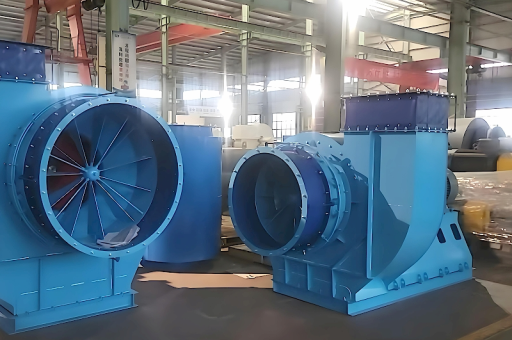
In the heart of any industrial steam boiler system—whether it powers a power plant, a chemical processing facility, or a large-scale heating network—the Wear Resistant Steam Boiler Backward Flue Gas Centrifugal Blower Fan functions as the system’s respiratory engine. This seemingly simple rotating machine is tasked with an extraordinarily difficult job: moving high-temperature, particulate-laden flue gases against a system’s total resistance (draft loss) while maintaining structural integrity.
Unlike a standard ventilation fan, this specialized centrifugal blower must withstand the abrasive nature of fly ash, the corrosive potential of sulfur oxides, and the thermal stress of continuous operation near 200°C or higher. The "backward" blade geometry is not a design afterthought; it is a deliberate engineering choice that dictates fan efficiency, noise levels, and long-term reliability. This article dives deep into why this specific configuration—combining wear resistance with backward curved blades—has become the gold standard for modern steam boiler applications.
Understanding the "Wear Resistant" Requirement in Boiler Systems
The Abrasive Reality: The flue gas extracted from a steam boiler is never "clean." It contains unburned carbon particles, silica from fuel impurities, and fly ash. When these particles travel at high velocities (often exceeding 20–30 m/s) through the fan impeller, they create a sandblasting effect. Standard carbon steel blades can lose significant thickness within months, leading to dynamic imbalance, excessive vibration, and catastrophic failure.
Design Strategies for Wear Resistance: Manufacturers achieve wear resistance through three primary channels:
- Material Selection: High-chromium alloy steel (e.g., Hardox or equivalent), stainless steel with high hardness (e.g., 304L with surface hardening), or cladding with tungsten carbide.
- Sacrificial Liners: Replaceable wear plates or coatings applied to the blade leading edges and the fan casing (volute) where flow impingement is highest.
- Flow Path Optimization: Computational Fluid Dynamics (CFD) is used to minimize sharp turns and sudden expansions that accelerate particle impact velocity.
The Trade-off: While adding wear resistance increases the fan’s upfront cost, it dramatically reduces the total cost of ownership (TCO). For a boiler operating at 100% load for 8,000 hours per year, a wear-resistant fan can extend service life from 18 months to 5–7 years.
The "Backward" Design: Aerodynamic and Mechanical Advantages
The term "backward" refers to the direction of the blades relative to the rotation direction. In a backward-curved centrifugal fan, the blade tip is angled opposite to the direction of rotation.
Why Backward is Superior for Boiler Duty:
- Self-Limiting Power Curve: Backward-curved (BC) fans have a characteristic power curve that peaks near the design point and then decreases. This prevents motor overload if system resistance drops unexpectedly (e.g., a burst duct). This is a critical safety feature for boilers.
- Higher Static Efficiency: Typically, BC fans achieve 80–85% static efficiency, compared to 65–75% for forward-curved designs. This translates directly into lower electrical consumption.
- Stable Pressure Curve: The pressure curve of a backward fan is steeply rising, making it ideal for systems with variable resistance (clogging filters, changing damper positions).
- Lower Noise Levels: The smooth aerodynamic flow path of backward blades reduces turbulence and vortex shedding, resulting in quieter operation compared to radial or forward-curved designs.
Mechanical Robustness: The backward blade design also naturally centers the centrifugal forces more efficiently, reducing bending stress at the blade root. This allows the impeller to operate at higher peripheral speeds without exceeding yield strength, which is essential for generating the pressure needed to overcome the boiler’s draft loss.
Key Material Science: How Wear Resistance is Achieved
To achieve a truly Wear Resistant Steam Boiler Backward Flue Gas Centrifugal Blower Fan, manufacturers employ a multi-layered material strategy:
| Component | Standard Material | Wear-Resistant Upgrade | Application Method |
|---|---|---|---|
| Blade Leading Edge | Carbon Steel | Chrome Carbide Overlay (CCO) or Ceramic Tiles | Welding or adhesive bonding |
| Blade Body | Q235 / S235JR | Hardox 400 / 500 (Brinell hardness 400–500) | Through-hardened plate |
| Volute (Casing) | Mild Steel | 6+6 Bimetal Wear Plate (6mm mild + 6mm chrome) | Bolt-on or weld-on lining |
| Shaft | 45# Steel | 40Cr or 17-4PH Stainless | Forging + heat treatment |
| Bearing Housing | Cast Iron | Ductile Iron with labyrinth seals | Casting |
Key Innovation – Ceramic Composite Blades: The most advanced fans now incorporate ceramic inserts (Alumina or Zirconia) at the high-wear zones. While ceramics are brittle, modern engineering uses a metal matrix to hold the ceramic pieces, creating a "armored" blade that can withstand temperatures up to 350°C while outlasting steel by 5–10 times. However, this solution is reserved for extremely abrasive fuels like pet coke or biomass.
The Impact on Thermal Efficiency and Emission Control
A fan is a parasitic load on the boiler system. It consumes electricity, but its performance directly affects the boiler’s thermal efficiency.
Draft System Balance: An efficient backward centrifugal fan requires less rotational speed (RPM) to generate the same pressure. This reduces the motor’s power draw. For a 500 kW motor, even a 5% efficiency gain saves approximately 250 MWh per year—enough to power 25 homes.
Emission Compliance: Modern emission control systems (ESP, baghouse filters, scrubbers) rely on precise negative pressure maintained by the fan. A worn-out fan that vibrates or has eroded blades cannot maintain this vacuum, leading to:
- Leakage of untreated flue gas.
- Reduced dwell time in scrubbers.
- Inefficient particulate collection in electrostatic precipitators.
The wear-resistant design ensures that the fan’s performance curve remains stable over years, directly supporting compliance with environmental regulations like the EPA’s MATS (Mercury and Air Toxics Standards) or the EU’s Industrial Emissions Directive.
Common Failure Modes and Preventive Maintenance
Even the best Wear Resistant Steam Boiler Backward Flue Gas Centrifugal Blower Fan will eventually require attention. Understanding failure modes is key to maximizing uptime.
Top 3 Failures:
- Erosion at the Blade Root: Particles accelerate near the hub. If uncoated, this area wears first, causing imbalance. Solution: Apply a thicker chrome carbide overlay at the root.
- Shaft Misalignment: Thermal expansion of the boiler casing can shift the fan base. Solution: Use expansion joints on the ductwork and check shaft alignment quarterly with a laser alignment tool.
- Bearing Contamination: Flue gas can contain moisture and acidic gases that damage seals. Solution: Use purged labyrinth seals with compressed air or nitrogen.
Proactive Maintenance Checklist:
- Weekly: Check vibration velocity (mm/s) and bearing temperature (max 90°C).
- Monthly: Visual inspection of blade leading edges through inspection door.
- Quarterly: Measure wall thickness of volute at wear zones using ultrasonic gauge.
- Annually: Dynamic balancing of impeller and replacement of sacrificial wear plates.
Frequently Asked Questions (FAQ) – Expert Answers
Q1: Can I use a forward-curved fan for my steam boiler flue gas system? Answer: Technically, yes—but it is strongly discouraged. Forward-curved fans consume more power at low resistance (risk of motor overload) and are prone to erosion because of the blade’s flat striking surface. For continuous boiler duty, a backward-curved design is universally recommended for efficiency and safety.
Q2: How do I calculate the correct RPM for my wear-resistant backward fan? Answer: The RPM is determined by the fan laws: Required Pressure = (RPM1 / RPM2)² x Pressure. You need your system’s total pressure drop (boiler + ducts + pollution control equipment). A fan supplier will use a performance curve to match the RPM to this pressure at your desired flow rate (m³/h). Never overspeed the fan beyond the manufacturer’s limit, as it risks blade rupture.
Q3: What is the typical lifespan of a wear-resistant blade coating in a coal-fired boiler? Answer: With proper Chrome Carbide Overlay (CCO) at 4–6mm thickness, expect 12,000 to 18,000 operating hours before the coating is 80% worn. For biomass boilers with high ash content, this can drop to 6,000 hours. Regular thickness monitoring is essential.
Q4: Does the fan material need to be stainless steel to resist corrosion? Answer: Not necessarily. For dry flue gas above the dew point (typically above 140°C), carbon steel with a wear coating is fine. However, if there is a risk of acid condensation (high sulfur fuel, low load operation), stainless steel (316L or duplex 2205) is required for the impeller to prevent corrosion cracking.
Q5: What is the difference between a "blower" and a "fan" in this context? Answer: In the industrial classification, a "fan" operates below 0.15 kg/cm² (approx. 1500 mmWG), while a "blower" operates above that. A Wear Resistant Steam Boiler Backward Flue Gas Centrifugal Blower Fan is typically a heavy-duty fan—but industry naming often uses the terms interchangeably. In your application, always check the rated static pressure (Pa or mmWG) regardless of the name.
Conclusion: The Future of Industrial Fan Design
The Wear Resistant Steam Boiler Backward Flue Gas Centrifugal Blower Fan represents a convergence of thermodynamics, material science, and precision mechanical engineering. As industries move toward higher fuel flexibility (biomass, waste-derived fuels) and stricter emission targets, the demand for fans that can withstand extreme abrasion while maintaining peak efficiency will only grow.
The future trend is clear: smart monitoring systems that integrate vibration analysis with AI to predict blade wear, and additive manufacturing (3D printing of metal parts) to create complex, lightweight blade geometries that are both stronger and more resistant to erosion. For now, selecting a fan with a proven backward curved design, heavy-duty chrome carbide coating, and a robust maintenance program is the most reliable path to boiler uptime and operational cost reduction.
Investing in this technology is not just about buying a fan—it is about ensuring that the entire steam system operates reliably, efficiently, and in compliance with environmental standards for decades to come.
For detailed technical specifications or to find a certified OEM manufacturer, search for "Wear Resistant Steam Boiler Backward Flue Gas Centrifugal Blower Fan" on industrial equipment directories or consult your local fan supplier.





