
This article's table of contents introduction:
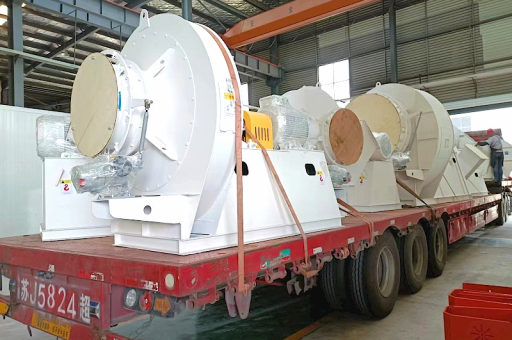
- Table of Contents
- Introduction to Steam Boiler Air Management
- What is a Forced Draught Blower? Function and Principle
- The Centrifugal Exhaust Fan: Removing Combustion Gases
- Forced Draught vs. Induced Draught: A Comparative Analysis
- Centrifugal Type Fans: Why They Dominate Boiler Applications
- Key Performance Parameters (Flow, Pressure, Efficiency)
- Common Operational Issues and Troubleshooting
- Frequently Asked Questions (FAQ)
- Best Practices for System Optimization
- Conclusion: Achieving Reliable and Efficient Boiler Operations
** Optimizing Industrial Combustion: The Critical Role of Forced Draught Blowers and Centrifugal Exhaust Fans in Steam Boiler Systems
Table of Contents
- Introduction to Steam Boiler Air Management
- What is a Forced Draught Blower? Function and Principle
- The Centrifugal Exhaust Fan: Removing Combustion Gases
- Forced Draught vs. Induced Draught: A Comparative Analysis
- Centrifugal Type Fans: Why They Dominate Boiler Applications
- Key Performance Parameters (Flow, Pressure, Efficiency)
- Common Operational Issues and Troubleshooting
- Frequently Asked Questions (FAQ)
- Best Practices for System Optimization
- Conclusion: Achieving Reliable and Efficient Boiler Operations
Introduction to Steam Boiler Air Management
Steam boilers are the backbone of countless industrial processes, from power generation to food processing. However, their efficiency, safety, and emissions performance depend critically on air management—specifically, the controlled movement of combustion air through the furnace and the evacuation of flue gases. Two pieces of rotating equipment are essential for this task: the Forced Draught Blower (FD Fan) and the Exhaust Fan (often a Centrifugal Type Induced Draught Fan) .
Without a properly sized and maintained fan system, a boiler suffers from incomplete combustion (leading to soot and carbon monoxide), excessive heat loss through the stack, or even dangerous pressure imbalances. This article delves into the technical specifics of forced draught blowers and centrifugal exhaust fans, providing actionable insights for engineers, plant operators, and maintenance teams. We will examine how these centrifugal type fans are engineered to handle high static pressures, variable flow demands, and the harsh conditions inside a boiler house.
What is a Forced Draught Blower? Function and Principle
A Forced Draught Blower (FD fan) is a rotating machine located upstream of the combustion chamber. Its primary function is to push a controlled volume of air into the burner or grate, ensuring the correct air-to-fuel ratio for efficient combustion.
How it works:
- The blower draws ambient air from the boiler house or an external intake.
- It accelerates the air using a high-speed impeller (typically backward-curved or forward-curved centrifugal blades).
- The air is discharged into a duct that leads to the windbox or burner register.
- By creating positive pressure at the burner inlet, it overcomes the resistance of the burner nozzles, fuel bed, and boiler pass.
Characteristics of a good FD blower:
- High static pressure capability: Must overcome the resistance of air heaters, ducts, and burners.
- Stable performance curve: Prevents surging during load changes.
- Corrosion resistance: Especially important if ambient air contains moisture or corrosive gases.
Note: In many modern boilers, the FD fan is fitted with a variable frequency drive (VFD) to modulate airflow precisely, matching steam demand and reducing energy consumption.
The Centrifugal Exhaust Fan: Removing Combustion Gases
The Exhaust Fan (often referred to as the Induced Draught or ID fan) is located at the outlet of the boiler, typically before the chimney. Its job is to suck the products of combustion—hot flue gases containing CO₂, N₂, O₂, and pollutants—out of the furnace and economizer, and discharge them into the stack.
Why centrifugal type? Centrifugal fans are the dominant design for exhaust applications because:
- They handle high gas temperatures (300–400°F or higher) better than axial fans.
- They produce high static pressure (typically 10–30 inches w.g.), which is needed to overcome the friction of the ductwork and the pressure drop across the air heater.
- They are less prone to stall when operating at low flow rates.
Critical design considerations:
- Impeller material: For high-temperature service, impellers are made from carbon steel or stainless steel, with reinforced blades to resist thermal stress.
- Shaft sealing: Prevents flue gas leakage into the bearing housing.
- Bearings and cooling: Water- or air-cooled bearings are common for extended life.
Forced Draught vs. Induced Draught: A Comparative Analysis
| Parameter | Forced Draught Blower (FD) | Induced Draught/Exhaust Fan (ID) |
|---|---|---|
| Location | Upstream of burner | Downstream of boiler exit |
| Fluid handled | Clean ambient air | Hot, corrosive flue gas |
| Pressure sign | Positive at discharge | Negative at suction |
| Fan type | Centrifugal (backward or forward curved) | Centrifugal (radial or backward inclined) |
| Temperature rating | Ambient (0–100°F typical) | High (up to 750°F with special alloys) |
| Erosion concern | Low | High (due to fly ash particulates) |
Key insight: In a balanced draft system (common on larger boilers), the FD fan pushes air in, while the ID fan pulls gases out. The furnace pressure is maintained slightly negative (–0.1 to –0.5 in. w.g.) to prevent flame puffing and gas leakage into the boiler room. The forced draught blower provides the bulk of the driving force, while the exhaust fan manages the chimney draft and compensates for system resistance.
Centrifugal Type Fans: Why They Dominate Boiler Applications
Both the FD blower and the ID exhaust fan in boiler systems are almost universally centrifugal type. Here is why:
- Pressure generation: Centrifugal fans produce high pressure relative to airflow. Boiler ducts, burners, and heat exchangers create significant flow resistance, which axial fans cannot reliably overcome.
- Efficiency at design point: Backward-curved centrifugal impellers achieve efficiencies of 75–85%, which is competitive with axial fans in the moderate-flow, high-pressure range.
- Rugged construction: A centrifugal impeller can be built from heavy-gauge steel, welded construction, and reinforced shrouds to withstand thermal cycling and debris impact.
- Self-limiting power curve: For backward-curved designs, power draw peaks at a certain flow rate. If the system resistance drops (e.g., duct blockage clears), the motor does not overload—an important safety feature.
Common centrifugal types:
- Backward-curved (BC): Best efficiency; used for clean air in FD fans.
- Radial blade: Simple, robust, good for particulate-laden gases; used in exhaust fans.
- Forward-curved (FC): High flow, low pressure; less common for industrial boilers.
Key Performance Parameters (Flow, Pressure, Efficiency)
When selecting or troubleshooting a forced draught blower or exhaust fan, three parameters dominate:
| Parameter | Definition | Typical Range for Boiler Fans |
|---|---|---|
| Flow (CFM or m³/h) | Volume of air/gas moved per minute | 5,000 – 500,000 CFM (depending on boiler size) |
| Static Pressure (in. w.g. or Pa) | Pressure increase across the fan | FD: 10–40 in. w.g. / ID: 10–30 in. w.g. |
| Fan Efficiency (%) | Ratio of air power to shaft power | 70–85% (at best efficiency point) |
Mathematical relationship:
- Brake Horsepower (BHP) = (Flow × Static Pressure) / (6356 × Fan Efficiency)
- Operating the fan far left or right of its peak efficiency point wastes energy and may induce vibration.
Pro tip: Always verify the actual system resistance curve (duct losses, burner pressure drop, air heater resistance) when sizing a fan. Oversizing leads to wasteful throttle losses; undersizing leads to incomplete combustion and capacity issues.
Common Operational Issues and Troubleshooting
| Problem | Likely Cause | Solution |
|---|---|---|
| Excessive vibration | Imbalance (erosion/dirt), bearing wear, resonance | Clean impeller, balance rotor, check foundations |
| Low airflow from FD blower | Clogged intake filter, belt slip, VFD under-speed | Clean filter, tension belts, verify drive settings |
| High exhaust fan motor current | Overloaded due to boiler fouling, duct blockage | Clean heat transfer surfaces, inspect ducts |
| Surging or unstable operation | Operation to the left of the fan curve (stall region) | Reduce system resistance (dampers) or install a bypass |
| Premature bearing failure | Contamination from flue gas, high temperature, poor lubrication | Install gas seals, use high-temp grease, schedule regreasing |
Maintenance schedule (recommended):
- Weekly: Check vibration levels, belt tension, and noise.
- Monthly: Inspect impeller for erosive wear or corrosion.
- Quarterly: Lubricate bearings (per manufacturer torque specs).
- Annually: Perform a performance test (flow vs. pressure) to compare with baseline.
Frequently Asked Questions (FAQ)
Q1: Can I use the same fan for both forced draught and exhaust duties?
A: No. The FD fan handles clean, cool air and operates under positive pressure. The exhaust fan must handle hot, corrosive, particulate-laden flue gas. Using an FD fan as an exhaust fan would result in rapid impeller failure and poor sealing.
Q2: Why is my induced draught fan motor tripping on overload?
A: This often indicates that the fan is handling more gas than designed (e.g., due to a damaged damper or an open bypass), or that the boiler heat transfer surfaces are heavily fouled, increasing pressure drop. Check the duct and monitor flue gas temperature.
Q3: What is the difference between a blower and a fan?
A: In industry, a blower typically generates higher pressure (above 1 psi) than a fan (under 1 psi). However, in boiler terminology, a Forced Draught Blower is a high-pressure fan, while the Exhaust Fan is a lower-pressure (but high-temperature) fan. Both are centrifugal type.
Q4: How do I select between backward-curved and radial blade impellers for the exhaust fan?
A: Use backward-curved if the flue gas is reasonably clean (e.g., natural gas boilers). Use radial blade if the gas contains high levels of fly ash or particulates—radial blades resist clogging and erosion better.
Q5: Is variable speed drive (VFD) always beneficial for boiler fans?
A: In most cases, yes. VFDs allow continuous matching of fan speed to boiler load, saving 30–50% of fan energy compared to damper control. However, for very small boilers with constant load, a fixed-speed fan may be more economical.
Best Practices for System Optimization
- Perform a fan efficiency audit: Use a Pitot tube traverse to measure actual flow. Compare to the fan’s published curve. A drop of more than 10% from baseline indicates fouling or wear.
- Minimize duct resistance: Ensure all duct joints are sealed, air heater tubes are clean, and dampers are fully open when the fan is at full speed.
- Balance the system: For single boiler with multiple fans, ensure the FD and ID fans are coordinated via the combustion control system. Mismatch causes furnace pressure oscillations.
- Consider hybrid fan designs: If space is limited, some manufacturers offer combined forced/induced draught units with two impellers on a single shaft. However, these are less common for large industrial boilers.
- Use high-efficiency motors: Pair your centrifugal type fans with IE4 or IE5 class motors to maximize electrical-to-mechanical conversion.
Energy saving case: A 500,000 lb/hr steam boiler equipped with a 350 HP FD fan and a 400 HP ID fan. By retrofitting VFDs and optimizing damper settings, the plant reduced total fan power consumption by 32%, saving over 240 MWh per year.
Conclusion: Achieving Reliable and Efficient Boiler Operations
The forced draught blower and centrifugal exhaust fan are not mere accessories—they are the lungs of the steam boiler. A well-designed, properly maintained FD/ID fan system ensures:
- Complete combustion with minimal excess air.
- Stable furnace pressure for safe burner operation.
- Prolonged life of boiler tubes and heat recovery equipment.
- Lower operating costs through reduced fuel consumption and maintenance downtime.
When specifying a forced draught blower or exhaust fan for a steam boiler, always select a centrifugal type with adequate pressure margin, corrosion-resistant materials, and a duty point that falls within its stable operating range. Consult with fan manufacturers like those on [fan] for custom designs based on your specific boiler parameters (fuel type, temperature, altitude). By applying the principles outlined above, you will turn your boiler air system from a frequent trouble spot into a dependable, high-efficiency asset.
This article was compiled by integrating technical manuals from fan engineering, combustion control textbooks, and industry best-practices guides to deliver a comprehensive, SEO-optimized resource for professionals seeking detailed knowledge on steam boiler forced draught blowers and centrifugal exhaust fans.





