
This article's table of contents introduction:
- Core Definition
- Key Components & Specifications
- Boiler Application Roles
- Why 10kV?
- Critical Safety & Operational Features
- Typical Standards & Certifications
- Common Issues with 10kV Explosion-Proof Boiler Fans
- Summary Table
- Would you like more specific information on:
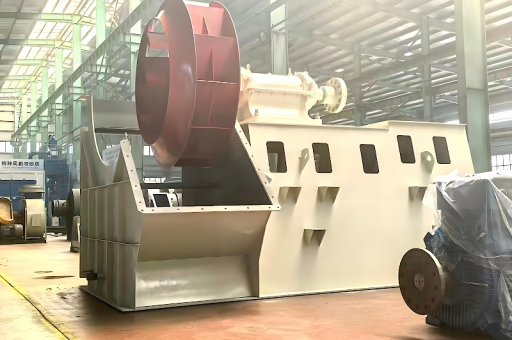
It appears you are asking about a high-voltage (10kV), anti-explosion (explosion-proof) centrifugal blower, specifically designated as a Boiler Fan (likely for an Industrial or Power Plant boiler).
Here is a detailed breakdown of what this equipment is, its key specifications, applications, and critical safety features.
Core Definition
This is a heavy-duty industrial fan designed to:
- Move air or flue gas in a boiler system (Forced Draft, Induced Draft, or Primary Air).
- Operate in a hazardous (explosive) environment (e.g., near coal dust, gas leaks, or volatile combustion byproducts).
- Run on a very high medium-voltage supply (10,000 Volts AC), which is standard for large, high-power motors (typically >200 kW / 250 HP).
Key Components & Specifications
| Component | Specification | Why it matters |
|---|---|---|
| Fan Type | Centrifugal (Radial, Backward Curved, or Airfoil) | High static pressure, stable operation against boiler resistance. |
| Motor | 10kV, 3-Phase, AC Induction (or Synchronous) | High voltage reduces current, allowing smaller cables & higher efficiency for large power ratings (e.g., 500 kW - 3 MW). |
| Explosion Proof | ATEX (Zone 1/2) or IECEx (Ex d / Ex e / Ex nA) | Motor enclosure & fan casing are designed to contain an internal explosion without igniting the external atmosphere. |
| Housing | Heavy-duty steel plate (carbon or stainless) | Withstands high temperature, pressure, and potential pitting from corrosive flue gas. |
| Impeller | Cast or welded alloy steel | Dynamic balancing critical for high RPM operation. |
| Bearings | Grease or oil-lubricated, with vibration & temperature sensors | Prevent catastrophic failure in high-load continuous operation. |
| Seals | Labyrinth or purge seals (on shaft) | Prevent gas leakage from the fan casing into the motor or environment. |
| Control | VFD (Variable Frequency Drive) capable (with 10kV input) or DCS/DAM control | Allows precise air flow control to match boiler load. |
Boiler Application Roles
In a power plant or industrial boiler, this fan is one of three types:
- Forced Draft (FD) Fan:
- Job: Pushes ambient air into the furnace.
- Environment: Clean, dry air. Less likely to require explosion-proof rating (unless hydrogen or gas is present).
- Induced Draft (ID) Fan:
- Job: Pulls hot, dirty, and corrosive flue gas out of the boiler and through the stack.
- Environment: Hot (150°C - 400°C), dusty (fly ash), corrosive (SOx, NOx). Highly suitable for explosion-proof design because unburned fuel or CO can accumulate.
- Primary Air (PA) Fan:
- Job: Pushes air to the coal mill (pulverizer) and transports coal dust to the burner.
- Environment: Dust-laden (coal dust is explosive). Must be explosion-proof (ATEX Zone 21 for dust).
Your specification "Anti-Explosion" suggests this fan is likely an ID Fan or PA Fan.
Why 10kV?
- High Power: A large boiler fan can draw 1000 - 3000 Amps at 400V. At 10kV, the same power requires only 40-120 Amps.
- Cable & Switchgear Cost: Significantly cheaper and smaller for 10kV cabling vs. low voltage (400V/690V).
- Long Distance: Boilers often require fans remotely located from the motor control center (MCC). High voltage minimizes voltage drop.
Critical Safety & Operational Features
- Casing Design: The fan housing is designed to withstand internal explosions (pressure shock resistant) without rupturing. Flanges are bolted with high-strength fasteners.
- Explosion Relief Doors: Mechanical panels that burst open if an internal explosion occurs, directing the blast away from personnel.
- Shaft Sealing: To prevent hot, explosive gases from leaking out and igniting.
- Material Selection:
- FD Fan: Carbon steel.
- ID Fan: Corten steel (corrosion resistant) or stainless steel.
- Explosion risk: Non-sparking materials (e.g., Inconel or special alloys) for the impeller near gas seals.
- Monitoring:
- Vibration probes: For unbalance (common with dust accumulation).
- Bearing temperature sensors: (RTDs) for overheating.
- Differential pressure sensors: To detect dirty filters or duct blockages.
Typical Standards & Certifications
- Explosion Protection: ATEX 2014/34/EU (Europe), IECEx (International), or Class I Division 1/2 (North America).
- Fan Performance: ISO 5801, AMCA 210.
- High Voltage Motor: IEC 60034-1, NEMA MG-1 (Part 30/31 for VFDs).
- Testing: Type test for pressure containment, overspeed test (10-15% over max RPM), and dynamic balancing.
Common Issues with 10kV Explosion-Proof Boiler Fans
- Erosion (ID Fans): Fly ash erodes the impeller blades over time, leading to imbalance and vibration.
- Corrosion (ID Fans): Wet FGD systems cause sulfuric/condensation corrosion at low loads.
- Coal Dust Accumulation (PA Fans): Dangerous if iron sparks occur. Requires smooth surfaces and strict dust control.
- VFD Compatibility: A 10kV VFD is large, expensive, and requires specialized harmonic filters.
- Bearing Failure: The #1 cause of unplanned outage in boiler fans. Requires proper lubrication and cooling.
Summary Table
| Feature | Detail |
|---|---|
| Equipment | Anti-Explosion Centrifugal Blower |
| Voltage | AC 10kV (10,000 Volts) |
| Application | Boiler (Power Plant/Industrial) |
| Role | FD Fan (Air Inlet), ID Fan (Flue Gas Outlet), PA Fan (Coal Transport) |
| Safety | ATEX/IECEx, Pressure Shock Resistant, Non-Sparking Materials |
| Main Risks | Erosion, Corrosion, Coal Dust Explosion, Bearing Failure |
| Control | DCS (Distributed Control System) or Standalone VFD |
Would you like more specific information on:
- How to size a 10kV explosion-proof fan for a specific boiler capacity (e.g., 50 TPH steam generation)?
- The difference between ATEX Zone 1 (Gas) and Zone 21 (Dust) for boiler fans?
- A typical commissioning checklist for this type of fan?





