
This article's table of contents introduction:
- The Core Components
- How They All Work Together
- Why a Carbon Steel Coupling is Used Here
- Common Issues & Considerations
- Summary
This request appears to describe a specific combination of industrial components, but the phrasing is a bit fragmented. Here is a breakdown of what each term means, how they connect, and the typical application you are referring to.
The Core Components
-
Carbon Steel Coupling:
- What it is: A mechanical device used to connect two rotating shafts (e.g., a motor shaft and a fan shaft).
- Material: Carbon steel is chosen for its high strength, durability, and resistance to shock loads. It is standard for industrial fans.
- Types: Common types include gear couplings, grid couplings, or flexible disc couplings.
-
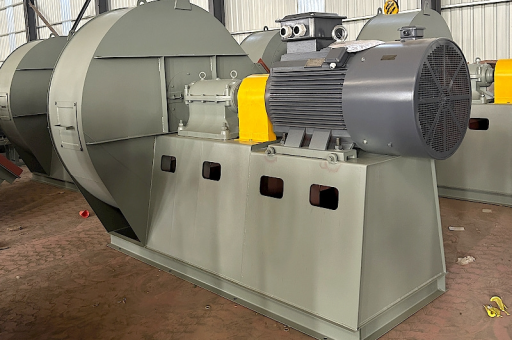
Driven FD Boiler Fan:
- FD Fan: Forced Draft Fan. Its job is to supply primary combustion air into the boiler furnace.
- "Driven": This means the fan is the load being rotated by a prime mover (usually an electric motor). The fan itself does not drive anything else.
-
Boiler Fan (Cumulative):
This confirms the entire assembly is part of a boiler system (thermal power plant, industrial boiler, or steam generator).
How They All Work Together
The typical arrangement is:
Electric Motor ➡️ Coupling ➡️ FD Fan Shaft
- An electric motor rotates.
- The Carbon Steel Coupling connects the motor shaft to the FD fan shaft.
- The motor drives the fan shaft, which rotates the impeller inside the FD fan casing.
- The FD fan draws in ambient air and forces it through air ducts into the boiler furnace.
Why a Carbon Steel Coupling is Used Here
- Torque Transmission: FD fans require significant torque to move large volumes of air against system resistance.
- Alignment Tolerance: Some flex couplings allow for slight misalignment between the motor and fan without damaging bearings.
- High Temperature Environment: While the coupling itself is not in the furnace, it is near a hot boiler. Carbon steel is suitable for ambient-to-moderate heat exposure.
- Cost-Effectiveness: It is stronger and more durable than cast iron for this application, but cheaper than stainless steel (which isn't usually needed here).
Common Issues & Considerations
If you are troubleshooting or specifying this system, pay attention to:
- Shaft Alignment: Misalignment will cause vibrations, heat, and rapid failure of the coupling.
- Coupling Type:
- Gear coupling = High torque, some misalignment tolerance.
- Grid coupling = Good shock absorption.
- Flexible disc = No lubrication needed, good for precise alignment.
- Lubrication: Gear and grid couplings require proper grease to prevent wear.
- Vibration Monitoring: Vibration at the coupling often indicates fan imbalance or bearing issues.
Summary
You are describing a Forced Draft Fan assembly used for a Boiler, where the Carbon Steel Coupling is the critical mechanical link between the driving motor and the fan impeller. It is a robust, high-torque connection designed for continuous, heavy-duty air supply to a combustion system.
Would you like more specific information on:
- How to select the right carbon steel coupling size for an FD fan?
- Common failure modes of couplings in boiler fan applications?
- Alignment procedures for motor-to-fan couplings?





