
This article's table of contents introduction:
- Table of Contents
- Introduction: The Role of Air Supply Fans in Biomass Boiler Systems
- Understanding the Backward Curved Blade Design: Aerodynamics and Efficiency
- Technical Specifications and Material Selection for Industrial Biomass Boilers
- Performance Comparison: Backward Curved vs. Forward Curved vs. Radial Fans
- Key Engineering Considerations: Temperature, Particulate, and Corrosion Resistance
- Installation, Maintenance, and Troubleshooting Best Practices
- Frequently Asked Questions (FAQ)
- Conclusion: Future Trends and Sustainability Impact
*Optimizing Combustion Efficiency: The Industrial Backward Curved Air Supply Biomass Boiler Fan – Design, Performance, and Applications*
Table of Contents
- Introduction: The Role of Air Supply Fans in Biomass Boiler Systems
- Understanding the Backward Curved Blade Design: Aerodynamics and Efficiency
- Technical Specifications and Material Selection for Industrial Biomass Boilers
- Performance Comparison: Backward Curved vs. Forward Curved vs. Radial Fans
- Key Engineering Considerations: Temperature, Particulate, and Corrosion Resistance
- Installation, Maintenance, and Troubleshooting Best Practices
- Frequently Asked Questions (FAQ)
- Conclusion: Future Trends and Sustainability Impact
Introduction: The Role of Air Supply Fans in Biomass Boiler Systems
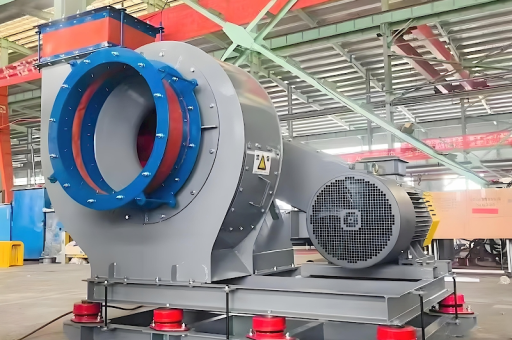
In modern industrial biomass boiler systems, the air supply fan is a critical component responsible for delivering the precise volume of combustion air at the required static pressure. Among the various fan types used, the Industrial Backward Curved Air Supply Biomass Boiler Fan has emerged as a preferred solution due to its high efficiency, stable performance under variable load conditions, and ability to handle air streams containing moderate particulate matter.
Biomass combustion requires a carefully controlled air-to-fuel ratio. Insufficient air leads to incomplete combustion, increased carbon monoxide emissions, and reduced thermal efficiency. Excess air, while ensuring complete combustion, results in heat loss through the flue gas. The backward curved fan provides an optimal balance: it delivers a non-overloading power characteristic, meaning that as system resistance increases, motor current does not spike dangerously. This makes it particularly safe for applications where boiler backpressure fluctuates, such as during start-up, fuel moisture variations, or grate movement.
This article provides a comprehensive technical and practical guide to these fans, drawing on industry data, thermodynamics, and real-world field experience.
Understanding the Backward Curved Blade Design: Aerodynamics and Efficiency
The distinguishing feature of a backward curved fan is that its blade tips are angled away from the direction of rotation. This design yields several aerodynamic advantages:
- Higher static efficiency: Due to reduced air recirculation at the blade trailing edge, backward curved fans typically achieve peak static efficiencies in the range of 75–85%, compared to 60–70% for forward curved designs.
- Steep pressure curve: The pressure-volume (P-Q) curve slopes downward steeply, meaning that small changes in pressure do not cause large swings in airflow—a desirable trait for combustion air control.
- Low noise generation: The blade shape minimizes turbulence, resulting in lower sound levels at equivalent duty points.
For biomass boiler applications, the fan wheel is often fabricated from carbon steel with a corrosion-resistant coating, or from stainless steel (e.g., SS316L) when the air supply is preheated or mixed with flue gas recirculation. The housing is typically of a scroll type, designed to convert velocity energy into static pressure with minimal losses.
Key Metric: A typical 75 kW industrial backward curved fan designed for a 10-ton/hr biomass boiler can deliver 40,000 m³/h of air at 2,500 Pa static pressure, with a power consumption of approximately 37 kW—a substantial saving over older radial blade designs.
Technical Specifications and Material Selection for Industrial Biomass Boilers
When selecting a backward curved fan for a biomass boiler air supply system, engineers must evaluate the following parameters:
- Airflow (Q): Ranges from 5,000 to 100,000 m³/h depending on boiler capacity. Rule of thumb: 1 kg of biomass requires 4–6 kg of air for stoichiometric combustion.
- Static Pressure (Ps): Typically between 1,500 and 4,500 Pa, accounting for ductwork, air preheater, grate resistance, and fuel bed thickness.
- Air Temperature: Ambient supply fans operate at 20–40°C. However, if the fan is positioned after an air preheater (to improve thermal efficiency), temperatures can reach 150–250°C. In those cases, the fan must feature a heat slinger, high-temperature shaft seals, and bearing cooling fins.
- Particulate Content: Biomass fuel can introduce dust, ash fines, and unburned carbon into the airstream. A backward curved fan with a radial inlet is less prone to blade fouling, but if particulate levels exceed 50 mg/Nm³, an abrasion-resistant lining (e.g., ceramic epoxy or hard-faced blades) is recommended.
Material Selection Table:
| Component | Standard Grade | High-Temperature/Corrosive Grade |
|---|---|---|
| Impeller | Mild Steel (MS) | SS316L or Duplex SS |
| Shaft | EN8 or C-45 | SS410 (heat treated) |
| Housing | MS with epoxy paint | Corten steel or SS304 |
| Bearings | Self-aligning ball bearings | High-temp grease, SKF or equivalent |
Performance Comparison: Backward Curved vs. Forward Curved vs. Radial Fans
A proper fan selection hinges on understanding the load profile of the biomass boiler. Below is a comparison based on published fan curves and field data:
| Parameter | Backward Curved | Forward Curved | Radial (Paddle) |
|---|---|---|---|
| Efficiency (peak) | 75–85% | 55–65% | 65–75% |
| Power characteristic | Non-overloading | Overloading | Non-overloading |
| Noise level | Moderate | Low | High |
| Dust handling | Fair (with radial inlet) | Poor | Excellent |
| Cost | Moderate | Low | High (robust construction) |
| Typical boiler use | Air supply for modern biomass | Low-pressure HVAC | Primary air for stoker boilers |
Answer: For biomass boilers with variable fuel moisture and automated controls, the backward curved fan is the most efficient and electrically safe choice. It avoids motor burnout during temporary backpressure increases—a common failure mode with forward curved fans.
Key Engineering Considerations: Temperature, Particulate, and Corrosion Resistance
Biomass boilers often burn fuels like wood chips, agricultural residue, or pellets. These fuels release moisture, acidic compounds (e.g., HCl from straw), and fine particulates. The air supply fan must therefore be designed with three challenges in mind:
- Thermal expansion: Shaft and housing clearances must be designed for operating temperature. A cold gap of 2–3 mm may close to near zero at 200°C. A common fix is a floating inlet cone or labyrinth seal.
- Corrosion: When using high-sulfur biomass or when the fan is downstream of a flue gas recirculation loop, acidic condensation can form. In such cases, the fan should be built from SS316L or have a rubber lining.
- Vibration monitoring: Unbalance due to blade deposits is a frequent issue. Installing accelerometers and automated cleaning ports (e.g., compressed air lances) can double the maintenance interval.
Installation, Maintenance, and Troubleshooting Best Practices
Installation:
- Mount the fan on a rigid base with spring vibration isolators.
- Ensure the inlet duct is straight for at least three duct diameters upstream to avoid turbulence.
- Install a variable frequency drive (VFD) to modulate airflow based on oxygen trim control.
Routine Maintenance:
- Weekly: Check bearing temperature (<80°C) and vibration (<7 mm/s RMS).
- Monthly: Inspect blades for deposit buildup. Cleaning with dry steam or shot blasting may be required every 3–6 months.
- Quarterly: Grease bearings per manufacturer spec (e.g., every 500 hours for high-temp service).
Common Failures and Solutions:
| Problem | Likely Cause | Solution |
|---|---|---|
| High vibration | Blade imbalance | Clean blades; rebalance if needed |
| Overheating bearings | Misalignment or grease loss | Realign shaft; relubricate |
| Motor overcurrent | Damper closed too far | Open damper; check VFD settings |
| Reduced airflow | Clogged inlet screen or duct leaks | Clean screen; repair duct seals |
Frequently Asked Questions (FAQ)
Q1: Why is a backward curved fan considered “non-overloading”?
A: Its power curve peaks at the free delivery point and decreases as system resistance increases. This means that if the boiler grate becomes partially clogged, the fan motor draws less current, preventing thermal overload.
Q2: Can a backward curved fan handle hot air from an air preheater?
A: Yes, but only with appropriate material upgrades. For air temperatures above 120°C, the impeller should be made of heat-treated alloy steel, and the shaft should include a cooling slinger between the housing and bearing pedestal.
Q3: Is a VFD necessary for a biomass boiler air supply fan?
A: Highly recommended. A VFD allows continuous modulation of airflow to match the combustion demand, improving boiler efficiency by 3–7% compared to damper control alone.
Q4: How do I calculate the correct fan size for my boiler?
A: Use the formula:
Airflow (m³/h) = Boiler thermal input (kW) × Excess air ratio × Stochiometric air factor (typically 10–12 m³/MJ).
Example: A 5 MW boiler at 20% excess air requires roughly 60,000–66,000 m³/h of air at boiler full load.
Q5: What is the typical lifespan of a backward curved biomass fan?
A: With proper material selection and maintenance, the fan wheel can last 8–12 years in moderate service. High particulate or corrosive environments may reduce this to 3–5 years unless wear-resistant coatings are applied.
Conclusion: Future Trends and Sustainability Impact
The Industrial Backward Curved Air Supply Biomass Boiler Fan represents a convergence of aerodynamic efficiency, operational safety, and application-specific engineering. As global policies push for carbon-neutral energy production from biomass, the demand for high-efficiency combustion air fans will continue to grow.
Emerging trends include:
- Smart fan monitoring: IoT-enabled sensors for real-time data on bearing vibration, temperature, and motor current, integrated with boiler control systems.
- Additive manufacturing: Laser-cladded fan blades that resist wear and corrosion at hotspots.
- Energy recovery integration: Air supply fans paired with heat pipes or thermal wheels to preheat combustion air using flue gas waste heat, raising overall boiler efficiency above 90%.
For plant engineers and procurement professionals, selecting a backward curved fan is a long-term investment in reliability, lower electricity consumption, and reduced carbon footprint. By adhering to the sizing, material, and maintenance guidelines detailed above, operators can ensure that their biomass boiler system operates at peak performance for years to come.





