
This article's table of contents introduction:
- Understanding the Terminology
- Core Engineering Challenges
- Typical Design & Construction
- Key Considerations for Selection
- Summary: Is this what you need?
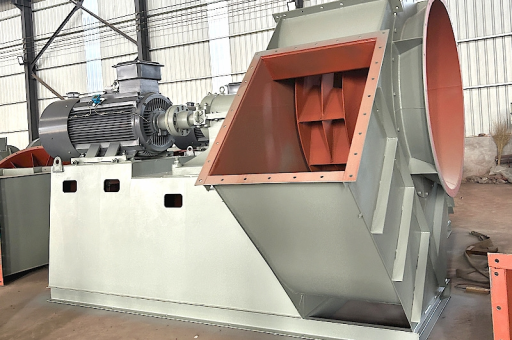
This is a highly specific industrial equipment request. Let's break down what a High Temperature High Volume Induced Draught (ID) Boiler Blower Fan is, the critical engineering considerations, and common solutions.
Understanding the Terminology
- Induced Draught (ID) Fan: Located at the exit of the boiler system (between the boiler/air heater and the stack/chimney). It pulls (induces) the flue gas through the boiler. This creates a negative pressure inside the furnace for safe operation.
- High Volume: The fan must handle the massive volume of flue gas produced by combustion, measured in m³/s or CFM.
- High Temperature: The flue gas entering the fan is hot. While some cooling occurs in heat exchangers (economizers, air heaters), temperatures can still be high (e.g., 100°C - 200°C+ for coal boilers, higher for biomass). The fan and its components must withstand this.
- Boiler Blower Fan: While often "blowers" (like FD fans) are for cold air, an ID fan is structurally a blower fan (centrifugal) but handling hot, dirty gas.
Core Engineering Challenges
Unlike a standard ventilation fan, this application has severe operating conditions:
- Thermal Expansion: The fan housing, shaft, and impeller expand significantly. The impeller must be locked axially at the drive end and free to expand axially at the non-drive end.
- Abrasion: Fly ash and unburned carbon particles act like sandpaper. The fan blades wear down rapidly, causing imbalance and vibration.
- Corrosion: When flue gases cool below the acid dew point (especially sulfur in coal/oil), sulfuric acid forms, corroding the fan internals.
- Impeller Balance & Strength: At high RPMs and high temperatures, the impeller material loses some tensile strength (hot yield strength). Centrifugal stress is extreme.
- Shaft Sealing: Hot, potentially toxic gas cannot leak into the bearing housing or the plant environment. Effective shaft seals are critical.
- Vibration: A heavy, high-speed rotor with potential ash buildup requires robust bearings and a sophisticated vibration monitoring system.
Typical Design & Construction
When sourcing or specifying this fan, look for these features:
| Component | Specification | Reason |
|---|---|---|
| Fan Type | Centrifugal, Backward-Curved (or Airfoil) Blades | Higher efficiency, non-overloading power curve, self-cleaning profile. |
| Impeller | Corten/Weathering Steel (for strength) OR Duplex Stainless Steel / Inconel (for severe heat/corrosion). Wear liners on blades. | Resists abrasion and corrosion at temperature. |
| Housing | Volute casing with split design (horizontally or vertically) for maintenance access. Insulated & clad for heat retention/safety. | Safety (against burns & heat loss) and easier impeller access. |
| Shaft | Forged alloy steel (e.g., AISI 4140, EN19) with high tensile strength. | Minimizes deflection under heavy load. |
| Bearings | Spherical roller bearings with relubrication system. Thermocouple ports in bearing housings. | Handle heavy radial and axial thrust loads. |
| Drive System | V-belt drive (for moderate power, easy speed change) OR direct drive with variable frequency drive (VFD). | VFD provides precise control of draft and energy savings. |
| Cooling | Shaft cooling fan or water-cooled bearing housing (for extreme heat). | Prevents heat conduction from the hot shaft to the bearings. |
| Accessories | Expansion joint on inlet/outlet. Vibration sensors (probes on bearings). Lube oil cooler. Standby fan (typically duty/standby configuration). | Handle thermal growth and protect against failure. |
Key Considerations for Selection
Before ordering, you must answer:
- Gas Temperature: Is it continuous or peak? (e.g., 150°C continuous, 250°C peak).
- Gas Composition: Is there fly ash (abrasion)? High sulfur (corrosion)? High moisture (sticky deposits)?
- Required Volume (m³/hr or CFM): At the actual inlet temperature and density.
- Required Static Pressure (mmWC or Pa): Total resistance the fan must overcome.
- Ambient Conditions: Plant altitude and temperature.
Summary: Is this what you need?
If you are looking for a rugged, high-efficiency centrifugal fan designed to suck hot, dirty, abrasive flue gas from a large industrial boiler and push it up a chimney, then yes, you are asking for the correct product.
Potential Manufacturers / Brands (for reference):
- Howden
- Greenheck (industrial division)
- New York Blower
- TLT-Turbo
- Robinson Fans
- AirPro Fan & Blower
- Cincinnati Fan
Important: This is not a standard HVAC fan. It is a heavy-duty, custom-engineered piece of capital equipment. You will likely need to provide process data to a manufacturer for a proper selection.
If you have a specific boiler capacity (e.g., 100 TPH steam generation) or a specific problem (e.g., "bearing failures every 3 months," "excessive vibration"), please provide it, and I can refine the advice.





