
This article's table of contents introduction:
- What is an Industrial Centrifugal Exhaust Fan?
- Common Industrial Applications
- Key Components & Features
- Types of Industrial Centrifugal Exhaust Fans
- How to Select the Right One (Key Specifications)
- Advantages vs. Axial Fans (e.g., Wall Fan, Tube Axial)
- Leading Industrial Manufacturers (US & Global)
- Quick Summary for Your Search
It sounds like you're looking for information on industrial centrifugal exhaust fans, specifically those used for HVAC (Heating, Ventilation, and Air Conditioning) exhaust applications. These are high-powered blowers designed to move large volumes of air against resistance (static pressure) from ductwork, filters, or environmental controls.
Here is a detailed breakdown of what these fans are, their key features, common types, and selection criteria.
What is an Industrial Centrifugal Exhaust Fan?
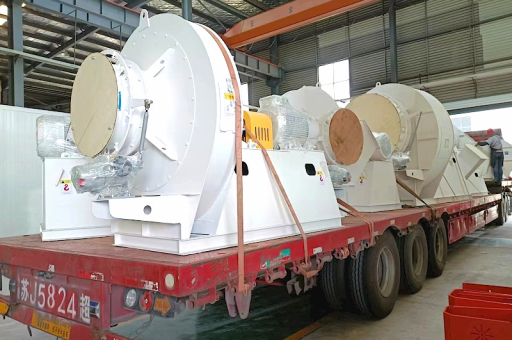
Unlike axial fans (like a desk fan or wall-mounted propeller fan) which move air parallel to the blades, centrifugal fans (also called squirrel cage fans or blowers) use a rotating impeller to draw air in axially and discharge it radially (perpendicular to the intake).
- Function: Creates a high-pressure airflow. This is critical for pulling "bad" air out of a building, kitchen, laboratory, factory, or warehouse and exhausting it through long, complex duct runs to the outside.
- Key Difference: They are much better at overcoming static pressure (the resistance from ducts, filters, louvers, and dampers) than axial fans.
Common Industrial Applications
- General Warehouse/Factory Ventilation: Removing heat, odors, and fumes.
- Commercial Kitchens (Type I & II Hoods): Exhausting grease-laden air, smoke, and heat.
- Laboratories & Cleanrooms: Maintaining negative pressure and exhausting hazardous fumes (often with corrosion-resistant materials).
- Parking Garages: Removing vehicle exhaust fumes (carbon monoxide).
- Paint Booths & Welding Areas: Removing combustible vapors, dust, and metal fumes.
- Dust Collection & Material Handling: Moving air with light particulate matter (chips, sawdust, fibers).
Key Components & Features
- Housing (Volute): A spiral-shaped casing that converts the air's kinetic energy (velocity) into pressure.
- Material: Heavy-gauge Galvanized Steel (standard), Stainless Steel (for corrosive or high-heat environments), or Fiberglass Reinforced Plastic (FRP) for chemical resistance.
- Impeller (Wheel): The rotating component. The blade design dictates the fan's performance curve.
- Drive System:
- Direct Drive: Motor is directly coupled to the impeller shaft. More efficient, lower maintenance, and often in smaller units.
- Belt Drive: Motor mounted externally, connected via pulleys and belts. Allows for easier speed adjustment (by changing pulley sizes) and better performance at higher static pressures and temperatures. Most common in industrial sizes.
- Motor: Typically TEFC (Totally Enclosed Fan Cooled) or explosion-proof for hazardous environments. Often mounted outside the airstream (on a pedestal or stand) for belt-drive models to keep it cooler and away from contaminants.
- Inlet Cone: A smooth, converging cone at the intake that efficiently directs air into the impeller eye.
Types of Industrial Centrifugal Exhaust Fans
The impeller blade design determines the fan's best use:
| Blade Type | Characteristics | Best For |
|---|---|---|
| Forward Curved | Curved in the direction of rotation. High airflow at low static pressure. Can fit in a compact housing. Less efficient. Often called "squirrel cage." | General HVAC, low-pressure exhaust, unit heaters, residential/light commercial (less common for heavy industrial). |
| Backward Inclined | Flat or curved blades leaning away from rotation. High efficiency, stronger, non-overloading power curve (motor won't burn up if airflow is blocked). Ideal for medium to high static pressure. | Most common industrial choice. Dust control, process exhaust, general ventilation in factories. |
| Airfoil | A type of backward inclined blade shaped like an airplane wing. Highest efficiency and quietest operation. More expensive. | Clean air, high-efficiency systems, large central HVAC units. |
| Radial (Paddle Wheel) | Straight, flat blades. Extremely rugged, simple, and self-cleaning. Very low efficiency, but can handle high temperatures and heavy dust or sticky materials. | Material handling (conveying dust, wood chips), high-temperature exhaust (ovens, dryers). |
| Radial Tip | A hybrid with a radial blade base and a curved airfoil tip. Higher efficiency than standard radial, good for dirty air. | A compromise between efficiency and material-handling capability. |
How to Select the Right One (Key Specifications)
To choose the correct fan, you need to define these parameters:
- CFM (Cubic Feet per Minute) - Airflow: How much air do you need to move? (e.g., 5,000 CFM).
- Static Pressure (SP) - Resistance: What is the total resistance in the system (ducts, filters, louvers)? (e.g., 2.5 inches water gauge [in. w.g.]).
- Air Temperature: Standard (up to 140°F), medium (up to 250°F), or high-heat (300°F+). This affects the motor power and bearing type.
- Air Contaminants:
- Clean air? (Backward Inclined or Airfoil)
- Greasy/dirty? (Backward Inclined with clean-out doors or Radial/Paddle wheel)
- Corrosive or flammable? (Stainless Steel, FRP, or Spark-Resistant Construction / Explosion-Proof motor).
- Motor Power (HP): Determined by the CFM and Static Pressure. An underpowered fan won't move the required air; an overpowered one wastes energy.
Advantages vs. Axial Fans (e.g., Wall Fan, Tube Axial)
| Feature | Centrifugal Fan (Your Extractor) | Axial Fan |
|---|---|---|
| Pressure Capability | High (Excellent for ducted systems) | Low to Medium |
| Airflow | Medium to Very High (at high SP) | Very High (at low SP) |
| Noise | Can be quieter in same airflow/pressure | Louder (wind noise & blade noise) |
| Space | Larger, wider footprint | Compact, long cylinder shape |
| Ductwork | Can handle long, complex ducts | Best for short, simple runs or open wall mounting |
| Dirt/Dust | Better suited for particle-laden air | Poor (blades collect material) |
Leading Industrial Manufacturers (US & Global)
- Greenheck
- Twin City Fan & Blower
- New York Blower Co. (NYB)
- Howden
- Loren Cook
- Cincinnati Fan
- ebm-papst (Smaller, high-efficiency EC motors)
Quick Summary for Your Search
If you need an HVAC exhaust air blower for industrial use, you are most likely looking for a Backward Inclined (BI) Belt-Drive Centrifugal Fan or a Radial Tip Fan if handling dirty air. Confirm your CFM and Static Pressure requirements first, as this is the only way to size the fan correctly.
Before purchasing, always ask:
- Duct length and diameter?
- Type of contaminant (grease, dust, fumes, just hot air)?
- Need for spark resistance?
- External or internal mounting? (Roof curb, wall mount, or indoors?)
If you provide a specific application (e.g., "Industrial kitchen exhaust for a 50-burner range" or "Exhausting a 2,000 sq ft welding booth"), I can give a more targeted recommendation.





