
This article's table of contents introduction:
- Terminology Breakdown
- Likely Application Context
- Key Performance & Specification Questions
- Typical Components of Such a Fan
- Why "Dynamic Balanced" is Critical
- Summary Table
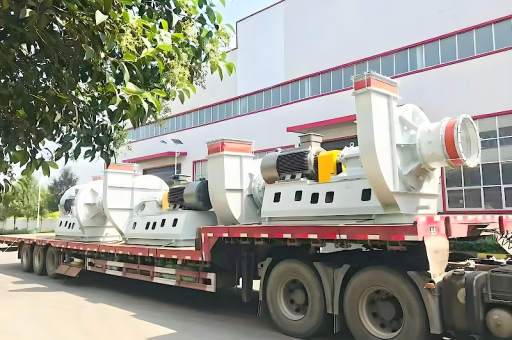
Based on your query, it sounds like you are describing a specific type of industrial fan used for high-pressure or high-efficiency air movement, likely in HVAC, dust collection, or material handling systems.
Let's break down the terminology in your request to clarify what you are referring to and what the key features are.
Terminology Breakdown
- Dynamic Balanced: This is a crucial quality indicator. It means the impeller (fan wheel) has been dynamically balanced on a precision machine. This minimizes vibration, reduces bearing wear, extends fan life, and lowers noise. For industrial fans, ISO 1940 Grade G6.3 or G2.5 balancing is standard.
- Impeller: The rotating wheel with blades that does the actual work of moving air.
- Air Exhaust: The fan is configured for the discharge (outlet) side. In this context, it likely means Arrangement 4 or Arrangement 1 (direct drive or belt drive), where the air is expelled from the housing.
- SWSI: Single Width, Single Inlet. This is a standard configuration.
- Single Width: The impeller is one wheel wide (as opposed to Double Width).
- Single Inlet: Air enters the fan housing from only one side (the opposite side is closed or has the motor mount).
- Key Feature: SWSI fans are more efficient for higher static pressure applications compared to double-width (DWDI) fans, and they are easier to install in tight spaces.
- Industrial Centrifugal Fans: These are workhorses. Unlike axial fans (like a desk fan), centrifugal fans use a rotating impeller to increase the velocity of air, then the volute (scroll housing) converts that velocity into static pressure. They are ideal for:
- Dust collection (handling particulate)
- Material handling (conveying wood chips, grain, etc.)
- Fume extraction
- High-temperature applications (e.g., oven exhaust)
- High-pressure HVAC systems
Likely Application Context
You likely have an Arrangement 4 (V-belt drive) or Arrangement 1 (direct drive) fan with a Backward-Inclined (BI) or Airfoil (AF) impeller. These are the most common for high-efficiency "exhaust" applications.
- Backward Inclined (BI): Medium to high pressure, very efficient, non-overloading horsepower curve. Good for clean to slightly dusty air.
- Airfoil (AF): Highest efficiency (up to 85-90%), very quiet, but blades are hollow and easily clogged. For clean air only.
Key Performance & Specification Questions
To find the exact fan you need or to evaluate a current one, you need to answer these four key selection criteria:
- Airflow (CFM or m³/hr): How much air do you need to move?
- Static Pressure (in. w.g. or Pa): What resistance does the system have (ductwork, filters, cyclones)?
- Air/Gas Temperature (°F or °C): Is it ambient, hot (e.g., 500°F/260°C), or high-temp?
- Material Handled: Is the air clean, slightly dusty, or heavily laden with material (e.g., wood chips, abrasive dust)?
Typical Components of Such a Fan
If you are ordering or specifying this fan, it will likely include:
- Housing: Heavy-gauge steel or aluminum, with a tangential outlet.
- Impeller: Welded steel, with a steel hub for shaft mounting. Dynamically balanced per ISO 1940.
- Inlet Cone (Venturi): Smoothly shaped to guide air into the impeller eye.
- Shaft & Bearings: Oversized for industrial duty (pillow block or flange bearings).
- Drive System:
- Direct Drive (Arr. 4 or 8): Motor shaft connected to fan impeller. Constant speed.
- Belt Drive (Arr. 1, 3, 9): Allows for speed changes to adjust CFM/pressure. Most common for exhaust systems.
- Base/Frame: Welded steel base with vibration isolators (spring or rubber) to prevent transmission of vibration to the building.
Why "Dynamic Balanced" is Critical
- Reduces Noise: Unbalanced impellers cause humming and rumble.
- Extends Bearing Life: Excessive vibration is the #1 killer of industrial fan bearings.
- Prevents Shaft Fatigue: Reduces stress on the shaft and coupling.
- Improves Airflow: A balanced impeller runs true, maintaining a consistent gap between the blade tips and the housing scroll, maximizing efficiency.
Summary Table
| Feature | Description | Benefit for "Air Exhaust" |
|---|---|---|
| Dynamic Balanced | Precision balancing of rotating mass | Low vibration, long life, quiet operation |
| SWSI | Single Width, Single Inlet | Higher static pressure capability, compact |
| Centrifugal | Uses rotating impeller & scroll housing | High pressure, handles particulate |
| Impeller | Backward Inclined (BI) or Airfoil (AF) | Best efficiency for clean or industrial exhaust |
Are you looking to:
- Purchase a specific fan with these specs (e.g., 10,000 CFM @ 4" w.g.)?
- Troubleshoot an existing fan (e.g., vibration issues, low flow)?
- Understand the difference between SWSI and DWDI?
If you can provide the CFM, Static Pressure, and what material is being exhausted, I can help you narrow down the exact model type (e.g., "Class II, Arrangement 4, Backward Inclined").





