
Energy Saving Oven Wall Cooling Dust Collector Centrifugal Blower Fan: A Comprehensive Guide to Industrial Efficiency
Table of Contents
- Introduction: The Need for Energy Saving in Industrial Ovens
- Understanding the Oven Wall Cooling System
- The Role of Dust Collectors in Industrial Hygiene
- Centrifugal Blower Fan: Design and Working Principle
- Integration of Energy Efficiency with Wall Cooling and Dust Collection
- Frequently Asked Questions (FAQ)
- Conclusion: Future Trends and Best Practices
Introduction: The Need for Energy Saving in Industrial Ovens
Industrial ovens are the backbone of many manufacturing processes, from food processing to powder coating, ceramics, and metallurgy. However, they are also among the most energy-intensive equipment in any facility. According to recent studies, industrial heating systems account for nearly 20% of total industrial energy consumption globally. The challenge is twofold: maintaining precise thermal conditions while reducing operational costs and environmental impact.
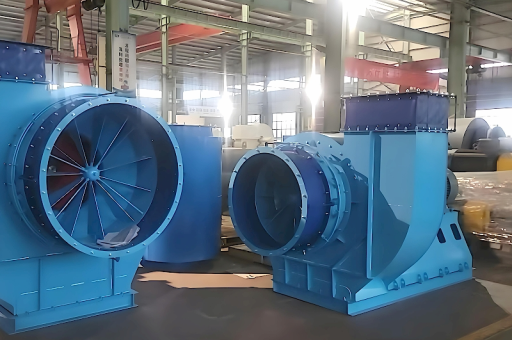
This is where the Energy Saving Oven Wall Cooling Dust Collector Centrifugal Blower Fan system comes into play. This integrated solution not only reduces energy consumption but also improves air quality, extends equipment life, and enhances production consistency. In this article, we will break down each component, explain how they work together, and answer the most common questions from industry professionals.
Understanding the Oven Wall Cooling System
What Is Oven Wall Cooling?
Oven wall cooling is a thermal management technique used to maintain the structural integrity of industrial ovens while minimizing heat loss. The walls of high-temperature ovens are often equipped with cooling channels or jackets through which air or water circulates. In modern energy-saving designs, air-based cooling using centrifugal fans is preferred because it is cheaper, easier to maintain, and allows for heat recovery.
Why Is Wall Cooling Important?
Excessive heat buildup on oven walls leads to:
- Thermal fatigue and material degradation
- Increased heat radiation to the surrounding environment
- Higher cooling loads for HVAC systems
- Reduced worker comfort and safety
By implementing a controlled wall cooling system, the heat that would otherwise be wasted is captured and either reused or dissipated efficiently. The Energy Saving Oven Wall Cooling Dust Collector Centrifugal Blower Fan system uses a dedicated fan to draw ambient air across the oven walls, then directs the heated air into the dust collector or back into the oven’s preheat zone.
Energy Saving Mechanism
The key to energy savings lies in heat recovery. When the centrifugal blower fan draws air across the hot oven walls, the air temperature rises by 30°C to 60°C depending on the application. Instead of exhausting this warm air to the atmosphere, it can be used for:
- Preheating combustion air
- Drying materials
- Space heating in the facility
This reduces the primary fuel consumption of the oven by up to 15-25%.
The Role of Dust Collectors in Industrial Hygiene
Why Dust Collection Matters
In industries such as powder coating, woodworking, and metal fabrication, ovens generate fine particulate matter from coatings, combustion residues, and material handling. Without an effective dust collector, these particles can:
- Contaminate the final product
- Increase maintenance frequency
- Pose explosion risks in certain environments
- Violate occupational health and safety regulations
How a Dust Collector Integrates with the Oven System
In the Energy Saving Oven Wall Cooling Dust Collector Centrifugal Blower Fan configuration, the dust collector is not a standalone unit but an integral part of the airflow loop. The centrifugal fan pulls air from the oven enclosure and the wall cooling channels, then pushes it through a high-efficiency particulate air (HEPA) filter or a baghouse filter. The cleaned air can then be recirculated back into the oven for heat recovery or discharged safely.
Types of Dust Collectors Suitable for Oven Applications
- Cyclone separators: For coarse particles; low maintenance
- Baghouse filters: For fine dust and high temperature
- Cartridge filters: For compact and modular systems
When combined with a centrifugal blower fan, these dust collectors achieve collection efficiencies of 99.9% for particles down to 0.5 microns.
Centrifugal Blower Fan: Design and Working Principle
Core Design Features
The centrifugal blower fan is the heart of the system. Unlike axial fans, centrifugal fans use a rotating impeller to increase air pressure and velocity. The air enters the fan axially near the center and is discharged radially outward. This makes them ideal for:
- High static pressure applications (e.g., ductwork with filters)
- Handling hot and dusty air streams
- Continuous 24/7 operation
Key Parameters for Energy Efficiency
| Parameter | Description | Impact on Energy Saving |
|---|---|---|
| Impeller diameter | Larger diameter moves more air | Reduces motor load if properly matched |
| Blade angle | Backward-curved blades are more efficient | Up to 85% efficiency |
| Motor type | IE4 or IE5 permanent magnet motors | Reduces power consumption by 15-20% |
| Variable Frequency Drive (VFD) | Enables speed control | Saves 30-50% at partial loads |
How the Fan Works in the Combined System
In the Energy Saving Oven Wall Cooling Dust Collector Centrifugal Blower Fan setup, the fan operates in a closed or semi-closed loop. It draws hot air from the oven wall cavities and the dust collector intake, passes the air through the filter, and returns the cleaned warm air to the oven or to a heat exchanger. This continuous recirculation minimizes thermal losses while maintaining clean internal air quality.
Integration of Energy Efficiency with Wall Cooling and Dust Collection
The Synergy Effect
When these three components—oven wall cooling, dust collection, and centrifugal blower—are integrated, the overall energy performance of the industrial oven improves dramatically. Here is how:
- Reduced heat loss: The wall cooling air is not wasted; it is reused or filtered and returned.
- Lower fan energy: With VFD control and optimized duct design, the fan runs only at the needed speed.
- Extended filter life: Pre-cooling the air before it reaches the dust collector reduces thermal stress on filter media.
- Improved oven performance: Clean internal air prevents fouling of heating elements and sensors.
Real-World Application Example
A powder coating line in a mid-sized facility replaced its conventional oven exhaust system with an integrated Energy Saving Oven Wall Cooling Dust Collector Centrifugal Blower Fan system. The results after six months:
- Energy consumption reduced by 22%
- Dust emissions below local regulatory limits
- Oven wall maintenance costs dropped by 35%
- Payback period: 14 months
Design Considerations for Engineers
- Calculate the required air volume (CFM) based on oven wall surface area and desired temperature drop.
- Select a fan with a pressure capability that overcomes the static resistance of the dust collector and ductwork.
- Install temperature sensors at critical points to control the VFD and damper positions automatically.
- Use insulated ducting to minimize reheating losses.
Frequently Asked Questions (FAQ)
Q1: Can the Energy Saving Oven Wall Cooling Dust Collector Centrifugal Blower Fan system be retrofitted to existing ovens?
Yes. Most systems are designed for retrofit. A site assessment is needed to determine duct routing, fan sizing, and filter compatibility.
Q2: What is the maximum temperature the centrifugal fan can handle?
Standard models handle up to 200°C. For higher temperatures (up to 500°C), use a high-temperature fan with appropriate bearings and shaft seals.
Q3: Does the dust collector require special filters for hot air?
Yes. For air above 80°C, use Nomex or PTFE-coated filters. For cooler return air, polyester filters are sufficient.
Q4: How does the VFD on the fan contribute to energy savings?
VFDs allow the fan to operate at exactly the speed needed. When the oven is at idle or low load, the fan slows down, saving up to 50% of fan energy compared to constant-speed operation.
Q5: Is there a risk of condensation in the cooling channels?
With proper design, no. The system maintains air temperatures above the dew point by mixing recirculated warm air with ambient air as needed.
Q6: What maintenance is required for the system?
- Inspect and clean filters monthly
- Lubricate fan bearings quarterly
- Check belt tension (if belt-driven)
- Monitor VFD parameters via SCADA or PLC
Q7: Can this system be used for ovens with explosive atmospheres?
Yes, but only with explosion-proof motors, ATEX-certified fans, and spark-resistant construction. Consult a safety engineer for specific regulations.
Conclusion: Future Trends and Best Practices
The Energy Saving Oven Wall Cooling Dust Collector Centrifugal Blower Fan system represents a paradigm shift in industrial oven design. Instead of treating cooling, dust collection, and air movement as separate functions, manufacturers are now integrating them into a single, intelligent, and energy-optimized unit.
Looking Ahead
- Smart controls: AI-based predictive control will adjust fan speed and damper positions based on real-time oven load, ambient conditions, and filter status.
- Modular plug-and-play units: Pre-assembled skids will reduce installation time and engineering costs.
- Zero-emission designs: Future systems will aim for total heat recovery and near-zero particulate discharge.
Actionable Takeaways
If you are managing an industrial oven operation, here is what you should do now:
- Conduct an energy audit of your oven’s cooling and exhaust system.
- Evaluate the potential for heat recovery from wall cooling air.
- Consider retrofitting with a centrifugal blower fan system that includes a dust collector.
- Partner with a supplier who offers integrated design and commissioning support.
The combination of Energy Saving Oven Wall Cooling Dust Collector Centrifugal Blower Fan technology is not just a trend—it is the new standard for sustainable and profitable manufacturing. By investing in this integrated solution, you reduce your carbon footprint, lower energy bills, and improve workplace safety all at once.





