
This article's table of contents introduction:
- Table of Contents
- Introduction: What Is an AC Backward Dust Collector Centrifugal Blower Fan?
- Key Components and Working Principle
- Why "Backward" Blades? Advantages Over Forward-Curved Designs
- Role of Alternating Current (AC) in Motor Performance
- Dust Collection Efficiency: Design Features That Matter
- Centrifugal Blower vs Axial Fan: Which Is Better for Dust?
- Common Applications in Industry and HVAC Systems
- Frequently Asked Questions (FAQ)
- Maintenance Tips for Longevity and Performance
- Conclusion: Why This Fan Is a Critical Asset for Clean Air Systems
** The Science and Application of the Alternating Current Backward Dust Collector Centrifugal Blower Fan: A Comprehensive Guide
Table of Contents
- Introduction: What Is an AC Backward Dust Collector Centrifugal Blower Fan?
- Key Components and Working Principle
- Why "Backward" Blades? Advantages Over Forward-Curved Designs
- Role of Alternating Current (AC) in Motor Performance
- Dust Collection Efficiency: Design Features That Matter
- Centrifugal Blower vs Axial Fan: Which Is Better for Dust?
- Common Applications in Industry and HVAC Systems
- Frequently Asked Questions (FAQ)
- Maintenance Tips for Longevity and Performance
- Conclusion: Why This Fan Is a Critical Asset for Clean Air Systems
Introduction: What Is an AC Backward Dust Collector Centrifugal Blower Fan?
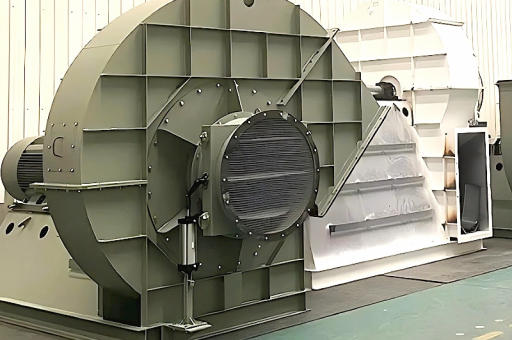
An Alternating Current Backward Dust Collector Centrifugal Blower Fan is a high-efficiency industrial fan designed to move air containing particulate matter—such as dust, sawdust, or metal shavings—through a filtration or dust collection system. Its name describes four key characteristics: it runs on alternating current (AC) , uses backward-curved blades, is built for dust collection, and operates as a centrifugal blower.
Unlike simple axial fans, this fan generates high static pressure, making it ideal for systems that require air to be pushed through long ducts, filters, and cyclones. The backward-curved blade design reduces clogging and improves energy efficiency, which is why it is widely used in woodworking shops, cement plants, food processing facilities, and HVAC exhaust systems.
Key Components and Working Principle
The fan consists of:
- AC Induction Motor: Converts electrical energy into rotational motion. AC motors are preferred for industrial settings due to their reliability, low maintenance, and ability to handle constant load.
- Impeller with Backward-Curved Blades: The rotating part that accelerates air outward using centrifugal force.
- Housing (Volute): A spiral-shaped casing that converts velocity into pressure.
- Inlet and Outlet: Designed to minimize turbulence and maximize airflow.
Working Principle:
When the AC motor spins the impeller, air enters the center (eye) of the fan. The backward-curved blades catch the air and fling it outward at high speed. The volute casing then slows the air down, converting its kinetic energy into static pressure. This pressurized air is then directed into ducts, filter bags, or cyclones for dust separation.
Why "Backward" Blades? Advantages Over Forward-Curved Designs
Backward-curved blades are angled opposite to the direction of rotation. This design offers several advantages, especially in dust-laden environments:
| Feature | Backward-Curved | Forward-Curved |
|---|---|---|
| Efficiency | Higher (up to 85%) | Lower (50–65%) |
| Self-Cleaning | Yes – less dust buildup | No – dust sticks to blades |
| No Overload | Power draw peaks at design point | Power increases with airflow |
| Pressure Capability | High static pressure | Low static pressure |
| Noise Level | Lower | Higher |
Because backward blades do not trap dust, they require less cleaning and maintain consistent performance over time. This makes them the clear choice for dust collection.
Role of Alternating Current (AC) in Motor Performance
AC motors are standard for industrial fan systems because:
- Reliability: No brushes or commutators, reducing wear.
- Variable Speed Control: Using Variable Frequency Drives (VFDs), AC motors can adjust speed to match system demand, saving energy.
- Torque Characteristics: AC induction motors provide constant torque over a wide speed range, ideal for high-pressure fans.
- Cost-Effectiveness: AC motors are cheaper to manufacture and maintain compared to DC motors with similar power ratings.
When paired with a VFD, an AC backward centrifugal blower fan can operate at partial speeds, reducing energy consumption by up to 40% in systems with fluctuating dust loads.
Dust Collection Efficiency: Design Features That Matter
To handle particulate matter effectively, the fan design must include:
- Wide Blade Spacing: Prevents clogging from large or sticky particles.
- Heavy-Duty Construction: Steel or wear-resistant alloys extend lifespan in abrasive environments.
- Sealed Bearings: Protect against dust ingress.
- Access Doors: Allow easy inspection and cleaning of the impeller.
The backward blade design also minimizes the risk of material buildup, which can unbalance the rotor and cause vibration or bearing failure.
Centrifugal Blower vs Axial Fan: Which Is Better for Dust?
| Criterion | Centrifugal Blower (Backward) | Axial Fan |
|---|---|---|
| Static Pressure | High (up to 20 in. w.g.) | Low (<5 in. w.g.) |
| Dust Handling | Excellent | Poor to moderate |
| Duct Length | Long | Short |
| Energy Use | Efficient at high pressure | Efficient at high flow, low pressure |
For dust collection, centrifugal blowers are the only practical choice because they can overcome the resistance of filters, cyclones, and long duct runs.
Common Applications in Industry and HVAC Systems
- Woodworking Shops: Capturing sawdust and wood chips from saws, planers, and sanders.
- Cement Plants: Conveying cement dust through baghouses.
- Food Processing: Removing flour, grain dust, and packaging debris.
- Metal Fabrication: Exhausting welding fumes and grinding dust.
- HVAC Systems: Exhausting contaminated air in laboratories, hospitals, and cleanrooms.
- Pharmaceuticals: Maintaining clean environments by capturing fine powders.
Frequently Asked Questions (FAQ)
Q1: Can I use a backward-curved centrifugal fan for clean air applications?
Yes. While it is optimized for dusty environments, its high efficiency makes it suitable for clean air systems as well, especially those requiring high static pressure.
Q2: How do I choose the right size fan for my dust collector?
You need to know your system’s required airflow (CFM) and static pressure (in. w.g.). Consult the fan’s performance curve to select a model that operates near its peak efficiency.
Q3: Why does my fan vibrate after a few months?
Likely caused by dust buildup on the impeller. Even backward blades can accumulate some material if the fan operates at low speed or handles sticky particles. Clean the impeller regularly.
Q4: Can I run this fan with a VFD?
Yes. AC motors are VFD-compatible. Ensure the VFD is sized correctly and that the fan does not operate below its minimum RPM (to avoid resonance).
Q5: Is the fan explosion-proof?
Not by default. For environments with combustible dust (e.g., grain, coal, metal powders), you need a fan with spark-resistant construction, non-ferrous impellers, and a certified explosion-proof motor.
Maintenance Tips for Longevity and Performance
- Inspect and Clean the Impeller every 1–3 months, depending on dust load.
- Check Belt Tension (if belt-driven) to avoid slippage and wear.
- Lubricate Bearings per manufacturer schedule – typically every 6 months.
- Monitor Vibration Levels using a vibration meter. Increasing vibration often signals imbalance or bearing failure.
- Clean the Inlet Screen to prevent large debris from entering and damaging the blades.
- Test Motor Windings using a megohmmeter to detect insulation breakdown.
Conclusion: Why This Fan Is a Critical Asset for Clean Air Systems
The Alternating Current Backward Dust Collector Centrifugal Blower Fan is a cornerstone of modern industrial ventilation. Its backward-curved blades offer superior efficiency and self-cleaning properties, while the AC motor provides reliable, energy-efficient operation. Whether in a small woodshop or a large cement plant, this fan ensures that dust and particulates are captured effectively, protecting both worker health and equipment longevity.
By understanding its design, proper selection, and routine maintenance, engineers and facility managers can maximize performance, reduce downtime, and lower operational costs. For any system requiring robust, high-pressure air movement in dusty environments, this fan remains the gold standard.
For further technical guidance or to browse specifications, consult your local fan supplier or visit an industrial fan manufacturer’s website.





