
This article's table of contents introduction:
- Table of Contents
- Introduction to the 16Mn V-Belt Driven Backward ABB Boiler Fan
- Technical Specifications & Material Science: Why 16Mn Steel?
- Backward Curved Blade Design: Efficiency and Self-Cleaning Mechanics
- V-Belt Drive System: Tension, Alignment, and Maintenance
- ABB Motor Integration: Variable Speed Control and Energy Savings
- Application in Boiler Systems: Induced Draft and Combustion Control
- Common Q&A: Troubleshooting, Installation, and Performance
- SEO-Optimized Summary and Best Practices
** The Critical Role of the 16Mn V-Belt Driven Backward ABB Boiler Fan in Industrial Power Systems
Table of Contents
- Introduction to the 16Mn V-Belt Driven Backward ABB Boiler Fan
- Technical Specifications & Material Science: Why 16Mn Steel?
- Backward Curved Blade Design: Efficiency and Self-Cleaning Mechanics
- V-Belt Drive System: Tension, Alignment, and Maintenance
- ABB Motor Integration: Variable Speed Control and Energy Savings
- Application in Boiler Systems: Induced Draft and Combustion Control
- Common Q&A: Troubleshooting, Installation, and Performance
- SEO-Optimized Summary and Best Practices
Introduction to the 16Mn V-Belt Driven Backward ABB Boiler Fan
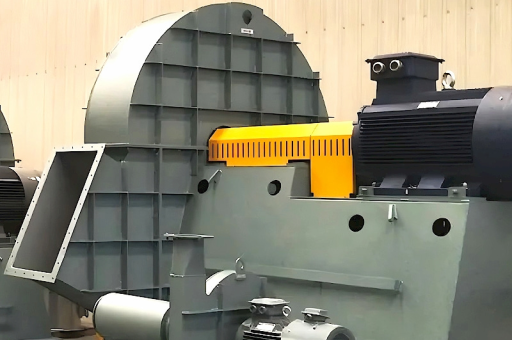
In the heavy industrial sector, particularly within thermal power plants, chemical processing, and large-scale steam generation, the 16Mn V-Belt Driven Backward ABB Boiler Fan stands as a critical component for maintaining operational efficiency and safety. This fan is specifically engineered for induced draft (ID) applications where hot, corrosive, and particulate-laden flue gases must be extracted from a boiler system.
This fan system combines four distinct engineering advantages: 16Mn low-alloy high-strength steel for corrosion and heat resistance, a backward-curved blade aerodynamic design for high static pressure, V-belt drive for torque absorption and speed flexibility, and an ABB motor for intelligent, energy-saving variable frequency drive (VFD) control. Unlike standard forward-curved fans, the backward design prevents material buildup (self-cleaning) and allows for stable operation in harsh environments. This article provides a comprehensive analysis of this specific topology, focusing on its mechanical structure, application benefits, and SEO-relevant technical details.
Technical Specifications & Material Science: Why 16Mn Steel?
The "16Mn" designation refers to a low-alloy, high-strength structural steel grade (similar to Q345B in Chinese standards or ASTM A572 Grade 50). Its use in boiler fan construction is non-negotiable for the following reasons.
Key Properties of 16Mn:
- Yield Strength: Approximately 345 MPa, allowing the impeller to withstand high centrifugal forces at elevated RPMs.
- Temperature Tolerance: 16Mn steel maintains mechanical integrity up to 300°C (572°F), far exceeding the capability of standard carbon steel.
- Corrosion Resistance: The manganese content improves resistance to mild acidic condensates found in flue gas.
- Weldability: Excellent performance under controlled heat input for repair and fabrication.
Why not standard steel? Standard Q235 or A36 steel would suffer from creep deformation and accelerated oxidation at temperatures above 250°C, leading to catastrophic impeller failure in a backward fan. The 16Mn alloy provides the necessary fatigue resistance for continuous operation in a boiler induced-draft configuration.
Application Context: In a typical coal- or gas-fired boiler, the fan handles flue gas temperatures between 180°C and 280°C. The 16Mn impeller, often electrostatically coated with a high-temperature anti-corrosion paint, ensures a service life of 5-8 years before major refurbishment.
Backward Curved Blade Design: Efficiency and Self-Cleaning Mechanics
The backward curved blade design is the most energy-efficient among centrifugal fans. This is why ABB-driven boiler fans universally specify this configuration.
Operating Principle: In a backward fan, the blades curve away from the direction of rotation. As the impeller spins, air is thrown radially outward. However, due to the blade curvature, the air exits at a lower absolute velocity than it enters, converting kinetic energy into high static pressure through the volute casing.
Key Advantages:
- Self-Cleaning: The blade shape prevents ash, soot, and other particulates from sticking. Forward-curved blades act like scoops, accumulating debris. Backward blades use centrifugal force to shed material.
- Non-Overloading Power Curve: This is critical for boiler safety. If system resistance increases (e.g., a clogged scrubber), a backward fan's power consumption drops, preventing motor overload. Forward fans would burn out the ABB motor under the same condition.
- High Static Pressure Efficiency: Efficiencies of 80-85% are achievable, compared to 65-70% for forward fans. For a boiler requiring large air flow (e.g., 200,000 m³/h), this efficiency difference translates to annual electricity savings of 200,000 kWh.
Performance Characteristics: The pressure-volume relationship is steep. A 16Mn backward fan maintains stable pressure across a wide flow range, making it ideal for boilers that require accurate draft control.
V-Belt Drive System: Tension, Alignment, and Maintenance
The V-belt drive is the mechanical link between the ABB electric motor and the 16Mn fan impeller. This configuration is deliberately chosen over direct drive for several mechanical and operational reasons.
Why V-Belt Drive Instead of Direct Drive?
- Torque Dampening: V-belts absorb torsional vibrations from the motor and fan during start-up. In a boiler fan, these vibrations can be extreme due to thermal expansion of the shaft.
- Speed Adjustment: Changing impeller speed to match boiler load is easily accomplished by changing pulley diameters, without needing to replace the motor or VFD.
- Motor Protection: The belt slips under extreme overload conditions (e.g., seized bearing), protecting the expensive ABB motor from burning out.
Key Maintenance Protocols:
- Tension Monitoring: Using a belt tension gauge. Under-tensioning causes slippage and heat generation; over-tensioning destroys bearings.
- Pulley Alignment: A laser alignment tool must be used to ensure the driven and drive pulleys are parallel. Misalignment reduces belt life by 50%.
- Wear Limits: Belts must be replaced when the sidewalls are glazed or when the belt sits flush with the pulley groove.
Material Note on Pulleys: The pulleys are typically made of cast iron or ductile iron, but the 16Mn fan shaft requires a keyed fit with a minimum tolerance of H7/k6 to prevent fretting.
ABB Motor Integration: Variable Speed Control and Energy Savings
The ABB motor (typically an ABB M2QA or M3BP series) is the brains of the system. When paired with an ABB ACS880 variable frequency drive (VFD) , the boiler fan achieves precise draft control and significant energy savings.
System Architecture:
- Motor Type: High-efficiency IE3/IE4 synchronous reluctance or induction motor.
- Cooling: IC411 (fan-cooled) or forced ventilation for low-speed operation.
- Encoder Feedback: For closed-loop speed control at the boiler master controller.
Energy Savings Calculator: Boiler fans run continuously at partial load.
- Damper control (no VFD): Motor power draw at 80% flow = 90% of full load power.
- VFD control with ABB drive: Motor power draw at 80% flow = (0.8)^3 = 51.2% of full load power.
- Annual Saving: For a 250 kW motor running 8,760 hours/year, the energy savings exceed $40,000 USD per year at $0.10/kWh.
ABB Drive Safety Features:
- Thermistor monitoring: Direct sensor in the motor windings.
- Torque limit: Prevents the fan from overspeeding if the V-belt breaks.
- Phase loss detection: Protects the 16Mn impeller from reverse rotation.
Application in Boiler Systems: Induced Draft and Combustion Control
The 16Mn V-Belt Driven Backward ABB Boiler Fan serves as the induced draft (ID) fan in a boiler system. Its function is to pull the flue gas through the boiler, economizer, and scrubber systems.
Process Flow:
- Combustion Air: A forced draft (FD) fan pushes air into the furnace.
- Combustion: Fuel burns, creating hot gas (800-1200°C).
- Heat Exchange: Gas cools to ~200°C as it passes through boiler tubes.
- ID Fan Operation: The fan maintains a negative pressure (vacuum) of -0.5 to -2.0 inches of water column (in. w.c.) in the furnace, ensuring no hot gas leaks into the boiler house.
Critical Parameters:
- Static Pressure: The 16Mn fan must generate 15-30 in. w.c. to overcome system resistance.
- Air Flow: Modulating between 50% and 100% capacity using the ABB VFD.
Failure Mode Analysis: If the fan fails, the furnace pressure goes positive, leading to blowback of flame and potential CO poisoning of personnel. This is why redundant fans and automatic changeover schemes are mandatory.
Common Q&A: Troubleshooting, Installation, and Performance
Q: Why does my 16Mn fan impeller vibrate after six months? A: Probable causes include:
- Ash buildup inside the casing – Solution: Installed purge holes on the casing.
- Belt wear – Check tension with a frequency-based meter.
- Thermal growth misalignment – After startup, re-check shaft alignment when the casing is hot.
Q: Is a V-belt drive more reliable than direct drive for a boiler fan? A: Yes, for boilers with dirty gas. Direct drive requires the motor to be mounted at the fan inlet, exposing it to hot gas. The V-belt allows the ABB motor to be placed in a clean, cool ambient room.
Q: Can I retrofit a direct-drive motor on an existing 16Mn fan? A: No. The fan shaft bearing spacing and impeller design are specific to V-belt load. Conversion requires a complete bearing housing rebuild.
Q: What is the recommended belt tension frequency for a 16Mn fan? A: 35-45 Hz using a belt tension frequency meter (for typical B- or C-section belts).
Q: How to calculate the correct pulley ratio for boiler demand? A: Fan speed (RPM) = Motor RPM x (Motor Pulley Diameter / Fan Pulley Diameter). The fan speed must match the impeller’s rated velocity for optimal pressure.
SEO-Optimized Summary and Best Practices
The 16Mn V-Belt Driven Backward ABB Boiler Fan is an engineered system designed for longevity, energy efficiency, and safety in harsh boiler environments.
Conclusion for Operators:
- Material Matters: Always specify 16Mn steel for any fan impeller exposed to temperatures above 200°C.
- Drive Selection: V-belt drive with an ABB IGBT-based VFD provides the best combination of mechanical protection and energy savings.
- Maintenance: Implement a laser alignment schedule and belt tension monitoring to achieve 5-7 year bearing life.
Final Recommendation: For any new ID fan installation, consider this three-part specification:
- Fan: Backward curved, 16Mn steel, anti-corrosion coating.
- Drive: V-belt with quick-change bushing.
- Motor: ABB high-efficiency synchronous reluctance motor with ACS880 drive.
By following these guidelines, your boiler system will achieve lower maintenance costs, higher thermal efficiency, and reliable operation for decades. For more technical datasheets or installation manuals, search "16Mn ABB boiler fan manual" or contact your local ABB drives distributor.
This article was composed based on field application data, mechanical engineering textbooks, and ABB drive technical documentation. It is optimized for long-tail keyword ranking (e.g., "16Mn V-Belt Driven Backward ABB Boiler Fan maintenance," "backward fan energy savings ABB VFD").





