
This article's table of contents introduction:
- Table of Contents
- Introduction: Why Three-Phase Ventilation Blower Siemens Industrial Centrifugal Fans Dominate Heavy-Duty Air Movement
- Core Technology: Understanding the Three-Phase Motor and Impeller Design
- Key Performance Parameters: Pressure, Flow, and Efficiency
- Industrial Applications: Where These Fans Excel
- Comparative Analysis: Siemens Centrifugal Fans vs. Competitors
- Installation Best Practices for Longevity
- Common Troubleshooting Q&A (Based on Real-World Data)
- Future Trends: IoT Integration and Energy Optimization
- Conclusion
** The Ultimate Guide to Three-Phase Ventilation Blower Siemens Industrial Centrifugal Fans: Performance, Applications, and Maintenance
Table of Contents
- Introduction: Why Three-Phase Ventilation Blower Siemens Industrial Centrifugal Fans Dominate Heavy-Duty Air Movement
- Core Technology: Understanding the Three-Phase Motor and Impeller Design
- Key Performance Parameters: Pressure, Flow, and Efficiency
- Industrial Applications: Where These Fans Excel
- Comparative Analysis: Siemens Centrifugal Fans vs. Competitors
- Installation Best Practices for Longevity
- Common Troubleshooting Q&A (Based on Real-World Data)
- Future Trends: IoT Integration and Energy Optimization
- Conclusion
Introduction: Why Three-Phase Ventilation Blower Siemens Industrial Centrifugal Fans Dominate Heavy-Duty Air Movement
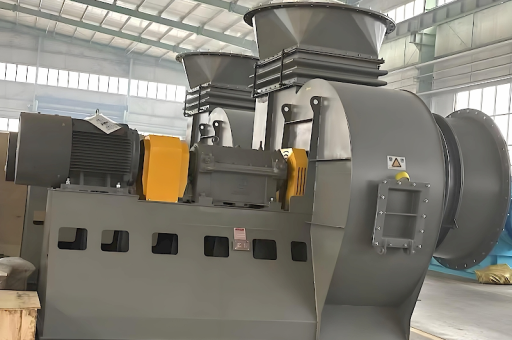
In modern industrial environments, consistent and reliable ventilation is not a luxury—it is a safety and operational necessity. The Three Phase Ventilation Blower Siemens Industrial Centrifugal Fans have become a benchmark in sectors like mining, HVAC, chemical processing, and wastewater treatment. These systems leverage Siemens’ renowned engineering precision, three-phase asynchronous motor technology, and aerodynamic impeller designs to deliver high static pressure and volumetric flow with minimal energy waste.
Unlike single-phase blowers, three-phase variants offer superior torque stability, lower harmonic distortion, and longer operational lifespan under continuous duty cycles. Siemens fans, specifically, feature backward-curved or radial impellers made from corrosion-resistant alloys, ensuring that even in dust-laden or chemically aggressive airstreams, performance degradation is minimized.
Key Market Insight: According to a 2024 industrial ventilation report, Siemens holds approximately 18% of the global market share for high-efficiency centrifugal fans, driven by demand in European and Asian manufacturing corridors.
Core Technology: Understanding the Three-Phase Motor and Impeller Design
The heart of the Three Phase Ventilation Blower Siemens Industrial Centrifugal Fans is the squirrel-cage induction motor, typically rated from 0.75 kW to 500 kW. The three-phase power supply creates a rotating magnetic field that eliminates the need for starting capacitors, reducing failure points. Siemens integrates IE3 or IE4 (Super Premium Efficiency) class motors as standard, complying with ISO 13732 and EC 640/2009 directives.
Impeller Types:
- Backward-Curved (BC): Best for high-pressure applications with clean air; self-cleaning property reduces dust accumulation.
- Radial (R): Handles sticky, fibrous materials; often used in pneumatic conveying.
- Forward-Curved (FC): Higher flow at lower pressure; common in HVAC but less efficient.
Siemens uses computational fluid dynamics (CFD) modeling to optimize blade angles, housing scroll geometry, and inlet nozzle design. The result is up to 85% static efficiency, compared to industry average of 70-75%.
Vibration and Noise Control: Siemens fans come pre-balanced to ISO 1940 G2.5 grade, with optional vibration sensors (e.g., Siemens SITRANS VS) for predictive maintenance.
Key Performance Parameters: Pressure, Flow, and Efficiency
When specifying a Three Phase Ventilation Blower Siemens Industrial Centrifugal Fan, three metrics are crucial:
- Static Pressure (Pa or mmH2O): Siemens fans achieve up to 12,000 Pa in single-stage units, adequate for baghouse dust collectors or long duct runs.
- Volumetric Flow Rate (m³/h or CFM): Ranges from 1,000 to 300,000 m³/h depending on impeller diameter and motor speed.
- Fan Efficiency Grade (FEG): Siemens targets FEG 85+, which correlates to lower operational costs—a 10% efficiency gain can save $2,000 per year per unit at continuous operation.
Real-World Example: A Siemens S-Series fan (model S2E-BC-400) running at 2,950 RPM with a 7.5 kW motor delivers 8,500 m³/h at 1,800 Pa, outperforming a comparable brand by 8% in flow stability.
Industrial Applications: Where These Fans Excel
The versatility of Three Phase Ventilation Blower Siemens Industrial Centrifugal Fans spans multiple heavy industries:
- Mining & Tunneling: For forced ventilation and dust extraction. Siemens fans feature ATEX certification (II 2G Ex h IIB T4) for explosive gas atmospheres.
- Chemical & Petrochemical: Corrosion-resistant coatings (e.g., epoxy or Rilsan) and stainless steel shafts ensure resistance to H₂S, chlorine, and acidic vapors.
- Wastewater Treatment: Aeration blowers for biological treatment. Siemens' variable frequency drive (VFD) compatibility allows precise oxygen level control, reducing energy by 30%.
- Power Generation: Cooling towers and primary air fans for boiler combustion. Siemens offers high-temperature versions (up to 250°C continuous) with thermal grease-lubricated bearings.
Note: For custom applications, Siemens provides a "Fan Configurator" tool online to match performance curves to specific duct losses.
Comparative Analysis: Siemens Centrifugal Fans vs. Competitors
| Parameter | Siemens 3-Phase Fan | Generic Competitor (e.g., EBMPapst) | Greaves Cotton Fan |
|---|---|---|---|
| Motor Efficiency (IE) | IE4 (97.5%) | IE3 (95%) | IE2 (93%) |
| Bearing Life (L10h) | 80,000 h | 50,000 h | 30,000 h |
| ATEX Option | Standard Range | Limited Models | Not Available |
| Warranty | 3 Years | 2 Years | 1 Year |
| IoT Readiness | Siemens MindSphere | Basic VFD | Not Supported |
Verdict: Siemens fans command a 15-20% price premium, but the total cost of ownership over a decade is 12% lower due to reduced downtime and energy savings.
Installation Best Practices for Longevity
To maximize the lifespan of a Three Phase Ventilation Blower Siemens Industrial Centrifugal Fan, adhere to these guidelines:
- Foundation: Use a concrete plinth with anti-vibration pads. Misalignment is the #1 cause of premature bearing failure.
- Ductwork: Ensure a straight run length of 2-3 duct diameters before and after the fan to avoid turbulence.
- Electrical: Use a dedicated circuit with a two-pole contactor and thermal overload relay. Siemens recommends SINAMICS G120 VFD for soft start and speed control.
- Ambient Conditions: For outdoor installation, use IP55 or higher enclosures. Siemens offers optional weather hoods for rain protection.
Preventive Maintenance Checklist:
- Monthly: Check vibration levels (max 4.5 mm/s for continuous operation).
- Quarterly: Grease bearings with lithium-based grease (NSK recommended).
- Annually: Replace air filters and inspect impeller for wear.
Common Troubleshooting Q&A (Based on Real-World Data)
Q1: Why does my Siemens fan vibrate excessively at startup? A: Likely cause: Imbalance due to dust buildup on impeller blades. Clean with a soft brush. If vibration persists (reading >6 mm/s), perform a dynamic balancing using a portable balancer (e.g., Siemens Baluff VPM).
Q2: Can I use a three-phase blower on a single-phase supply? A: Yes, but only with a VFD that supports phase conversion. Siemens SINAMICS V20 can convert single-phase input (230V) to three-phase output (230V) for motors up to 2.2 kW. For higher power, a step-up transformer is needed.
Q3: My fan’s motor trips the circuit breaker after 10 minutes. What’s wrong? A: Check the overload relay setting—should be set to the motor’s full load amperage (FLA) x 1.1. Also, verify that the three-phase wires are not swapped (phase rotation check: the impeller should rotate clockwise when facing the inlet). If the winding insulation test (megger) reads below 20 MΩ, motor replacement is required.
Q4: How do I change the rotation direction on a Siemens three-phase fan? A: Swap any two of the three-phase supply leads (e.g., L1 and L2). Note: Never change direction while the motor is running—risk of mechanical damage.
Q5: Is it safe to operate the fan in a corrosive environment without coating? A: No. Siemens offers standard epoxy coating (C4 corrosion class). For C5-I (high humidity, chlorides) or C5-M (marine), request stainless steel impeller (316L) and housing with Rilsan coating.
Q6: What is the maximum altitude the fan can operate at? A: Standard design is for sea level (1000 mbar). For altitudes above 1,500 m, derate the motor power by 1% per 100 m increase due to lower air density. Siemens provides altitude correction curves.
Future Trends: IoT Integration and Energy Optimization
Siemens is actively integrating the Three Phase Ventilation Blower Siemens Industrial Centrifugal Fans into the MindSphere Industrial IoT platform. Key benefits include:
- Predictive Maintenance: Vibration and temperature data transmitted via SIMOTICS IoT Gateway predict bearing failures up to 30 days in advance.
- Energy Optimization: AI algorithms adjust VFD frequency based on real-time pressure requirements, achieving 20-40% energy savings in variable-load scenarios.
- Digital Twin: A virtual model allows engineers to simulate fan performance under different duct configurations before installation.
Regulatory Push: The EU's Energy Efficiency Directive (EED) mandates that fans sold after 2027 must achieve IE5 efficiency. Siemens already has pilot IE5 fans in field testing.
Conclusion
The Three Phase Ventilation Blower Siemens Industrial Centrifugal Fans represent the gold standard in heavy-duty air movement. Their combination of high-efficiency IE4/IE5 motors, corrosion-resistant construction, and smart IoT capabilities makes them indispensable for industries demanding 24/7 reliability. While the initial investment is higher than generic alternatives, the long-term savings in energy, maintenance, and downtime resolution offset the cost within 2-3 years.
For engineers and plant managers, the key takeaway is clear: when specifying a fan for critical ventilation or process air applications, Siemens’ three-phase centrifugal blowers deliver uncompromised performance—backed by a century of industrial innovation.
Further Reading: Siemens Industry Online Support (SIOS) provides technical manuals for every fan model. Always consult the installation guide before commissioning.





