
This article's table of contents introduction:
- Key Requirements Defined
- The Correct Fan Type: Centrifugal (Radial) Fans
- Material Considerations (Critical for Corrosion)
- Typical Applications (Gas Delivery & Ventilation)
- Example Product Search Terms
- Important Selection Parameters (What to specify)
- Summary Recommendation
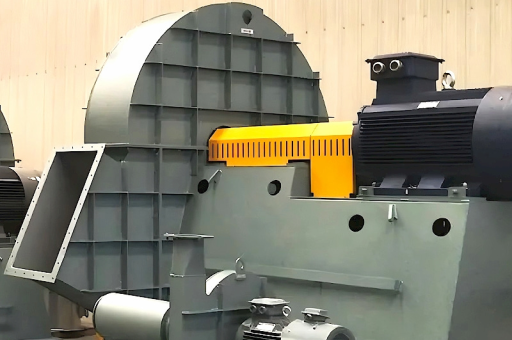
It appears you are looking for a specific type of industrial fan designed to handle corrosive gas under pressure (high static pressure) using an AC centrifugal design, specifically for ventilation or gas delivery systems.
Here is a breakdown of what this specification means and the type of equipment you should be looking for:
Key Requirements Defined
- Pressure: Implies a Centrifugal Fan (not axial). You need high static pressure to overcome resistance in ductwork or scrubbers.
- Air Flow / Gas Delivery: The fan moves a volume of gas (CFM/m³/h) against a system resistance.
- Corrosive Gas: The material of construction (impeller, housing, coating) must be resistant to chemicals (acids, alkalis, moist chlorine, H₂S, etc.).
- AC: Standard Alternating Current motor (typically 3-phase for industrial sizes, or single-phase for smaller units; VFD-ready is common).
- Ventilation Fans: General industrial ventilation or fume extraction.
The Correct Fan Type: Centrifugal (Radial) Fans
For corrosive gas under pressure, you cannot use standard HVAC blowers. You need an Industrial Corrosive Air Handling Centrifugal Fan.
Common designs for this application:
| Fan Type | Best For | Pros | Cons |
|---|---|---|---|
| Backward Inclined / Backward Curved | High efficiency, clean-ish corrosive air. | Energy efficient, stable pressure curve. | Can clog with sticky particles. |
| Radial (Paddle Wheel) | Dirty, sticky, or high-particulate corrosive gas. | Rugged, self-cleaning, handles high pressure. | Lower efficiency, louder. |
| Inline Centrifugal | Space-constrained ductwork. | Compact, easy to install in line. | Harder to maintain, limited pressure. |
| High-Pressure Ring Blower (Side Channel) | Low volume, high pressure (e.g., aeration, pneumatic conveying). | Very high pressure, oil-less. | Low flow volume, expensive for high flow. |
Material Considerations (Critical for Corrosion)
The fan must be constructed from corrosion-resistant materials. The choice depends on the specific chemical and temperature.
- FRP (Fiber-Reinforced Plastic): The gold standard for strong acids (HCl, H₂SO₄), bleach, and moist corrosive gases. Completely inert.
- PP (Polypropylene): Good for acid fumes and lower temperatures (up to 80°C / 176°F). Lightweight.
- PVC (Polyvinyl Chloride): Excellent for certain acids and low temperatures (up to 60°C / 140°F).
- Stainless Steel (SS 316 / SS 316L): Good for dry corrosive gases, alkaline environments, and higher temperatures. Not recommended for chlorides (wet chlorine).
- Hastelloy / Monel: For extreme high-temperature, highly corrosive environments (e.g., HCl gas at high temp).
- Coated Mild Steel (Epoxy or Rubber Lining): Cheaper option but coating failure leads to rapid rust. Not recommended for persistent corrosive duty.
Typical Applications (Gas Delivery & Ventilation)
- Laboratory Fume Hood Exhaust: Moving corrosive fumes from hoods to outside.
- Chemical Plant Ventilation: Removing acid vapors from plating tanks, etching baths, or reactors.
- Wastewater Treatment: Moving corrosive, moist air (H₂S, biogas) from headworks, digesters, or scrubbers.
- Electronics Manufacturing: Exhaust from etching (HF, HNO₃) and cleaning processes.
- Pharmaceutical & Semiconductor: Clean, corrosive gas delivery under pressure.
Example Product Search Terms
To find a supplier or catalog, use these exact search terms:
- "FRP centrifugal fan high static pressure"
- "Polypropylene fume exhaust blower"
- "Corrosive gas AC centrifugal ventilation fan 3 phase"
- "Radial paddle wheel fan acid gas"
- "Chemical duty backward inclined fan"
Important Selection Parameters (What to specify)
When contacting a manufacturer, you must provide:
- Gas Composition: What chemical(s) and concentration? (e.g., "10% HCl vapor at 50°C")
- Moisture Content: Is the gas dry or saturated?
- Temperature: Operating and maximum temperature (affects material choice).
- Air Flow (CFM or m³/h): Volume required.
- Static Pressure (in. w.g. or Pa): Resistance the fan must overcome.
- Motor: Voltage (e.g., 460V/3ph/60Hz or 230V/1ph/50Hz), fixed speed vs. VFD.
- Mounting: Inline ducted vs. pedestal mount vs. wall mount.
Summary Recommendation
For a pressure air flow corrosive gas delivery AC centrifugal ventilation fan:
- Best General Choice: FRP (Fiberglass) Backward Inclined Centrifugal Fan with a TEFC (Totally Enclosed Fan Cooled) AC motor (or an explosion-proof motor if the gas is flammable).
- For Extreme Corrosion: PP or PVC Plastic Construction.
- For High Pressure / Low Flow: Regenerative Blower or High-Pressure Radial Fan.
Warning: Do not use standard galvanized steel or painted steel fans for corrosive gases. They will fail rapidly, potentially causing a safety hazard (fan disintegration or motor burnout). Always consult with a reputable industrial fan manufacturer (e.g., Greenheck, Twin City Fan, New York Blower, Airblowers, Chicago Blower, Euroventilatori – or local equivalents) for a certified selection.





