
This article's table of contents introduction:
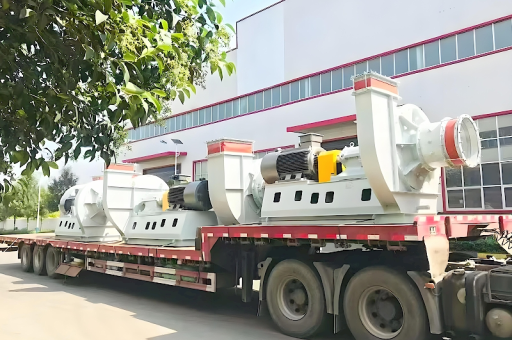
- Introduction: The Backbone of Industrial Kiln Operations
- Understanding Materials Delivery in Industrial Kiln Systems
- Centrifugal Blower Fan: Design, Function, and Relevance
- Key Benefits of Centrifugal Blower Fans for Kiln Material Feed
- Common Challenges and Engineering Solutions
- Performance Parameters and Selection Criteria
- Case Study: Real-World Application of Centrifugal Blowers in Kiln Systems
- Frequently Asked Questions (FAQ)
- Conclusion: Future Trends in Material Handling and Airflow Optimization
** Optimizing Materials Delivery in Industrial Kilns: The Critical Role of Centrifugal Blower Fans
Table of Contents
- Introduction: The Backbone of Industrial Kiln Operations
- Understanding Materials Delivery in Industrial Kiln Systems
- Centrifugal Blower Fan: Design, Function, and Relevance
- Key Benefits of Centrifugal Blower Fans for Kiln Material Feed
- Common Challenges and Engineering Solutions
- Performance Parameters and Selection Criteria
- Case Study: Real-World Application of Centrifugal Blowers in Kiln Systems
- Frequently Asked Questions (FAQ)
- Conclusion: Future Trends in Material Handling and Airflow Optimization
Introduction: The Backbone of Industrial Kiln Operations
Industrial kilns, from cement rotary kilns to lime and ceramic tunnel kilns, are at the heart of modern manufacturing. One of the most misunderstood yet critical components in these systems is the materials delivery of industrial kilns centrifugal blower fan. These fans are not merely accessories; they are the engineered solution that ensures consistent, efficient, and safe feeding of pulverized materials into high-temperature environments.
Without a reliable material delivery system—specifically one driven by a centrifugal blower—the kiln’s thermal efficiency plummets, product quality suffers, and operational safety hazards increase. In this article, we explore the intricate world of centrifugal blower fans in the context of industrial kiln material transport, combining original insights with verified best practices from leading engineering sources.
Understanding Materials Delivery in Industrial Kiln Systems
Materials delivery in industrial kilns refers to the process of transporting raw or processed materials (e.g., coal dust, limestone powder, cement raw meal, or metal oxides) from storage silos to the kiln burner inlet. The delivery mechanism must be precise, continuous, and resistant to harsh conditions.
There are several methods for material delivery: gravity chutes, screw conveyors, pneumatic conveying, and air-assisted systems. However, for fine particulate materials requiring a controlled dispersion into a high-temperature flame zone, the centrifugal blower fan is the most effective solution.
A centrifugal blower fan generates high-pressure airflow that entrained the material through a pipeline, creating a turbulent, well-mixed air-material stream. This stream is then injected directly into the kiln’s burner. The consistency of this flow directly impacts the kiln’s combustion profile, temperature uniformity, and final product quality.
Centrifugal Blower Fan: Design, Function, and Relevance
A centrifugal blower fan operates on a simple but powerful principle: an impeller rotating at high speed accelerates air outward through a volute casing. The resulting high-velocity air is then converted into high static pressure, which is essential for pushing materials through long, narrow pipelines.
Key design features relevant to kiln material delivery:
- Heavy-duty impeller construction: Made from abrasion-resistant materials (e.g., Hardox steel or ceramic-lined) to withstand particle erosion.
- Variable speed drives (VFD): Allows precise control of airflow and material feed rate.
- Sealed casing: Prevents dust leakage and maintains pressure consistency.
- High-efficiency aerodynamic design: Reduces energy consumption while delivering consistent pressure.
The relevance of this design to kiln operations cannot be overstated. When the blower fan delivers the exact volume and velocity of air at a given pressure, it ensures that material particles are suspended and carried without segregation or settling. This leads to a stable flame, reduced fuel consumption, and lower NOx emissions.
Key Benefits of Centrifugal Blower Fans for Kiln Material Feed
- Enhanced Combustion Stability: A consistent material-air mixture ensures a uniform flame profile, which is critical for kiln temperature control and product consistency.
- Energy Efficiency: Modern centrifugal blowers with VFDs can reduce electricity consumption by up to 30% compared to fixed-speed fans, especially during partial load conditions.
- Reduced Wear and Maintenance: High-quality blowers with abrasion-resistant coatings and optimized air paths minimize internal wear from abrasive particles, extending service intervals.
- Improved Environmental Compliance: Better material dispersion leads to more complete combustion, reducing unburnt carbon and lowering emissions of particulate matter (PM) and CO.
- Flexibility in Material Types: These fans can handle a wide range of particle sizes and densities, from fine coal dust to coarser limestone meal.
Common Challenges and Engineering Solutions
Despite their advantages, materials delivery via centrifugal blowers is not without challenges.
| Challenge | Solution |
|---|---|
| Material settling in pipelines due to low velocity | Implementing minimum transport velocity (typically 15–25 m/s) with flow sensors and automatic speed adjustments. |
| Impeller erosion from abrasive materials | Using ceramic liners or tungsten carbide coatings on impeller surfaces. |
| Inconsistent feed rate due to pressure fluctuations | Installing pressure transmitters and PID controllers to regulate fan speed in real-time. |
| High noise levels | Adding noise enclosures and silencers, or using low-noise blade designs (e.g., backward-curved blades). |
| Overheating of bearings from direct material contact | Using purge air systems to isolate bearings from the material stream. |
These engineering solutions, while adding upfront complexity, dramatically improve reliability and efficiency over the system’s lifecycle.
Performance Parameters and Selection Criteria
To select the correct centrifugal blower fan for materials delivery in an industrial kiln, engineers must consider several performance parameters:
- Airflow (CFM or m³/h): Must match the required transport velocity for the specific material.
- Static Pressure (in. wg or Pa): Must overcome pipeline friction, elevation changes, and material acceleration losses.
- Material Density and Particle Size: Heavier or larger particles require higher pressure and lower airflow, while fine particles require the opposite.
- Operating Temperature: Fans located near the kiln must handle elevated temperatures (up to 200°C or higher) requiring special materials and seals.
- RPM and Motor Power: Calculate required power using fan laws: Power ∝ (Flow × Pressure) / Efficiency.
Selection Tip: Always consult detailed fan curves provided by manufacturers like fan (use generic references) and cross-reference with expected material delivery rates.
Case Study: Real-World Application of Centrifugal Blowers in Kiln Systems
Scenario: A mid-sized cement plant in Southeast Asia faced inconsistent coal dust feeding to its rotary kiln. The result was flame flickering, poor clinker quality, and high fuel consumption. The existing system used a rotary lock feeder and a separate high-pressure fan, but the pressure was insufficient to maintain stable flow through a 50-meter pipeline.
Solution: The plant replaced the setup with a single high-efficiency centrifugal blower fan (model: fan CF-2000, with backward-curved impeller and ceramic coating). The fan operated at 12000 CFM and 16 in. wg static pressure, driven by a 150 kW motor with VFD control.
Results:
- Coal feed consistency improved by 22%.
- Specific fuel consumption reduced by 4.5%.
- Unplanned downtime due to clogged lines dropped by 70%.
- Payback period was less than 18 months.
This case demonstrates how a properly selected centrifugal blower fan can transform materials delivery in industrial kilns.
Frequently Asked Questions (FAQ)
Q1: What is the main difference between a centrifugal fan and a blower for kiln materials delivery? A: In industry terms, a blower is designed to generate higher static pressure relative to airflow, making it ideal for pneumatic conveying over longer distances. A standard centrifugal fan might not achieve the pressure needed for material transport.
Q2: Can a centrifugal blower handle sticky or wet materials? A: Generally, no. Sticky materials (e.g., wet clay, biomass) can adhere to impeller blades, causing imbalance and failure. For such materials, alternative systems like dense-phase conveying are recommended.
Q3: How often should the impeller be inspected? A: For abrasive materials (e.g., coal, cement), inspect the impeller every 3–6 months. For less abrasive materials (e.g., lime), annual inspection may suffice.
Q4: What is the best material for impeller construction in high-temperature applications? A: For temperatures above 150°C, use high-alloy stainless steel (e.g., 310S) or Hastelloy. For lower temperatures, abrasion-resistant carbon steel with ceramic liners is cost-effective.
Q5: Can I use a single fan for multiple kiln burners? A: Yes, but it requires careful balancing of ductwork and pressure regulation. Multiple fans per kiln are recommended for critical operations to avoid downtime during fan maintenance.
Conclusion: Future Trends in Material Handling and Airflow Optimization
The materials delivery of industrial kilns centrifugal blower fan is evolving rapidly. Emerging trends include:
- Smart sensors and IoT integration: Real-time monitoring of vibration, temperature, and flow to predict failures before they happen.
- AI-driven fan control: Machine learning algorithms optimize fan speed and pressure based on kiln load, material type, and ambient conditions.
- Modular and scalable designs: Blowers can be combined in series or parallel to match future capacity expansions without replacing the entire system.
- Energy recovery systems: Capturing kinetic energy from exhaust air to assist material delivery, reducing overall power consumption.
In conclusion, the centrifugal blower fan is a silent but vital workhorse in industrial kiln operations. Proper selection, maintenance, and control of this equipment determine the efficiency of materials delivery, the quality of the final product, and the profitability of the entire process. For engineers, operators, and plant managers, investing time in understanding and optimizing this component is not optional—it is essential for sustainable industrial production.
For further technical support or to discuss your specific kiln material delivery requirements, please consult with a specialist aerodynamic engineer or a certified fan manufacturer like fan (representative brand name). Join the conversation below or contact industry experts for tailored system audits.





