
This article's table of contents introduction:
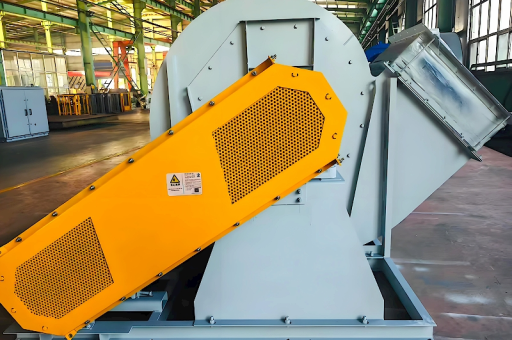
- Table of Contents
- Introduction: The Backbone of Industrial Air Management
- Technical Anatomy: What Defines a "Large Scale" System?
- Operational Mechanics: Forced Draft vs. Induced Draft
- Material Science: Why Standard Fans Fail in Flue Gas Applications
- AC Drive Systems: Power, Efficiency, and Control
- Installation & Maintenance: Best Practices for Longevity
- Frequently Asked Questions (FAQ)
- Conclusion: Future Trends in High-Temperature Exhaust
*Optimizing Industrial Ventilation: The Critical Role of the Large Scale Flue Gas Forced Draft AC Centrifugal Exhaust Fan*
Table of Contents
- Introduction: The Backbone of Industrial Air Management
- Technical Anatomy: What Defines a "Large Scale" System?
- Operational Mechanics: Forced Draft vs. Induced Draft
- Material Science: Why Standard Fans Fail in Flue Gas Applications
- AC Drive Systems: Power, Efficiency, and Control
- Installation & Maintenance: Best Practices for Longevity
- Frequently Asked Questions (FAQ)
- Conclusion: Future Trends in High-Temperature Exhaust
Introduction: The Backbone of Industrial Air Management
In the demanding environments of power plants, steel mills, cement factories, and chemical processing facilities, the removal of hot, corrosive, and particulate-laden flue gas is not merely a convenience—it is a critical safety and operational requirement. The Large Scale Flue Gas Forced Draft AC Centrifugal Exhaust Fan stands as the undisputed workhorse of these systems. Unlike standard ventilation fans, this specialized equipment is engineered to handle extreme thermal loads (often exceeding 400°C / 752°F), high static pressures, and abrasive particulate matter.
A common misconception is that any large fan can be adapted for flue gas service. In reality, the physics of forced draft in a high-temperature, corrosive environment demands a fan built with specific metallurgy, aerodynamic design, and motor control. Before we dissect its components, it is essential to understand that "Large Scale" in this context refers to wheel diameters typically exceeding 2.5 meters (8.2 feet) and motor ratings often surpassing 1,000 kW. These are not off-the-shelf units; they are custom-engineered solutions.
Q: What is the primary difference between a standard industrial fan and a flue gas forced draft fan?
A: The primary difference lies in thermal tolerance and material selection. A standard fan uses mild steel or aluminum impellers, which deform or corrode rapidly above 200°C. A flue gas fan uses alloy steel (e.g., Corten or stainless steel 310S) with thermal expansion joints and air-cooled shafts to maintain structural integrity at extreme temperatures.
Technical Anatomy: What Defines a "Large Scale" System?
To appreciate the engineering of a Large Scale Flue Gas Forced Draft AC Centrifugal Exhaust Fan, one must examine its core components. The design philosophy centers on three pillars: volumetric flow rate (CFM/cmm), static pressure (Pa/inWG), and temperature.
- Impeller Design: The backward-curved centrifugal impeller is the standard for forced draft applications. Why? Because it offers non-overloading power characteristics. This means that even if system resistance drops (e.g., due to a duct leak), the motor will not draw excessive current and burn out. For truly large-scale units, the impeller is often fabricated from high-strength alloy plates, welded in a double-thickness configuration at the blade root to resist centrifugal stress.
- Housing & Volute: The scroll-shaped housing is constructed with wear-resistant liners. In flue gas service, the internal walls are exposed to acid dew point corrosion. Therefore, the housing is often lined with ceramic tiles or a specialized epoxy coating to prevent pitting. The housing also features an expansion joint to absorb thermal growth.
- Shaft & Bearings: This is a primary failure point in cheap fans. A large-scale unit requires a shaft diameter of at least 150 mm to minimize deflection. The bearings are housed in water-cooled pedestals (or radiators) to draw heat away from the bearing races, ensuring continuous operation at 120°C ambient.
Q: Why is backward-curved blade design preferred over forward-curved in forced draft?
A: Backward-curved blades provide higher efficiency (typically 82-88%) and a non-overloading power curve. Forward-curved blades can stall and overheat the motor under high static pressure conditions. For a critical flue gas system, reliability trumps modest cost savings.
Operational Mechanics: Forced Draft vs. Induced Draft
Understanding the terminology is key to SEO ranking for this topic. A Forced Draft (FD) fan pushes air into the system. In a boiler context, an FD fan supplies combustion air. However, the Large Scale Flue Gas Forced Draft AC Centrifugal Exhaust Fan is often used in a different role: it is positioned after the combustion chamber or scrubber, pulling (or pushing) the exhaust through the stack.
Wait, there is a semantic nuance. In many industrial process lines, the fan is technically an "Induced Draft" (ID) fan if it is located at the end of the system, pulling gases through the equipment. However, the term "Forced Draft" in this product line refers to the forced expulsion of the flue gas into the atmosphere against wind pressure. The "AC Centrifugal" aspect means it utilizes an alternating current electric motor, typically a squirrel-cage induction motor, coupled directly or via a V-belt drive.
The operational flow is simple:
- Flue gas enters the inlet box.
- A set of inlet vanes (dampers) controls the flow.
- The gas accelerates through the rotating impeller.
- The kinetic energy is converted to static pressure in the volute.
- The gas is discharged vertically into the stack.
Q: Can the same fan handle both combustion air and flue gas?
A: No. Combustion air is clean and cool. Flue gas contains acid vapors (SOx, NOx), fly ash, and high heat. Using a combustion air fan for flue gas service would cause rapid impeller erosion and metal fatigue. The fan housing and impeller must be specifically rated for the gas composition and temperature.
Material Science: Why Standard Fans Fail in Flue Gas Applications
The leading cause of early failure in a Large Scale Flue Gas Forced Draft AC Centrifugal Exhaust Fan is corrosion fatigue. Flue gas is chemically aggressive. When sulfur dioxide (SO2) combines with water vapor, it forms sulfuric acid (H2SO4). If the fan housing drops below the acid dew point (typically 110-140°C), condensation forms and eats through standard carbon steel in weeks.
To combat this, manufacturers use the following material strategies:
- Corten Steel (ASTM A588): This "weathering steel" forms a stable rust layer that protects the base metal. It is cost-effective for moderate temperatures.
- Stainless Steel 304/316: Used for shafts and fasteners to resist pitting.
- High-Nickel Alloys (Hastelloy / Inconel): Used in severe chemical service (e.g., flue gas desulfurization units, FGD). These alloys are expensive but offer near-imperviousness to chloride stress corrosion.
- Ceramic Lining: For the housing, a 10mm thick alumina ceramic tile lining is applied. This provides a hard wall that resists the abrasive scouring of fly ash.
Q: How do I prevent condensation inside the fan housing?
A: The most effective method is to maintain the gas temperature above the acid dew point. This involves either pre-heating the gas (using a heat exchanger) or insulating the fan casing. Another method is to install a drain port at the lowest point of the volute to expel any condensed liquid.
AC Drive Systems: Power, Efficiency, and Control
The "AC" in the title refers to the motor technology. These fans almost exclusively use three-phase induction motors. While DC drives offer better speed control, they are less robust for high-power outdoor applications. The AC motor is paired with a variable frequency drive (VFD) for precise airflow control.
Why a VFD?
- Energy Savings: Reducing fan speed by 20% reduces power consumption by nearly 50% (Affinity Laws).
- Soft Start: Large motors (2,000 kW+) cannot be started across-the-line due to inrush current. A VFD ramps the speed slowly.
- Process Control: The VFD can react to a pressure transducer, maintaining a constant stack draft regardless of boiler load.
For very large fans (above 5,000 kW), a synchronous motor or slip-ring induction motor might be used for better power factor correction, but the AC squirrel-cage induction motor remains the industry standard due to its simplicity and low maintenance.
Q: What horsepower (HP) is typical for a large-scale centrifugal exhaust fan?
A: "Large scale" in the power generation industry usually starts at 500 HP (approx. 375 kW). Typical units for a 500 MW coal-fired boiler may use two 3,000 HP fans running in parallel. Some steel mill BOF (Basic Oxygen Furnace) fans exceed 10,000 HP.
Installation & Maintenance: Best Practices for Longevity
Proper installation is critical. A misaligned baseplate can cause shaft deflection, leading to bearing failure.
Installation Checklist:
- Foundation: Must be a massive concrete block isolated from building vibrations.
- Alignment: Laser alignment between motor and fan shaft must be within 0.05mm.
- Dampers: Inlet box dampers (louver type) must be installed to prevent gas backflow during shutdown.
- Safety Guards: High-temperature guards around the coupling.
Maintenance Routine:
- Daily: Check bearing temperature (target < 90°C). Listen for cavitation or rubbing.
- Monthly: Inspect the ceramic lining for cracks. Check the drain trap for acid water.
- Annually: Perform a vibration analysis (FFT spectrum). Balance the impeller if required. Inspect the shaft for thermal fatigue cracks.
Q: How often should the impeller be replaced?
A: This depends on the gas particulate loading. In a clean natural gas boiler, an impeller can last 15-20 years. In a coal-fired plant without a scrubber, an impeller may need repair or replacement every 2-3 years due to erosion. Regular "hardfacing" welding can extend life.
Frequently Asked Questions (FAQ)
Q1: What is the maximum temperature this fan can withstand?
A: Standard flue gas fans are rated for 400°C continuously. With special alloys (e.g., Inconel) and shaft cooling, some units can handle 650°C for short periods (emergency bypass). For continuous operation above 500°C, a regenerative thermal oxidizer (RTO) fan design is required.
Q2: What is the noise level of a large-scale centrifugal exhaust fan?
A: Extremely high. Unsilenced units can produce 120 dB(A) beyond the inlet. A silencer (reactive or absorptive) is mandatory for occupational health. A typical sound enclosure reduces noise to 85 dB(A).
Q3: Can I use a single fan for multiple boilers?
A: It is possible but not recommended. A single fan creates a single point of failure. For critical applications, an "N+1" configuration (one operating, one standby) or two 50% capacity fans is preferred.
Q4: How do I choose between belt drive and direct drive?
A: Belt drives (via sheaves) allow adjustable speed changes and isolate motor inertia. They are common for fans under 500 HP. Direct drive is preferred for large units (>1,000 HP) because belts cannot handle the torque. Direct drive is also more reliable and requires less maintenance.
Conclusion: Future Trends in High-Temperature Exhaust
The Large Scale Flue Gas Forced Draft AC Centrifugal Exhaust Fan is not a static technology. The industry is moving toward:
- Digitalization: Fans equipped with IoT sensors for predictive maintenance (e.g., bearing temperature trends, blade vibration).
- High-Efficiency Aerofoils: Computational Fluid Dynamics (CFD) is enabling blade designs that achieve 90%+ efficiency, reducing energy costs.
- Modular Construction: For very large fans (10m+ diameter), modular sections are bolted on-site to facilitate shipping.
For any plant engineer or procurement specialist, understanding the nuances of this fan—from material selection to VFD tuning—is essential for ensuring uptime and regulatory compliance. When sourcing, focus on suppliers who provide detailed thermal stress analysis and warranty on corrosion. If you are searching for a reliable fan, remember that a premium centrifugal exhaust fan pays for itself within 18 months through reduced maintenance and energy efficiency.





