
This article's table of contents introduction:
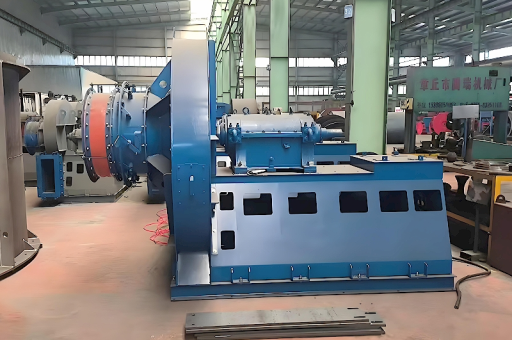
- Centrifugal Flow Fan (The Core Type)
- Forced Draft (The Application)
- Single Inlet (Air Intake Design)
- V-Belt Driven (The Drive Mechanism)
- Summary: A Typical Application
- Key Terms/Components (for ordering or specifying):
This is a very specific and technical description of a type of industrial fan. Let's break down what each part of that name means to fully understand the equipment you are referring to.
In short: You are describing a Centrifugal Fan (often called a "squirrel cage" fan) that uses a V-belt to connect its motor, has a single air intake on one side, and is specifically designed to push air into a system under positive pressure (Forced Draft).
Here is a detailed breakdown of each component and its significance:
Centrifugal Flow Fan (The Core Type)
This is the fundamental design of the fan. Unlike an axial fan (like a propeller), which moves air parallel to its shaft, a centrifugal fan moves air perpendicular to its shaft.
- How it works: Air enters the center of the fan (the inlet) and is caught by the rotating impeller (wheel). The spinning action throws the air outward by centrifugal force. The air then collects in the fan housing (scroll) and is discharged at a 90-degree angle.
- Characteristics:
- High Pressure: Centrifugal fans are excellent at generating high static pressures, which are needed to overcome resistance from ductwork, filters, heat exchangers, and other system components.
- Stable Flow: They provide a more constant and stable airflow than axial fans, especially when system resistance changes.
- Common Uses: HVAC systems, industrial drying, combustion air supply, material handling.
Forced Draft (The Application)
This refers to the fan's specific function within a larger system, most commonly a boiler, furnace, or industrial process.
- Function: A Forced Draft (FD) fan is located upstream of the process. It pushes or forces air into the combustion chamber, furnace, or system.
- Opposite: This is the opposite of an Induced Draft (ID) fan, which is located downstream and pulls or sucks exhaust gases out of the system.
- Why it matters: The fan must be designed to handle clean, relatively cool ambient air (the air being pushed in) and generate enough pressure to overcome the resistance of the burners, fuel beds, and heat exchangers.
Single Inlet (Air Intake Design)
This specifies from how many sides the fan draws air.
- Definition: The fan has a single, large air intake opening on one side of the housing (the non-drive side, usually opposite the motor).
- Comparison:
- Single Inlet: More common and generally more efficient for a given airflow. Easier to duct air into. The impeller is usually a "single-width" design.
- Double Inlet: Draws air from both sides of the housing. Used for very high airflow applications where space is limited.
V-Belt Driven (The Drive Mechanism)
This describes how the fan's impeller is connected to its electric motor.
- How it works: The motor has a small pulley (sheave), the fan shaft has a larger pulley, and a V-belt runs between them.
- Advantages:
- Speed Adjustment: You can change the fan's speed (RPM) by changing the size of one of the pulleys. This is a very common way to adjust airflow and pressure.
- Torque Control: The belt acts as a mechanical fuse. If the fan seizes or jams, the belt will often slip or break before the motor burns out or the fan is damaged.
- Motor Isolation: The belt absorbs some vibration and misalignment, protecting the motor bearings.
- Disadvantages:
- Lower Efficiency: Belt drives have some friction loss (typically 2-5%).
- Maintenance: Belts wear out, stretch, and need periodic tensioning or replacement.
Summary: A Typical Application
Imagine a large industrial boiler room.
- The Need: The boiler needs a steady, high-pressure stream of air to properly burn the fuel (e.g., natural gas, coal, or oil).
- The Equipment: A Forced Draft Single Inlet V-Belt Driven Blower Centrifugal Flow Fan is installed.
- The Process:
- The fan's single inlet draws in ambient air from the boiler room (or a duct from outside).
- The V-belt drive allows the maintenance team to adjust the fan's speed via pulley changes to fine-tune the combustion air volume and pressure.
- The centrifugal impeller spins, creating the high static pressure needed to push that air through the air preheater and into the boiler's burner windbox.
- The fan is a Forced Draft unit because it is on the "clean" intake side, forcing air into the system.
Key Terms/Components (for ordering or specifying):
- Impeller/ Wheel Type: (e.g., Forward Curved, Backward Inclined, Radial) - This affects the fan's performance curve and suitability for different dust loads.
- Housing Material: (e.g., Carbon Steel, Stainless Steel)
- Belt Guard: Required by OSHA for safety.
- Motor: The HP, RPM, and voltage of the driving motor.
- Pulleys: The diameters are critical for determining the final fan speed.
In conclusion, you are describing a high-pressure, industrial-grade blower designed for a specific role (pushing air into a system), with a flexible drive system (V-belt) and a standard air intake (single inlet). It's a workhorse piece of equipment in many process and HVAC industries.





