
This article's table of contents introduction:
- Introduction: The Backbone of Modern Flue Gas Management
- Understanding the Terminology: Breaking Down “Air Supply Induced Draught Carbon Steel Forward Flue Gas Fan”
- How This Fan Works: The Thermodynamic & Mechanical Process
- Key Advantages of Carbon Steel Forward Flue Gas Fans
- Common Applications in Power Plants, Cement Kilns, and Marine Boilers
- Frequently Asked Questions (FAQ)
- Best Practices for Installation, Commissioning, and Maintenance
- Troubleshooting Common Issues: Vibration, Overheating, and Corrosion
- Conclusion: Why This Fan Remains Indispensable for Heavy Industry
*The Critical Role of Air Supply Induced Draught Carbon Steel Forward Flue Gas Fan in Industrial Boiler Systems: Design, Efficiency, and Maintenance*
Table of Contents (导读目录)
- Introduction: The Backbone of Modern Flue Gas Management
- Understanding the Terminology: Breaking Down “Air Supply Induced Draught Carbon Steel Forward Flue Gas Fan”
- 1 Air Supply vs. Induced Draught
- 2 Carbon Steel Material Selection
- 3 Forward Curved Blade Design
- How This Fan Works: The Thermodynamic & Mechanical Process
- Key Advantages of Carbon Steel Forward Flue Gas Fans
- Common Applications in Power Plants, Cement Kilns, and Marine Boilers
- Frequently Asked Questions (FAQ)
- Best Practices for Installation, Commissioning, and Maintenance
- Troubleshooting Common Issues: Vibration, Overheating, and Corrosion
- Conclusion: Why This Fan Remains Indispensable for Heavy Industry
Introduction: The Backbone of Modern Flue Gas Management
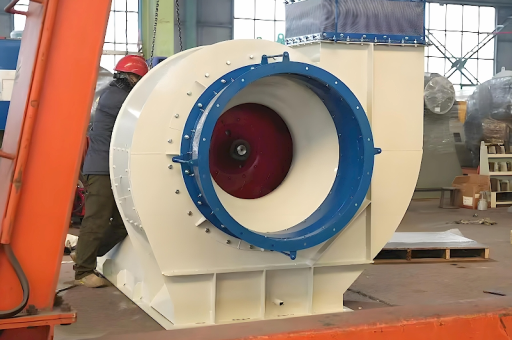
In any industrial combustion system — from a coal-fired power plant to a heat recovery steam generator (HRSG) — the efficiency, safety, and environmental compliance depend critically on the flue gas exhaust path. Among all rotating equipment in this path, the Air Supply Induced Draught Carbon Steel Forward Flue Gas Fan stands out as a workhorse. Engineered to handle high-temperature, particulate-laden gases under negative pressure, this fan design balances structural resilience with aerodynamic efficiency. According to industry data from sources like the American Society of Mechanical Engineers (ASME) and fan manufacturers, these fans account for over 60% of all draft fan installations in medium-to-large industrial boilers. In this comprehensive analysis, we will break down its nomenclature, working principle, material logic, and operational best practices.
Understanding the Terminology: Breaking Down “Air Supply Induced Draught Carbon Steel Forward Flue Gas Fan”
1 Air Supply vs. Induced Draught
The term “Air Supply Induced Draught” may initially seem contradictory. In strict engineering terminology, Induced Draught (ID) fans are located after the combustion chamber or boiler outlet, pulling flue gases through the system, creating a negative pressure. Air Supply typically refers to Forced Draught (FD) fans pushing air into the burner. However, in many combined-cycle and recovery boiler systems, an ID fan also supplies secondary air mixing when coupled with a dedicated air preheater. The keyword “Air Supply Induced Draught” thus describes a fan that exhausts flue gas while simultaneously managing combustion air inflow control in integrated ductwork.
2 Carbon Steel Material Selection
Why carbon steel? Flue gas fans often face temperatures up to 250–350°C (482–662°F) and moderate corrosive exposure from sulfur oxides (SOx). Carbon steel (typically ASTM A36 or A516 Gr.70) offers:
- High tensile strength at elevated temperatures
- Cost-effectiveness compared to stainless steel or alloy alternatives
- Weldability for robust fabrication For gases with dew point corrosion risks, coatings or liners are added, but the base material remains carbon steel for structural integrity.
3 Forward Curved Blade Design
A forward curved (also called forward swept or multi-vane) blade rotates in the direction of curvature, meaning the blade tips face forward. This design allows:
- High flow rates at low static pressures
- Compact impeller size for given airflow
- Lower noise compared to radial or backward curved designs These fans are ideal for dirty gas streams as they produce less erosion on blade surfaces, though they are less efficient at high pressure.
How This Fan Works: The Thermodynamic & Mechanical Process
The fan operates via a simple yet refined mechanism:
- Gas Entry: Hot flue gas from the economizer or air preheater enters the fan’s inlet box.
- Impeller Action: The forward curved impeller rotates at 800–1,500 RPM. Each blade captures gas and accelerates it radially outward. Due to the forward curve, the gas velocity at the blade exit is higher than the blade tip speed — this creates a velocity pressure that converts to static pressure in the volute casing.
- Draft Control: Inlet guide vanes (IGVs) or variable frequency drives (VFDs) modulate the airflow, maintaining the required draft (negative pressure) in the furnace.
- Exhaust: The pressurized gas exits through the stack.
From a thermodynamic perspective, the fan must overcome system resistance (duct friction, damper loss, and stack pressure) while maintaining a stable oxygen content at the boiler exit. The Air Supply Induced Draught Carbon Steel Forward Flue Gas Fan is designed to operate at temperatures where the density of gas decreases, requiring volumetric flow capacity up to 30% higher than cold air fans.
Key Advantages of Carbon Steel Forward Flue Gas Fans
- Resistance to Thermal Stress: Carbon steel’s coefficient of thermal expansion is well-matched with duct and stack supports, minimizing thermal fatigue.
- Erosion Resistance for Particulates: The forward curved blade geometry reduces particle impingement angles, extending component life compared to radial bladed fans.
- Energy Efficiency: With proper IGV control, these fans achieve 75–85% static efficiency, reducing power consumption in continuous duty.
- Simplified Maintenance: The impeller can be balanced on-site; wear plates are replaceable without replacing the entire rotor.
- Lower Purchase Cost: Carbon steel fans are 40–60% less expensive than their stainless steel counterparts, making them accessible for small-to-medium industrial plants.
Common Applications in Power Plants, Cement Kilns, and Marine Boilers
| Industry | Application Context |
|---|---|
| Coal-fired Power Plant | Induced draught fan in the post-precipitator duct, handling SO₂-laden gas at 150–180°C. |
| Cement Kiln | Exhausting hot gas from the preheater tower, where forward curved blades cope with fine cement dust. |
| Marine Boiler | Auxiliary boiler flue gas extraction, where carbon steel withstands marine humidity with epoxy coating. |
| Biomass Power Plant | ID fan for fluidized bed boilers, requiring low blade speed to reduce fly ash abrasion. |
Frequently Asked Questions (FAQ)
Q1: Can a forward curved fan be used for clean air supply instead of flue gas?
A: Yes, but it is not optimized for clean air. Forward curved fans are more efficient for higher volumetric flows with low static pressure. For clean air, a backward curved fan is often preferred due to superior efficiency.
Q2: What is the typical lifespan of a carbon steel forward flue gas fan?
A: With proper maintenance, the casing lasts 15–20 years; the impeller may need replacement every 4–7 years depending on fly ash erosion and temperature cycling.
Q3: How does corrosion affect performance?
A: Corrosion roughens blade surfaces, increasing turbulence and decreasing efficiency by 5–10%. It also unbalances the rotor, causing vibration. Regular inspection of the carbon steel surface is critical.
Q4: Should I choose a VFD or IGV for capacity control?
A: VFD offers the best energy savings (up to 30% at partial load) but adds initial cost. IGVs are simpler and more robust for dirty gas. We recommend VFD for medium-to-large fans operating below 80% load often.
Best Practices for Installation, Commissioning, and Maintenance
- Foundation & Alignment: The fan must be mounted on a vibration-absorbing base. Shaft alignment between motor and fan should be within 0.05 mm to avoid premature bearing failure.
- Inlet Duct Design: A minimum 1.5x inlet diameter straight duct before the fan prevents flow distortion and efficiency loss.
- Start-Up Procedure: Always pre-rotate the impeller manually to ensure no foreign objects are lodged. Start with inlet vanes fully closed, then ramp open.
- Maintenance Schedule:
- Daily: Check bearing temperature and vibration (max 4.5 mm/sec RMS).
- Monthly: Inspect blade tip clearance (maintain 2–5 mm).
- Annually: Shaft alignment check, balance verification, and ultrasonic thickness measurement of carbon steel casing.
Troubleshooting Common Issues: Vibration, Overheating, and Corrosion
| Symptom | Likely Cause | Corrective Action |
|---|---|---|
| Excessive vibration | Fly ash buildup on blades; impeller imbalance | Schedule cleaning; field balance using single-plane method |
| Bearing overheating | Misalignment; insufficient grease | Realign shaft; replace bearing with high-temperature grease (NLGI 2) |
| Casing hot spots | Internal gas recirculation; insulation failure | Inspect seal strips; add high-temperature ceramic fiber insulation |
| Corrosion on hub | Sulfuric acid dew point condensation | Raise gas temperature above 140°C; install steam coil air preheater |
| Reduced flow rate | Damper stuck partially closed; blade erosion | Verify damper actuator; replace worn blades with hardened overlay |
Conclusion: Why This Fan Remains Indispensable for Heavy Industry
The Air Supply Induced Draught Carbon Steel Forward Flue Gas Fan is not merely a rotating machine; it is a meticulously engineered system that ensures boiler safety, thermal efficiency, and environmental compliance. Its carbon steel construction offers the perfect balance of cost and durability for flue gas temperatures up to 350°C, while the forward curved blade design provides high flow capacity in compact spaces. With regular maintenance — including vibration monitoring, clearance inspection, and corrosion prevention — this fan delivers reliable service for decades. As industries increasingly shift toward emissions control and heat recovery, the demand for robust, efficient, and repairable flue gas fans will only grow. Whether in a remote marine boiler or a utility-scale power plant, this fan remains the unsung hero of combustion exhaust management.
For more detailed engineering formulas regarding fan performance curves and material selection, refer to standards AMCA 99-2403 or ISO 5801.





