
This article's table of contents introduction:
- What is it?
- Key Features for Flue Gas Handling
- How it works (Heat Dissipation Focus)
- Important Technical Specifications (To look for)
- Potential Issues & Troubleshooting
- Related Equipment
- Need More Specific Help?
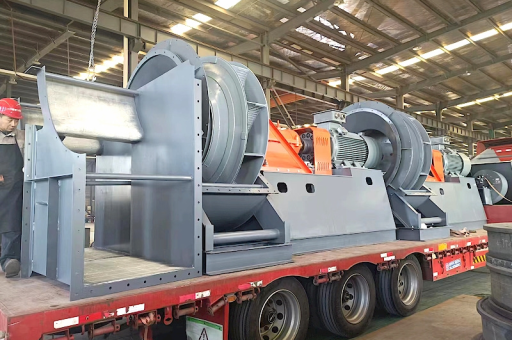
It seems you are looking for information on a Flue Gas Industrial Equipment Heat Dissipation Centrifugal Blower. This is a very specific piece of industrial machinery, often referred to as an ID Fan (Induced Draft Fan) or a Flue Gas Exhauster in power plants, cement factories, and chemical processing.
Here is a breakdown of what this equipment is, its key features, and how it differs from standard blowers.
What is it?
A Flue Gas Centrifugal Blower is a heavy-duty fan designed to handle hot, dirty, and often corrosive exhaust gases (flue gas) from industrial processes like boilers, furnaces, kilns, or incinerators.
- Primary Function: To "induce" a draft (negative pressure) through the system, pulling hot gases out of the combustion chamber and through pollution control equipment (like scrubbers or baghouses) before releasing them up the chimney.
- Heat Dissipation: The "heat dissipation" aspect refers to the blower's ability to handle high-temperature gases without failing. The blower itself must dissipate heat from the shaft and bearings to prevent catastrophic failure.
Key Features for Flue Gas Handling
-
High-Temperature Construction:
- Materials: Carbon steel for standard temps (<400°F / 200°C). Stainless steel or Inconel for very high temps (500°C+).
- Shaft Cooling: A cooling fan (shaft cooler) is mounted on the blower shaft between the bearing and the impeller housing. This pulls ambient air over the shaft to prevent heat soaking into the bearings.
- Bearing Cooling: Bearings are often water-cooled or fitted with heat shields.
-
Abrasion & Corrosion Resistance:
- Lining: The inside of the housing and impeller blades may be lined with ceramic tiles, hard facing (chrome carbide), or rubber to resist erosion from fly ash and particulates.
- Coating: Heavy-duty epoxy or PTFE coatings for acidic condensation (sulfuric acid from burning coal/oil).
-
Impeller Design:
- Radial or Paddle Wheel: Usually has straight, backward-inclined or radial tipped blades. These are stronger than airfoil blades and less likely to clog with dust.
- Wear Plates: Replaceable wear plates are bolted onto the blades and housing to extend the blower's life.
How it works (Heat Dissipation Focus)
The biggest challenge in flue gas blowers is keeping the bearings cool and managing thermal expansion.
- The Gas Path: Hot flue gas (200°C – 400°C) enters the blower inlet.
- Thermal Isolation: The gas touches the impeller and the housing. The shaft conducts heat towards the drive end.
- Shaft Cooling Fan: A small fan on the shaft blows ambient air over the shaft, removing the conducted heat before it reaches the bearing.
- Bearing Housing: The bearings are isolated from the main casing. They are located outside the main gas path.
- Expansion Management: The blower housing is mounted on sliding bases to allow the metal to expand as it heats up without warping the frame or misaligning the shaft.
Important Technical Specifications (To look for)
When sourcing or specifying this blower, you need:
- Gas Temperature: (e.g., 250°C / 482°F) – Crucial for material selection.
- Gas Composition: (e.g., "Coal Flue Gas with 15% H2O and 50 mg/Nm3 SO2") – Determines corrosion resistance.
- Particulate Load: (e.g., "30 g/Nm3 of fly ash") – Determines abrasion resistance.
- Static Pressure: (e.g., 6000 Pa / 24" WG) – The resistance the fan must overcome.
- Volume Flow: (e.g., 100,000 m³/h)
- Drive Type: Belt drive (for variable speed, less torque) or Direct drive (for high reliability, high torque).
Potential Issues & Troubleshooting
| Issue | Likely Cause | Solution |
|---|---|---|
| Vibration | Dust build-up on impeller (imbalance) | Clean impeller; add access doors for cleaning. |
| Bearing Overheating | Failed shaft cooling fan; blocked water cooling line | Inspect cooling fan blades; flush water lines. |
| Reduced Flow | Corrosion of impeller blades; inlet damper issue | Replace impeller; check actuator on damper. |
| Excessive Noise | Resonance; worn bearings | Check ductwork connection; replace bearings. |
| Premature Wear | High particulate velocity; wrong material | Install wear liners; upgrade to harder steel. |
Related Equipment
This blower is usually part of a larger system:
- Air Preheater: Extracts heat from the flue gas before it hits the fan (lowers the gas temperature entering the fan).
- Baghouse / ESP: Removes dust before the blower (to protect the impeller).
- Ductwork: Expands and contracts with temperature.
- Variable Frequency Drive (VFD): Used to control the speed of the blower motor to match the process demand.
Need More Specific Help?
If you are trying to:
- Select a blower: Tell me the Gas Temperature, Volume Flow (m³/h or CFM), and Total Static Pressure (Pa or "WG) .
- Fix a problem: Describe the symptoms (vibration, noise, temperature, motor amps).
- Find a type: Ask for specific manufacturer names (e.g., Howden, New York Blower, Cincinnati Fan, Robinson Fans, FläktGroup).
Please provide more context, and I can give you a much more precise answer!





