
This article's table of contents introduction:
- What is it?
- Key Features of a Mine Ventilating Centrifugal Fan
- Common Applications
- Typical Specifications to Look For
- Types of Impellers Used
- Popular Manufacturers
- Question for you:
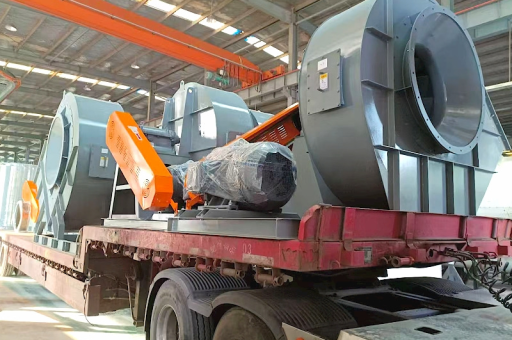
This appears to be a search query or product description for an industrial centrifugal fan used in mine ventilation. You are likely looking for information on a specific type of heavy-duty fan.
Here is a technical breakdown of what this product is and the key specifications you should look for.
What is it?
This is a Centrifugal Blower designed for the harsh environments of underground mining. Unlike axial fans (which look like jet engines), centrifugal fans use an impeller (a rotating wheel with blades) inside a scroll housing to increase air pressure and move large volumes of air through ductwork (ventilation columns).
Key Features of a Mine Ventilating Centrifugal Fan
- High Static Pressure: Mines can be very long and have high resistance to airflow (duct friction). A centrifugal fan is excellent at generating high pressure to push air through kilometers of ducting.
- The Impeller: The specific design of the impeller (forward-curved, backward-curved, or radial) determines the fan's efficiency and pressure capabilities. Backward-curved impellers are common for energy efficiency, while radial impellers are used for highly abrasive dust-laden air.
- Robust Construction: Made from heavy-gauge steel or abrasion-resistant materials to withstand dust, moisture, and potential methane gas (explosion-proof models are available).
- Explosion-Proof (ATEX/IECEx): In gassy coal mines, the fan motor and electrical components must be spark-proof to prevent igniting methane.
Common Applications
- Main Mine Ventilation (Primary): Moving fresh air down the main shaft.
- Auxiliary Ventilation (Secondary): Ventilating dead-end tunnels (drifts) where the main airflow doesn't reach.
- Exhaust Ventilation: Pulling contaminated air (with dust, smoke, or exhaust fumes) out of the mine.
- Tunnel Boring Machine (TBM) Ventilation: Keeping Tunnel Boring Machines cool and dust-free.
Typical Specifications to Look For
When comparing "Industrial Impeller Mine Ventilate Centrifugal Blower Fans," you should check these numbers:
| Specification | Typical Range for Mine Use | Why It Matters |
|---|---|---|
| Airflow (CFM / m³/s) | 5,000 – 50,000+ CFM | Determines how much fresh air is moved. |
| Static Pressure (in. w.g. / Pa) | 6 – 30+ in. w.g. | Determines how far the air can be pushed through ducting. |
| Motor Power (HP / kW) | 10 HP – 200+ HP | Larger motors mean higher pressure and volume. |
| Impeller Diameter | 16" – 60"+ | Larger impellers move more air. |
| Voltage | 460V, 575V, 3-Phase | Must match the mine's electrical system. |
| Explosion Proof Rating | Class I, Division 1 (Methane) | Mandatory in hazardous mines. |
Types of Impellers Used
- Backward-Curved (BC) / Backward-Inclined (BI):
- Best for: High efficiency and lower noise.
- Use: General mine ventilation where energy cost is a concern.
- Radial (Paddlewheel):
- Best for: Handling dirty, sticky, or abrasive air (e.g., dust collectors).
- Use: Crusher stations, transfer points.
- Forward-Curved (Squirrel Cage):
- Best for: High volume at low pressure (less common in deep mines).
- Use: Smaller auxiliary fans.
Popular Manufacturers
If you are sourcing this fan, look at these brands (which specialize in mining):
- Howden
- Zitron
- ABC Industries
- Chicago Blower
- New York Blower (NYB)
- TLT-Turbo
Question for you:
To give a more specific answer, can you tell me:
- Is this for a coal mine (explosion-proof required) or a hard rock mine?
- What is the distance you need to push the air? (e.g., 500m, 2000m)
- What is the diameter of the ducting?
If you provide those details, I can help you narrow down the exact impeller type and motor size needed.





