
This article's table of contents introduction:
- The Core Concept: A Hybrid Machine
- Key Engineering Features You Should Expect
- What is it typically used for? (Common Applications)
- Important Considerations When Buying/Specifying
- In Summary
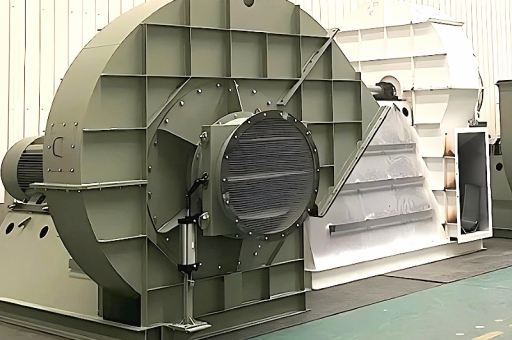
This sounds like you are describing a specific type of industrial fan that combines features of exhaust ventilation, centrifugal fan design, and material handling capabilities.
Let's break down what that specific combination of terms means, as it points to a very heavy-duty, specialized piece of equipment.
The Core Concept: A Hybrid Machine
You are not describing a standard wall-mounted bathroom fan. You are describing an industrial centrifugal fan designed to exhaust dirty air while handling solid materials (dust, chips, granules) in the airstream.
The three terms define its engineering:
- Exhaust Ventilation Fan: Its primary function is to pull air (and materials) out of a space (negative pressure) to create a clean environment.
- Centrifugal: The method of moving air. It uses a rotating impeller to accelerate air outward by centrifugal force, generating high pressure to overcome duct resistance.
- Material Handling Blower: The critical spec. The fan is built to handle heavy particulate, sharp objects, and abrasive debris without clogging or destroying the impeller.
Key Engineering Features You Should Expect
If you are sourcing or specifying this fan, look for these specific design choices:
| Feature | Standard Fan | Material Handling Blower | Why it matters for you |
|---|---|---|---|
| Impeller Type | Backward-inclined (high efficiency, clean air) | Radial (Paddlewheel) or Radial-Tip | Radial blades are flat, strong, and self-cleaning. They don't clog with stringy or sticky materials. |
| Housing | Light-gauge steel | Heavy-gauge steel (AR or abrasion-resistant) | Thicker metal resists wear from sand, glass, or metal chips impacting the housing. |
| Clearance | Tight (high efficiency) | Large (wide tolerance) | Prevents jamming if materials swell or if there are momentary clogs. |
| Access | Side access only | Swing-out or pull-out access | Allows quick cleaning of debris stuck in the scroll or on the wheel. |
| Drive/Motor | Standard motor | Oversized motor & V-belt drive | Material handling requires extra torque to start up with a heavy load. Belt drives allow speed changes to fine-tune air volume. |
What is it typically used for? (Common Applications)
This combination of fan is the workhorse of "dirty" industrial processes. You will find it in:
- Industrial Dust Collection: In wood shops (sawdust), metal fabrication (grinding dust), or chemical plants (powders).
- Pneumatic Conveying: Moving granules (plastic pellets, grains, cement) through pipes.
- Trim Removal Systems: In printing, paper mills, or plastic film production, handling long strips of scrap material.
- Welding Fume Exhaust: Moving heavy, hot, and particulate-laden air from welding stations.
- Bin/Tank Venting: Exhausting dusty air from the top of storage silos.
Important Considerations When Buying/Specifying
If you are looking to purchase or maintain one of these, ask these specific questions:
- What is the material in the airstream? (Wood dust? Metal chips? Sticky fibers? Explosive dust?) This dictates material selection (e.g., aluminum wheel for spark resistance) and filter requirements.
- What is the air volume (CFM) and static pressure (SP/in. wg)? Material handling requires high pressure to push air through ducts and filters.
- Is it spark-resistant? For wood or metal dust, you often need a non-sparking construction (e.g., aluminum impeller, steel housing) to prevent explosions.
- Direct Drive vs. Belt Drive? Belt drive is preferred for material handling because it allows for speed adjustment and protects the motor from shock loads.
In Summary
"Exhaust Ventilation Fan Centrifugal Material Handling Blower" is a precise technical description for a heavy-duty, radial-blade centrifugal fan designed to pull dirty air and solid debris out of an industrial space. It prioritizes robustness and clog-resistance over maximum energy efficiency.
If you are having a specific problem (e.g., the fan is clogging, making loud noises, or not moving enough air), please provide more context (e.g., what material you are moving, the fan's current specs), and I can give you a more targeted solution.





