
*The Critical Role of Smelting Furnace Dynamic Balanced Impeller Dust Collector Fan Blower Machine in Industrial Air Management*
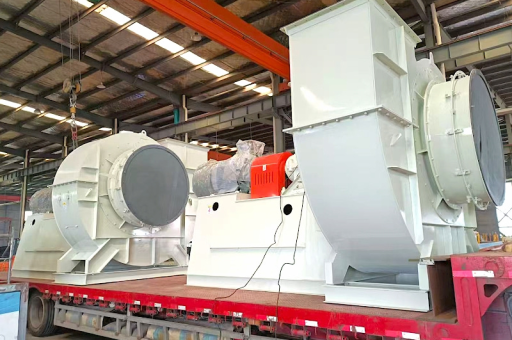
Table of Contents
- Introduction: The Unsung Hero of Smelting Operations
- Understanding the Core Components
- 1 The Smelting Furnace Environment
- 2 Dynamic Balanced Impeller: Engineering Precision
- 3 Dust Collector Fan Blower Machine: System Integration
- How the System Works: Airflow, Filtration, and Pressure Balance
- Why Dynamic Balancing is Non-Negotiable for Fan Blower Machines
- Real-World Application: Enhancing Smelting Efficiency
- Common Technical Questions Answered
- Conclusion: Future Trends and Maintenance Best Practices
Introduction: The Unsung Hero of Smelting Operations
In the high-temperature, particulate-heavy environment of a smelting furnace, air management is not a luxury—it is a prerequisite for safety, productivity, and equipment longevity. At the heart of this system lies the Smelting Furnace Dynamic Balanced Impeller Dust Collector Fan Blower Machine. This integrated unit combines precision rotor dynamics, high-efficiency dust collection, and robust air movement to maintain negative pressure within the furnace enclosure, extract toxic fumes, and prevent particulate accumulation. Without it, smelting operations would face rapid equipment degradation, increased emission violations, and compromised worker health. This article dissects the engineering, application, and maintenance of this critical industrial fan blower machine, offering actionable insights for plant engineers, procurement specialists, and maintenance managers.
Understanding the Core Components
1 The Smelting Furnace Environment A smelting furnace operates at temperatures exceeding 1,500°C (2,732°F). During the process, flux materials, ores, and fuels generate vast quantities of dust, metal oxides, and gases such as sulfur dioxide and carbon monoxide. This creates an aggressive environment where standard industrial fans fail within weeks due to imbalance, corrosion, or heat damage.
2 Dynamic Balanced Impeller: Engineering Precision The impeller is the rotating component that imparts kinetic energy to the air. In a dynamic balanced impeller, mass distribution is corrected to near-zero residual imbalance through precision machining and dynamic balancing machines. Two key balancing planes are used—correction on both the front and rear sides of the impeller—to eliminate vibration across the operating speed range (typically 1,450 to 3,600 RPM). This is critical because even a 1-gram imbalance at 3,000 RPM generates centrifugal forces equivalent to several kilograms, causing premature bearing failure, shaft fatigue, and noise pollution.
3 Dust Collector Fan Blower Machine: System Integration The fan blower machine is not a standalone unit; it is the motive force for the entire dust collection system. It draws contaminated air from the furnace hood through ductwork, passes it through a baghouse or cyclone separator, and expels cleaned air to the atmosphere or recirculates it. The fan must deliver consistent static pressure (typically 2,000 to 6,000 Pa) and volumetric flow (10,000 to 200,000 m³/h) while resisting abrasive wear from dust particles.
How the System Works: Airflow, Filtration, and Pressure Balance
The operation follows a closed-loop logic:
- Capture: The fan blower machine creates negative pressure inside the furnace enclosure, pulling fume-laden air into the hood.
- Transport: High-velocity air carries particulates through ductwork designed to minimize dropout (typically 18–25 m/s velocity).
- Filtration: Air enters the dust collector where filter bags or cartridges separate particles. The fan must overcome the pressure drop across these filters, which increases as dust cake accumulates.
- Exhaust: Cleaned air is discharged or recirculated. A dynamic balanced impeller ensures the fan runs smoothly even when the filter load changes, preventing motor overload or vibration spikes.
Key engineering insight: The fan blower machine must be sized not just for clean filter conditions but also for worst-case dirty filter pressure drop, typically 1.5–2 times higher. Oversizing leads to energy waste; undersizing causes system collapse.
Why Dynamic Balancing is Non-Negotiable for Fan Blower Machines
In a smelting environment, vibration is the enemy of reliability. A poorly balanced impeller causes:
- Bearing failure within 200–500 hours vs. 8,000+ hours for balanced units.
- Shaft fatigue cracks at the impeller eye or coupling.
- Structural resonance that damages ductwork and supports.
- Noise levels exceeding 115 dB(A), violating OSHA or EU directives.
Dynamic balancing follows ISO 1940-1 G6.3 or higher (G2.5 for high-speed fans). The process involves mounting the impeller on a balancing machine, rotating it, measuring amplitude and phase with accelerometers, and adding or removing weight until residual unbalance is below specification. For smelting furnace fans, an additional high-temperature balance is often required because thermal expansion can shift mass distribution.
Real-world example: A copper smelter in Chile reduced unplanned downtime by 73% after upgrading to a dynamic balanced impeller dust collector fan blower machine from a conventional fan. Vibration velocity dropped from 18 mm/s to below 2 mm/s.
Real-World Application: Enhancing Smelting Efficiency
Consider a typical secondary aluminum smelting facility:
- Challenge: A baghouse fan experienced severe imbalance within three months due to dust accumulation on the impeller blades.
- Solution: The plant installed a dynamic balanced impeller fan blower machine with an automated cleaning system (solenoid valve pulse-jet). The impeller was coated with a tungsten carbide wear layer.
- Result: Fan service life extended to 24 months. Energy consumption reduced by 11% because the balanced impeller required less motor torque. Particulate emissions stayed below 10 mg/Nm³.
Common Technical Questions Answered
Q1: What is the difference between static and dynamic balancing for a fan blower machine?
A: Static balancing corrects for center of gravity offset in one plane (gravity direction). Dynamic balancing corrects for unbalanced couples in two or more planes, which is essential for high-speed, long-impeller fans commonly used in smelting dust collectors.
Q2: Can I retrofit an existing fan with a dynamic balanced impeller?
A: Yes, provided the shaft diameter, hub fitting (taper lock, keyway), and housing clearance are compatible. Most reputable fan manufacturers offer retrofit kits. However, you must also verify that the motor and bearings can handle the revised impeller weight and speed.
Q3: How often should I rebalance the impeller in a smelting furnace dust collector?
A: Under normal operation, rebalance is needed every 12–18 months or when vibration exceeds ISO 14694 zone B (typically 4.5 mm/s RMS for rigid support). However, if the impeller experiences dust buildup, erosion, or temperature cycling, more frequent checks are advised.
Q4: What materials are recommended for the impeller in a high-temperature smelting environment?
A: For temperatures up to 250°C, mild steel with corrosion-resistant coating is acceptable. Above 250°C, use stainless steel (304 or 316) or Inconel 625. For extreme temperatures (>500°C), heat-treated alloy steel with air-cooled shaft is mandatory.
Conclusion: Future Trends and Maintenance Best Practices
The Smelting Furnace Dynamic Balanced Impeller Dust Collector Fan Blower Machine is evolving toward:
- IoT integration: Real-time vibration monitoring and automated balancing through active magnetic bearings.
- High-efficiency impeller designs: Backward-curved airfoil blades offering 85%+ static efficiency.
- Smart cleaning cycles: Pressure sensors triggering pulse-jet cleaning only when delta-P increases, saving compressed air.
Maintenance checklist for plant managers:
- Check vibration levels weekly using handheld analyzer (horizontal, vertical, axial).
- Inspect impeller for erosion or dust buildup during scheduled furnace outages.
- Verify dynamic balance after any impeller repair or coating reapplication.
- Replace bearings at recommended intervals (typically 8,000 hours or 12 months).
- Keep a spare fan blower machine available for rapid change-out.
Ultimately, investing in a high-quality, dynamically balanced fan system pays for itself through reduced energy consumption, lower maintenance costs, and compliance with ever-tightening environmental regulations. For any smelting furnace operator, this machine is not just a fan—it is the lungs of the operation.
This article is intended for industrial engineers and facility managers seeking in-depth technical knowledge about fan blower systems in smelting environments. For equipment specifications or retrofit quotes, consult a fan manufacturer directly.





