
This article's table of contents introduction:
- Introduction: Why Heavy Duty Heat Dissipation Matters
- Understanding 380V Industrial Centrifugal Fans
- Key Features of Heavy Duty Heat Dissipation Design
- Applications Across Industries
- Performance Metrics: Airflow, Pressure, and Energy Efficiency
- FAQ: Common Questions About 380V Centrifugal Fans
- How to Select the Right Fan for Your Facility
- Maintenance Best Practices for Longevity
- Conclusion: Future Trends in Industrial Ventilation
Heavy Duty Heat Dissipation 380V Industrial Centrifugal Fans: The Ultimate Guide to Performance, Efficiency & Applications**
Table of Contents
- Introduction: Why Heavy Duty Heat Dissipation Matters
- Understanding 380V Industrial Centrifugal Fans
- Key Features of Heavy Duty Heat Dissipation Design
- Applications Across Industries
- Performance Metrics: Airflow, Pressure, and Energy Efficiency
- FAQ: Common Questions About 380V Centrifugal Fans
- How to Select the Right Fan for Your Facility
- Maintenance Best Practices for Longevity
- Conclusion: Future Trends in Industrial Ventilation
Introduction: Why Heavy Duty Heat Dissipation Matters
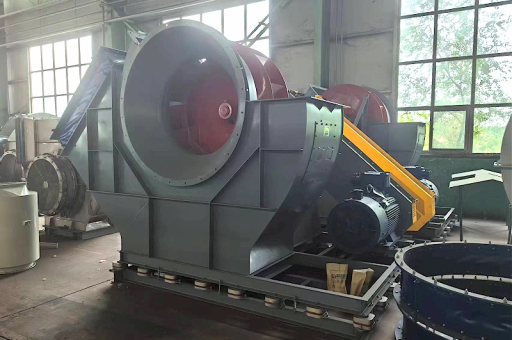
In high-temperature industrial environments, heat dissipation is not just a comfort issue—it is a critical factor for equipment reliability, worker safety, and production continuity. Heavy duty heat dissipation 380V industrial centrifugal fans are purpose-built to handle extreme thermal loads in steel plants, foundries, power generation facilities, chemical processing units, and large-scale manufacturing lines. These fans move massive volumes of air against high static pressure, effectively removing heat generated by furnaces, motors, compressors, and other heat-intensive machinery.
Unlike standard ventilation fans, heavy duty 380V centrifugal models are engineered for continuous operation under harsh conditions. The 380V three-phase power supply delivers the torque and power density required for large impellers, while the centrifugal design excels at overcoming duct resistance and long-distance air delivery.
Understanding 380V Industrial Centrifugal Fans
A 380V industrial centrifugal fan operates on a three-phase alternating current (AC) motor, typically supplying 380 volts at 50Hz or 60Hz depending on the region. The centrifugal configuration uses a rotating impeller to accelerate air radially outward, converting kinetic energy into static pressure.
Key Components:
- Impeller: Backward-curved, forward-curved, or radial blades designed for heavy duty heat dissipation.
- Housing: Heavy-gauge steel or stainless steel with reinforced welds.
- Motor: IP55 or higher protection class, often with thermal overload protection.
- Inlet/Outlet: Flanged connections for duct integration.
- Bearings: Sealed, maintenance-free or grease-lubricated for high-temperature service.
Why 380V?
380V three-phase power reduces current draw compared to single-phase equivalents, allowing for smaller wire gauges, lower resistive losses, and higher starting torque—essential for heavy impeller rotation.
Key Features of Heavy Duty Heat Dissipation Design
Heavy duty heat dissipation fans incorporate multiple engineering innovations:
- High-Temperature Tolerances: Bearings, seals, and motor windings rated for ambient temperatures up to 80–120°C (176–248°F). Some models use external motor cooling or shaft-mounted cooling fins.
- Robust Impeller Construction: Aluminum alloy, carbon steel, or stainless steel impellers with precision balancing to minimize vibration.
- Aerodynamic Optimization: Computational fluid dynamics (CFD)-designed blade profiles for maximum airflow-to-pressure ratio.
- Vibration Dampening: Heavy-duty base frames with isolation mounts.
- Corrosion Resistance: Epoxy coatings, galvanized housings, or stainless steel options for corrosive environments.
These features ensure reliable performance even when extracting hot gases, dust-laden air, or chemical fumes.
Applications Across Industries
| Industry | Typical Application | Fan Requirement |
|---|---|---|
| Steel & Metal | Cooling of electric arc furnaces, ladle refining | High temperature (up to 300°C), high static pressure |
| Cement | Dust collection, clinker cooler ventilation | Abrasion-resistant impeller, heavy duty housing |
| Chemical | Reactor cooling, fume extraction | Explosion-proof motor, corrosion-resistant materials |
| Power Generation | Boiler forced draft, induced draft | Large airflow (50,000+ CFM), variable speed drive ready |
| Automotive | Paint booth exhaust, foundry ventilation | Spark-proof construction, high torque startup |
| HVAC (Industrial) | Air circulation in warehouses, hangars | Low noise, high energy efficiency class IE3/IE4 |
Performance Metrics: Airflow, Pressure, and Energy Efficiency
Understanding key metrics helps in selecting the correct fan for heavy duty heat dissipation:
- Airflow (CFM or m³/h): The volume of air moved per unit time. Heavy duty fans typically range from 5,000 to 150,000 CFM.
- Static Pressure (Pa or in wg): The resistance the fan must overcome. High static pressure (10–30 in wg) is common for long duct runs.
- Power Consumption (kW): Directly relates to motor size. 380V motors from 7.5 kW to 75 kW+ are typical.
- Fan Efficiency: Look for fans meeting ISO 12759 or AMCA 205 standards with efficiency above 75%.
- Sound Level (dB): Heavy duty fans operate at 70–95 dB; silencers may be required.
Energy-Saving Tip: Pairing a 380V centrifugal fan with a variable frequency drive (VFD) can reduce energy consumption by 30–50% when full speed is not required.
FAQ: Common Questions About 380V Centrifugal Fans
Q1: Can a 380V centrifugal fan be used for both air supply and exhaust?
Yes. Most heavy duty centrifugal fans can be configured for either supply (blowing) or exhaust (suction) by reversing the motor rotation or adjusting duct connections. However, check the manufacturer’s specifications for dedicated designs.
Q2: What is the typical lifespan of these fans?
With proper maintenance, a well-built heavy duty 380V centrifugal fan can operate for 15–20 years. Factors like dust load, temperature, and bearing quality significantly affect longevity.
Q3: Do I need an explosion-proof model for chemical facilities?
Absolutely. For environments with flammable gases, dust, or vapors, select a fan with ATEX or IECEx certification and spark-resistant impellers (aluminum or non-ferrous).
Q4: How do I reduce vibration and noise?
- Use flexible duct connectors.
- Install vibration isolation pads under the base frame.
- Ensure the impeller is dynamically balanced.
- Add a sound enclosure or silencer on the inlet/outlet.
Q5: Can I retrofit an existing fan with a 380V motor?
Yes, but ensure the impeller, housing, and bearings are compatible with the higher torque and speed. Consult the fan or motor supplier for a proper retrofit kit.
How to Select the Right Fan for Your Facility
Follow this step-by-step selection process:
- Define the application: Hot air removal, dust extraction, or general circulation?
- Calculate required airflow: Use CFM = (Heat load in BTU/h) / (1.08 × temperature rise in °F).
- Determine static pressure: Consider duct length, fittings, filters, and dampers.
- Choose impeller type:
- Forward-curved: High airflow, low pressure (clean air).
- Backward-curved: High efficiency, medium pressure.
- Radial: Highest pressure, handles dust and fumes.
- Select motor voltage and enclosure: 380V/3ph is standard; IP55 for indoor, IP65 for outdoor.
- Review material compatibility: Stainless steel for corrosive environments, carbon steel with epoxy for general use.
- Check certifications: ISO, AMCA, ATEX, CE, UL as needed.
Pro Tip: Use fan selection software from leading manufacturers to model system curve and fan curve intersection—this ensures you don’t oversize or undersize the fan.
Maintenance Best Practices for Longevity
Heavy duty heat dissipation fans require scheduled maintenance to avoid unexpected downtime:
| Maintenance Task | Frequency |
|---|---|
| Inspect impeller for wear & balance | Monthly |
| Check bearing temperature & lubrication | Quarterly |
| Clean housing & filter screens | Quarterly |
| Tighten belt tension (if belt-driven) | Quarterly |
| Measure motor current draw | Annually |
| Replace seals & gaskets | As needed (every 2–3 years) |
| Perform vibration analysis | Annually |
Critical Warning: Always lock out/tag out (LOTO) power before servicing. Heat dissipation fans often restart automatically in temperature-controlled systems.
Conclusion: Future Trends in Industrial Ventilation
The next generation of heavy duty heat dissipation 380V industrial centrifugal fans will incorporate:
- IoT sensors for real-time monitoring of bearing health, vibration, and temperature.
- Smart VFD integration for predictive load balancing and energy optimization.
- High-efficiency motor designs (IE4/IE5) to meet global carbon reduction targets.
- Modular construction for faster on-site replacement of worn components.
- 3D-printed impellers for complex aerodynamic shapes that reduce noise and increase efficiency by 10–15%.
Investing in a high-quality 380V centrifugal fan today is a long-term strategy for operational reliability, lower energy bills, and compliance with stricter industrial ventilation standards.
For more information on heavy duty heat dissipation fans, visit your local industrial equipment supplier or consult an applications engineer at fan.





