
This article's table of contents introduction:
- What the Name Implies
- Common Applications
- Key Design Features (What to Specify)
- Example Product Category
- Critical Questions to Ask
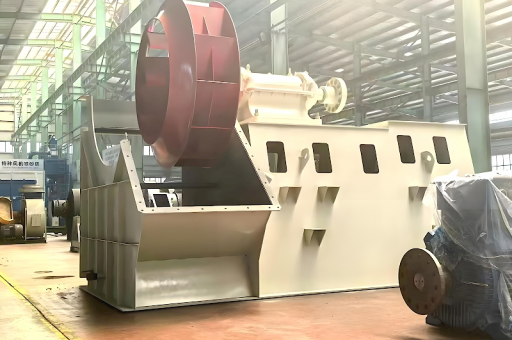
It appears you are describing a specific, heavy-duty industrial fan system designed for hazardous environments. This combination of terms points to a specialized piece of equipment, likely used in applications where explosive gases, high heat, and high pressure are present.
Here is a breakdown of what that product name implies, the typical applications, and the key design features you should look for.
What the Name Implies
- High Temperature: The fan is built to handle process air or exhaust gases at elevated temperatures (e.g., 200°C to 600°C+). Standard fans would fail or warp under these conditions.
- Explosion Protection: The fan is designed according to ATEX (Europe), IECEx (International), or NEC/NFPA (North America) standards. This prevents the fan from becoming an ignition source.
- Tunnels: This often refers to the tunnel in the fan housing or the ductwork it connects to. In ventilation, it could be for a transport (road/rail/metro) tunnel, a mining tunnel, or a process tunnel. The housing may be reinforced to withstand a pressure spike.
- High Pressure Centrifugal Fan: This is the mechanical type. It uses an impeller (often a radial/backward curved design) to move air against a high static pressure resistance (ductwork, filters, long distances).
Common Applications
- Industrial Tunnel Kilns: (Ceramics, brick, carbon baking) where fans must push hot combustion gases through long kilns at high pressure.
- Mine Ventilation: Explosion-proof fans for hazardous gas (methane) zones in coal or metal mines.
- Refinery & Chemical Plants: Flare gas recovery, drying systems for powdery, explosive materials (e.g., flour, sugar, chemical powders).
- Tunnel Fire Safety: Smoke extraction systems in road or rail tunnels where the fan must operate at high temperature (400°C for 2 hours is a common standard) even during a fire.
- Boiler Induced Draft (ID) Fans: Handling hot, possibly explosive flue gas.
Key Design Features (What to Specify)
If you are sourcing or specifying this fan, these are the critical components:
| Feature | Specification / Requirement |
|---|---|
| Material | Housing & Impeller: High-tensile steel (Q345R, S355) or Stainless Steel (304/316L for corrosion) for high temp. Shaft: 40Cr or alloy steel, often water-cooled at the bearing end. |
| Temperature Rating | Specify the maximum continuous operating temperature (e.g., 350°C) and peak temperature (e.g., 450°C for short periods). |
| Explosion Proof | Motor: Must be Ex d (flameproof) or Ex e (increased safety) with appropriate gas/dust group (e.g., IIB T3, IIB T4). Fan: Non-sparking impeller (aluminum bronze or stainless steel), spark-proof labyrinth seal, anti-static belt (if belt-driven). |
| Tunnel Design | The fan housing may be pressure-rated to withstand a flash (Explosion Protected Housing). An explosion relief panel on the ductwork is common. |
| Drive System | Direct Drive is preferred for high reliability (no belts to slip or spark). If belt-driven, use anti-static belts. |
| Bearings | Heavy-duty, spherical roller bearings with a cooling fan or water jacket to handle radiant heat from the shaft. |
| Casing | Often a double-walled or air-cooled casing to reduce surface temperature and protect personnel. |
Example Product Category
In industry, this is often called a "High Temperature Explosion-Proof Centrifugal Fan" (e.g., Model: W9-26 Ex or C6-48 Ex in Chinese/NEMA equivalents, or an EtaLine model for high pressure).
Critical Questions to Ask
- What is the exact gas/air mixture? (This determines the ATEX/IECEx zone and temperature class).
- What is the continuous operating temperature? (Design changes drastically between 150°C and 600°C).
- What is the required static pressure (Pa or mmH2O)? (High pressure fans have specific impeller designs).
- Is it for supply air or fume extraction? (Extraction of dust or corrosive gases will affect material choice).
In summary: You are looking for a specialized fan for high-heat, high-risk environments. It is not a standard HVAC fan. You must verify the explosion protection certification, temperature rating, and pressure rating with the manufacturer to ensure it meets your site's safety requirements.





